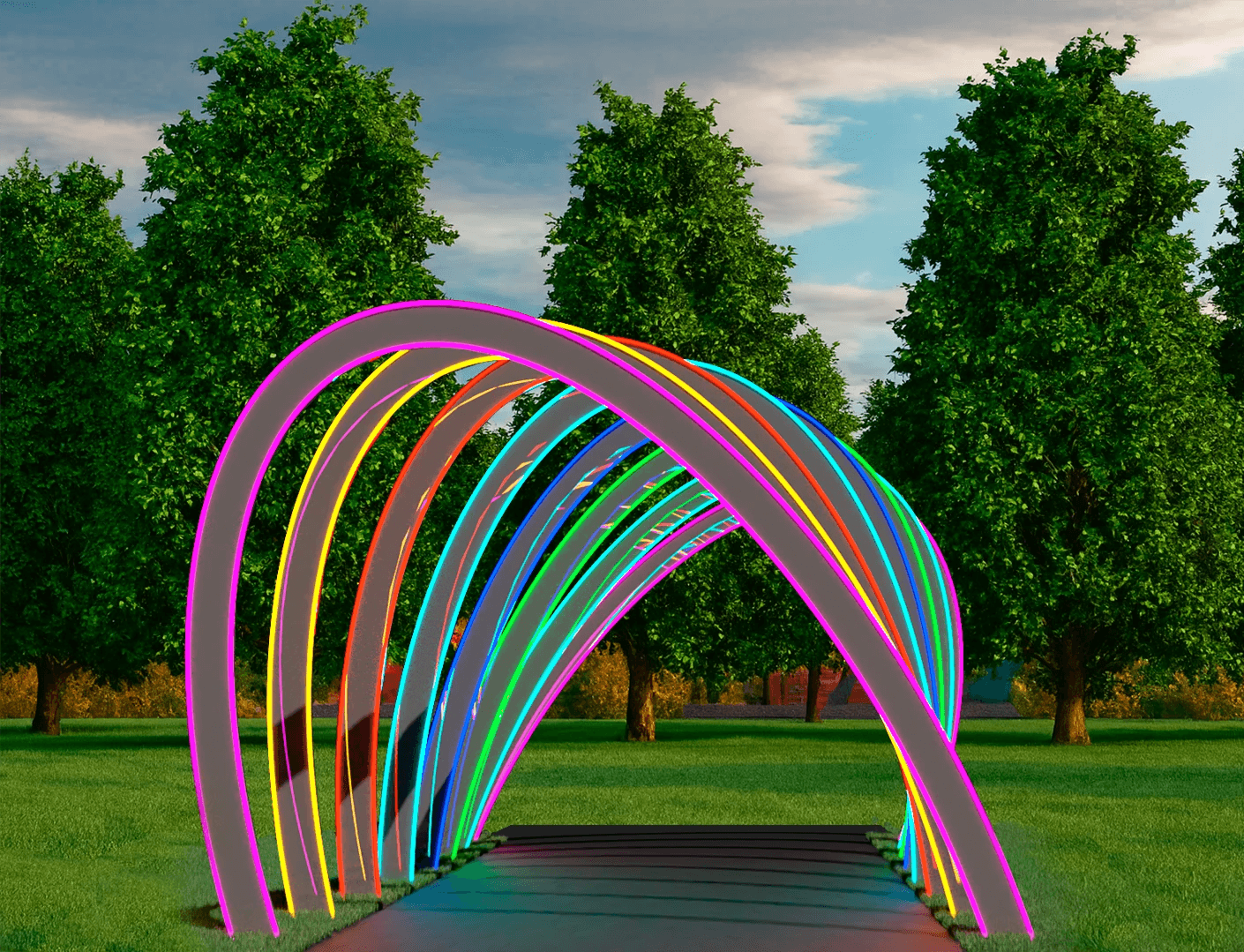
Vive Claro - Parametric Venue Model & Lightning System
Client:
La Gallina de Oro / Páramo Presenta / LiveNation
Industry:
Live Production / Venue Design / Computational Design
Start:
End:
Duration:
4 months
Read time:
5 min
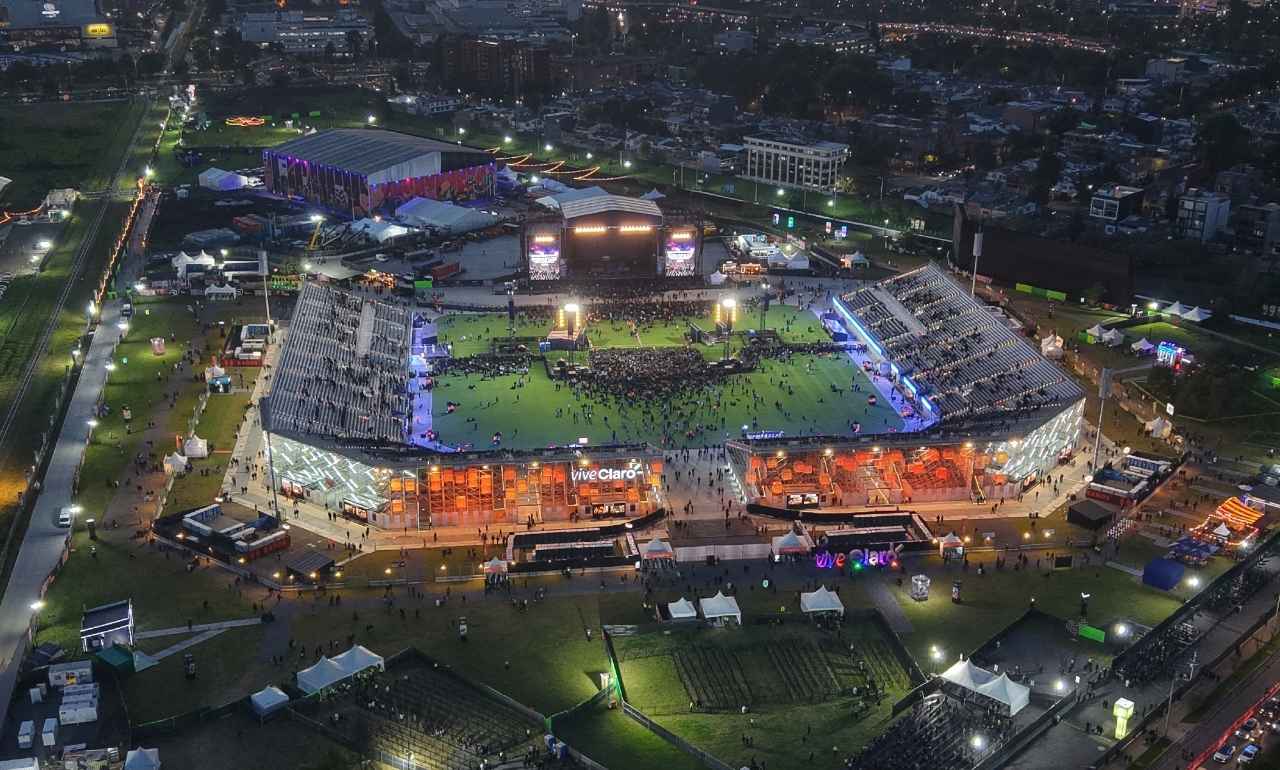
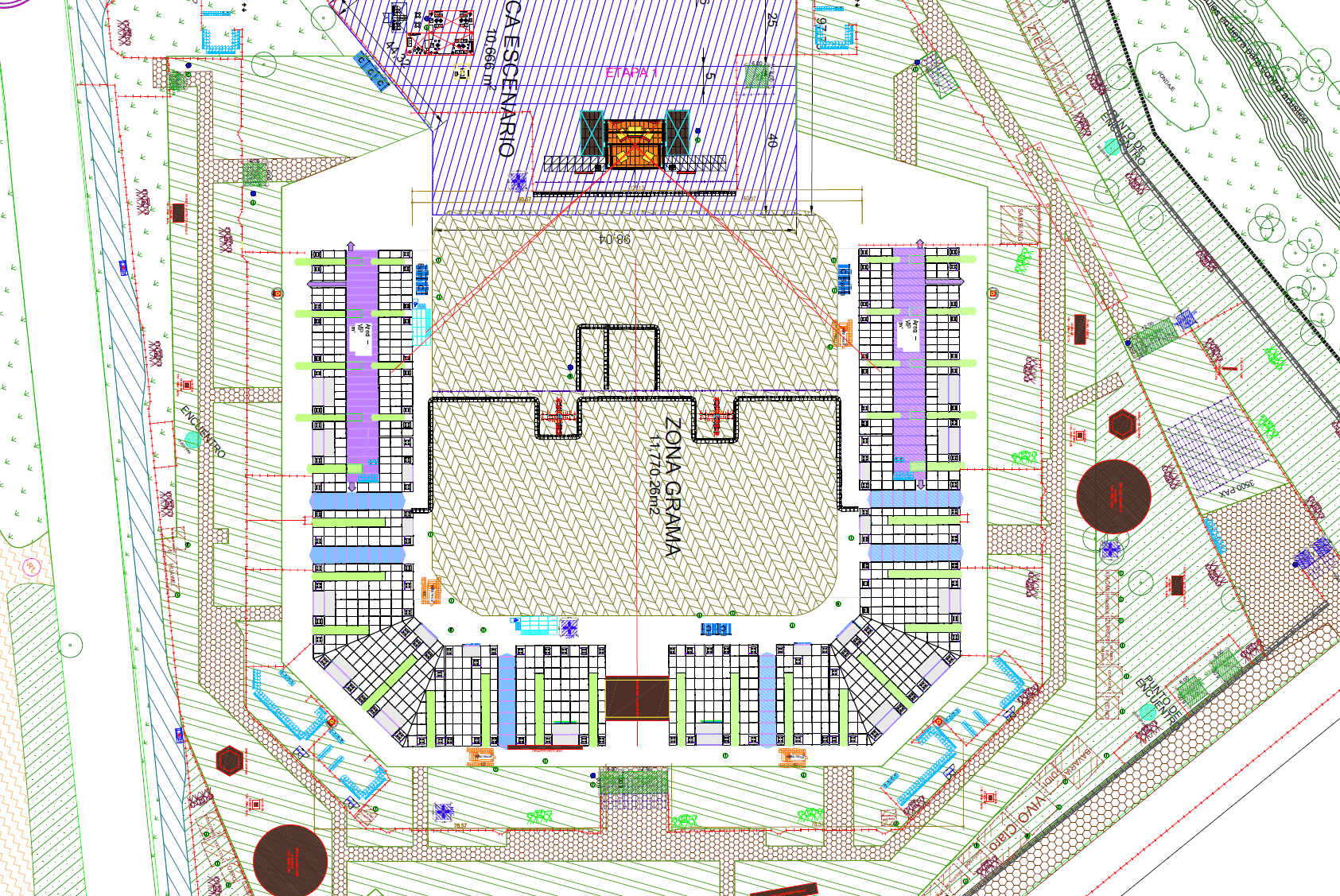
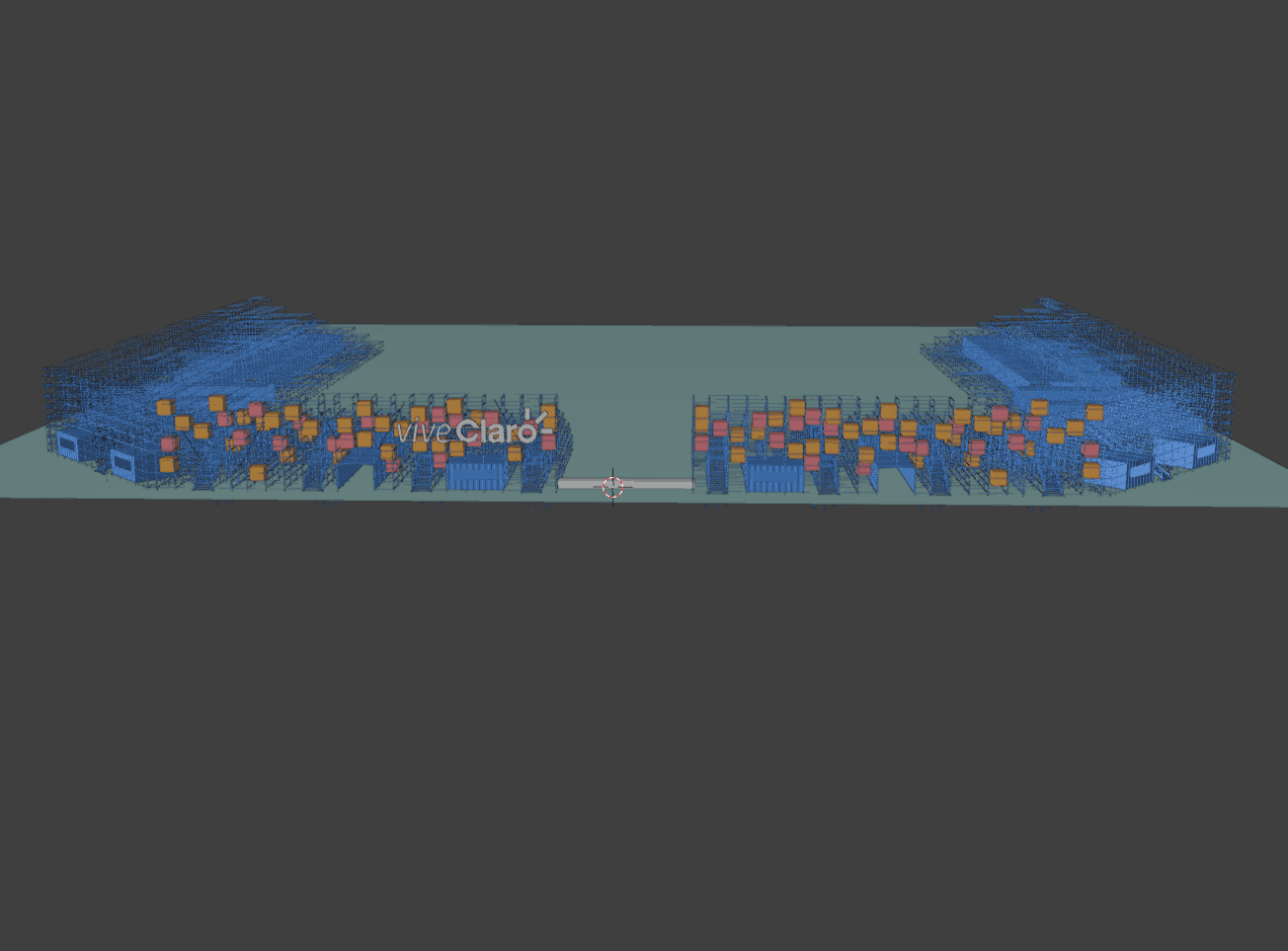
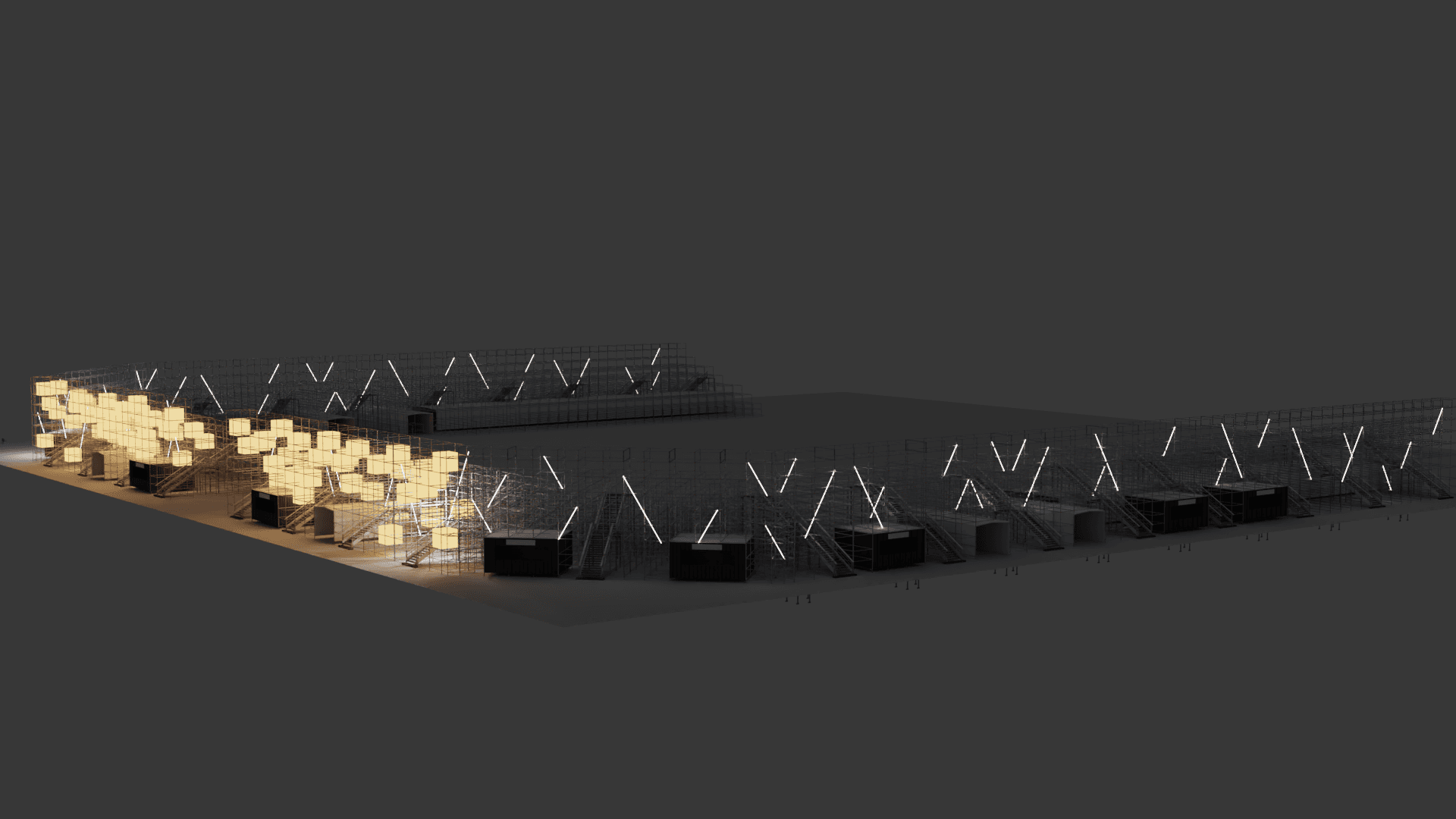
Vive Claro is the largest live entertainment venue in Colombia, located in Bogotá and developed for Páramo Presenta / LiveNation. For this part of the project, I worked on the complete parametric reconstruction of the venue in Rhino and Grasshopper, using the architectural plans as the base.
The goal was to create a flexible digital model that could support design decisions, capacity changes, stage movement, and lighting studies inside the venue’s modular grandstand structure.
Starting point
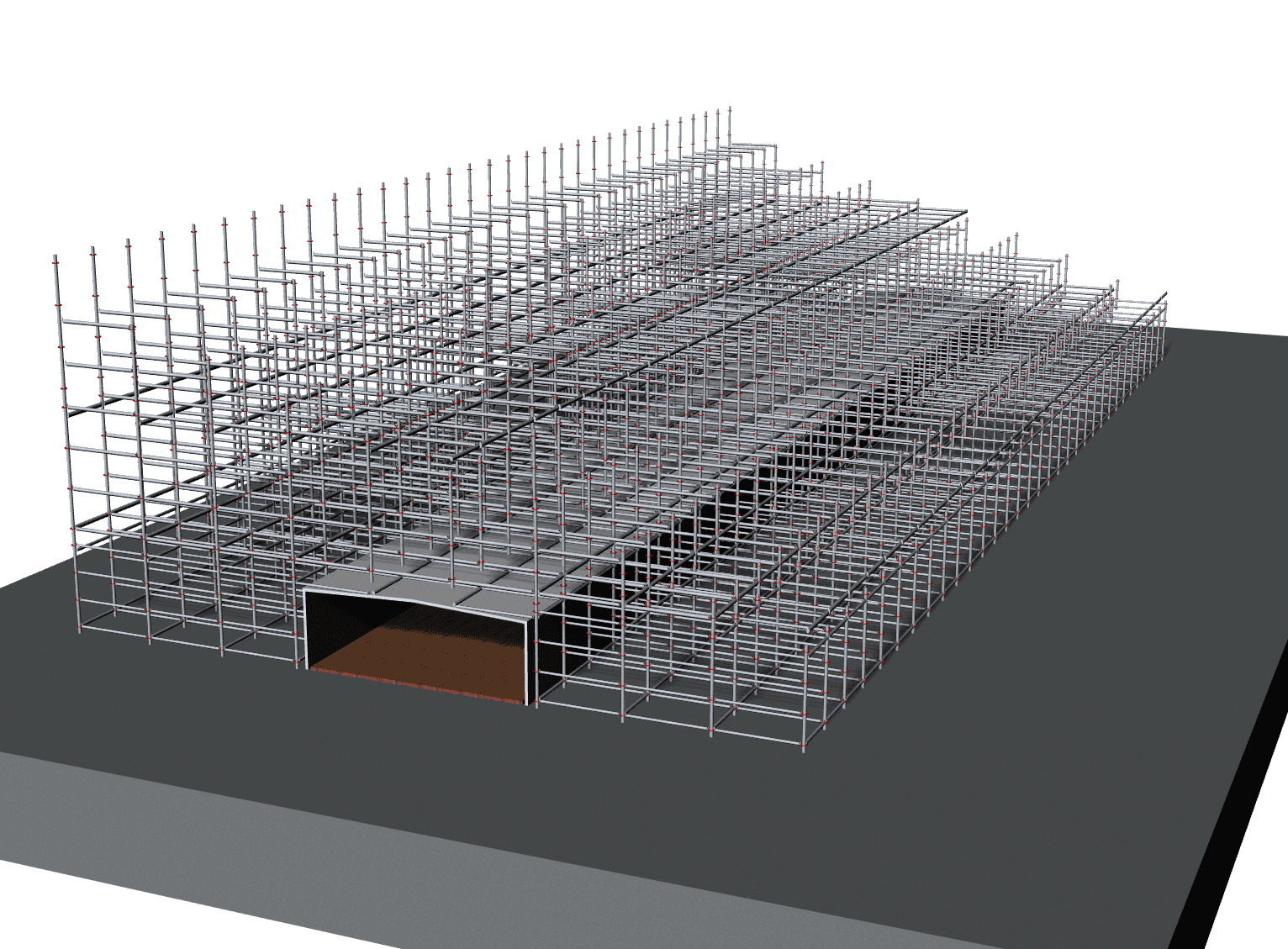
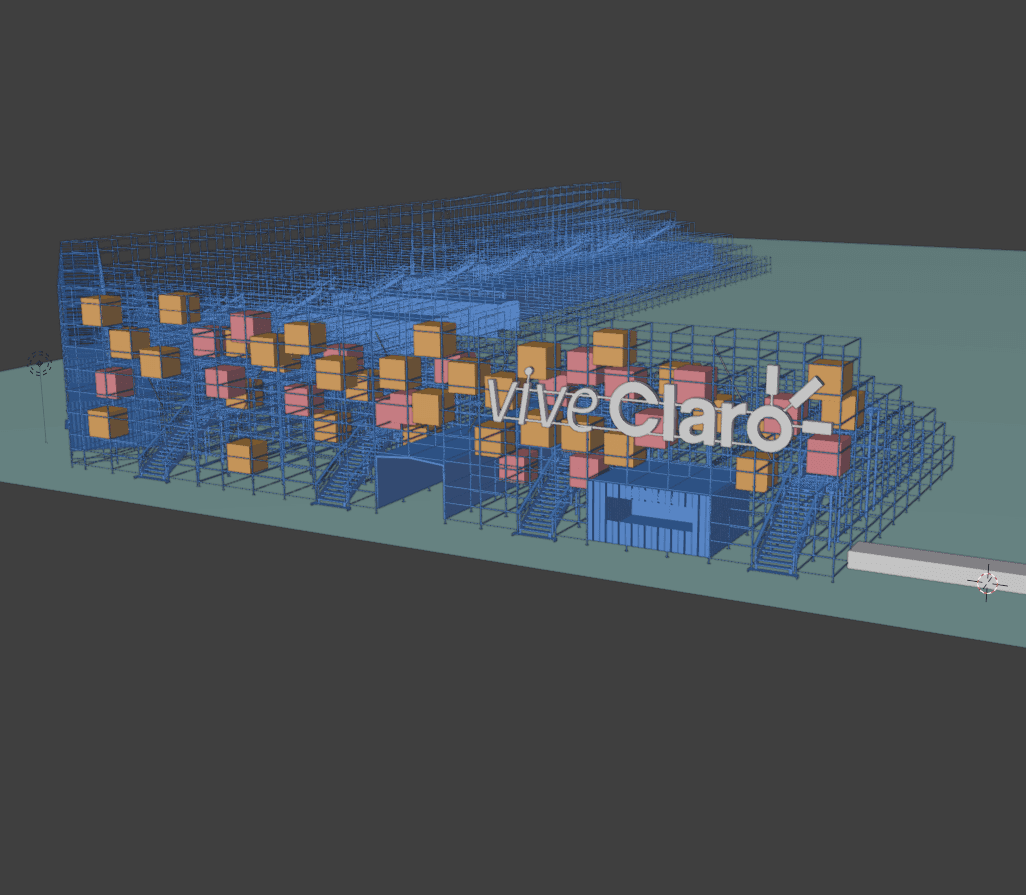
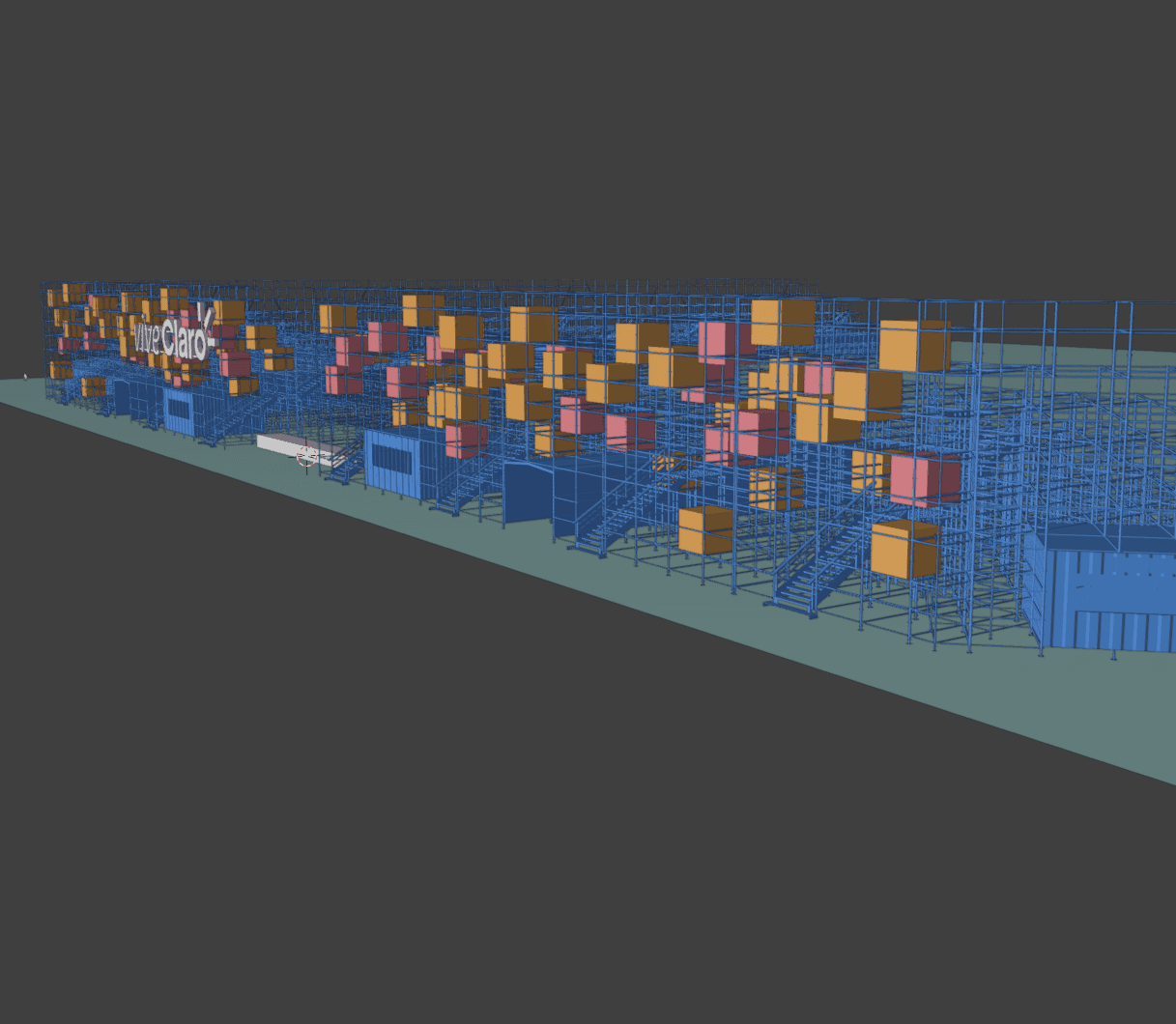
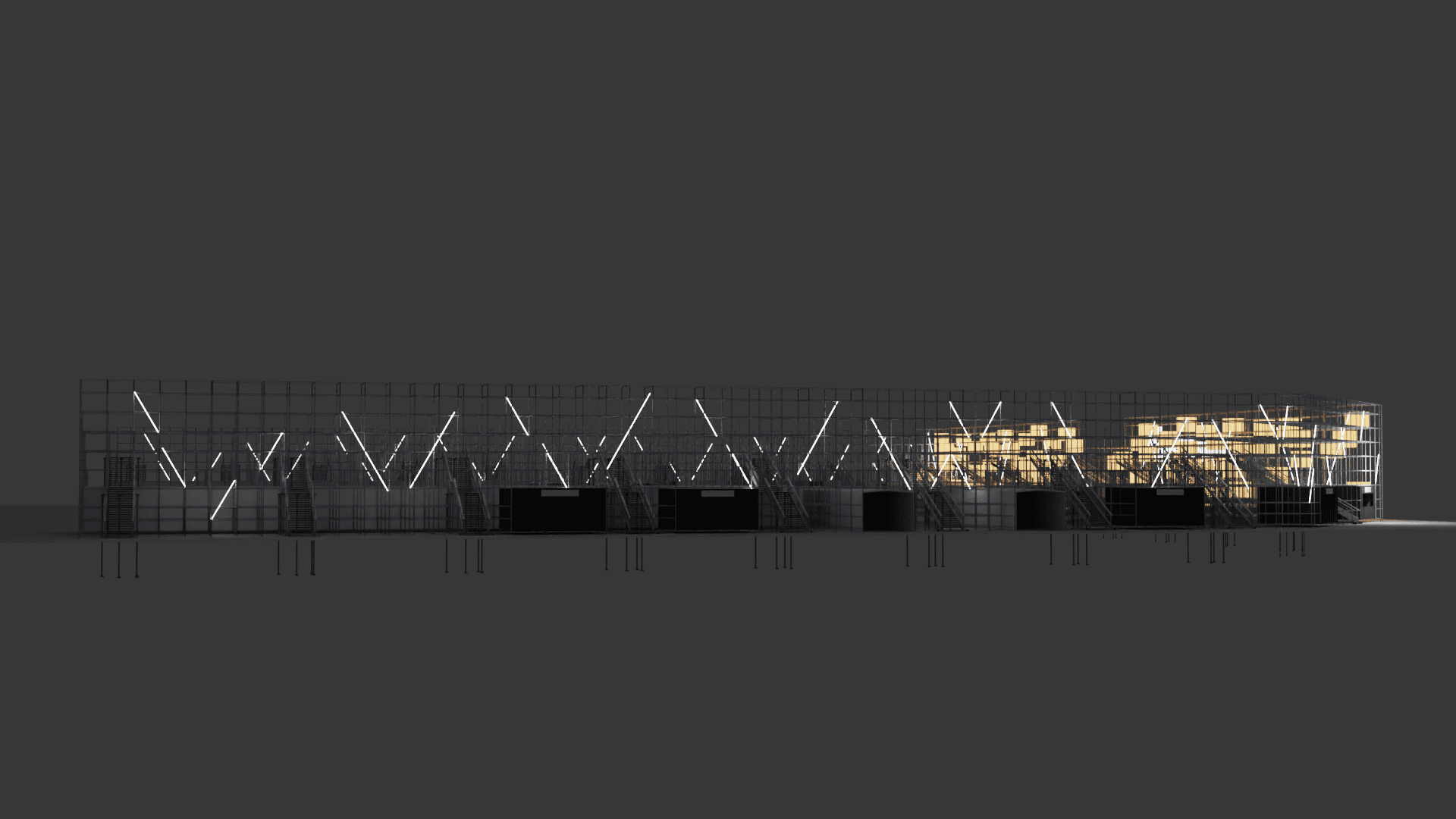
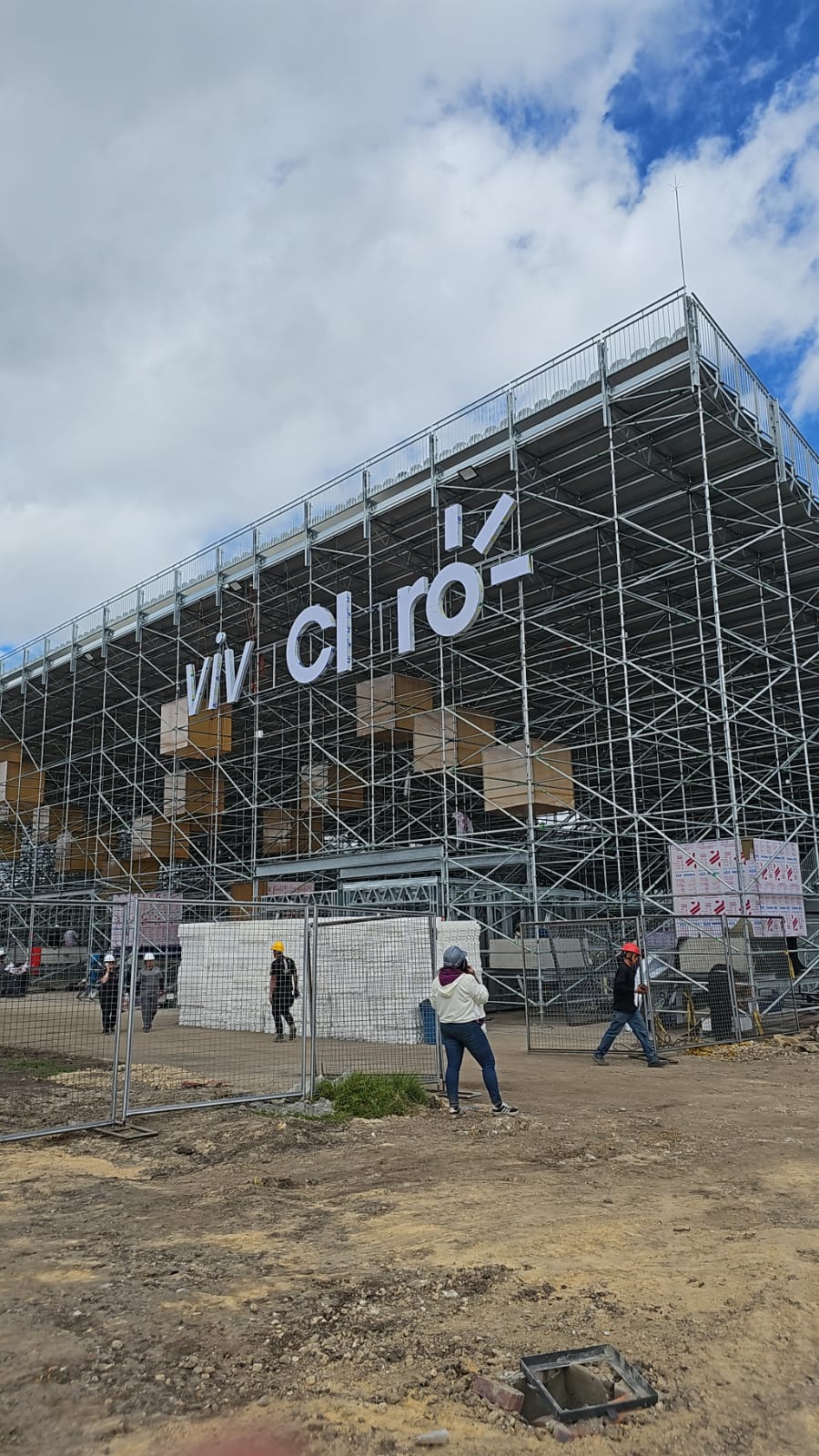
The venue structure was based on a modular scaffolding system used to build the grandstands. Because the system was repetitive, adjustable, and highly dependent on dimensions, it made sense to rebuild it parametrically instead of modeling it manually.
Another key condition was capacity. Depending on the artist and event configuration, the venue could shift between approximately 90,000 and 120,000 people, mainly by moving the stage and adapting the spatial layout.
Problem solving
The parametric model allowed the venue to be reconstructed with more control and flexibility. Since the grandstands were modular, Grasshopper helped organize the scaffolding logic, repeat structural elements, and test different configurations without rebuilding everything from scratch.
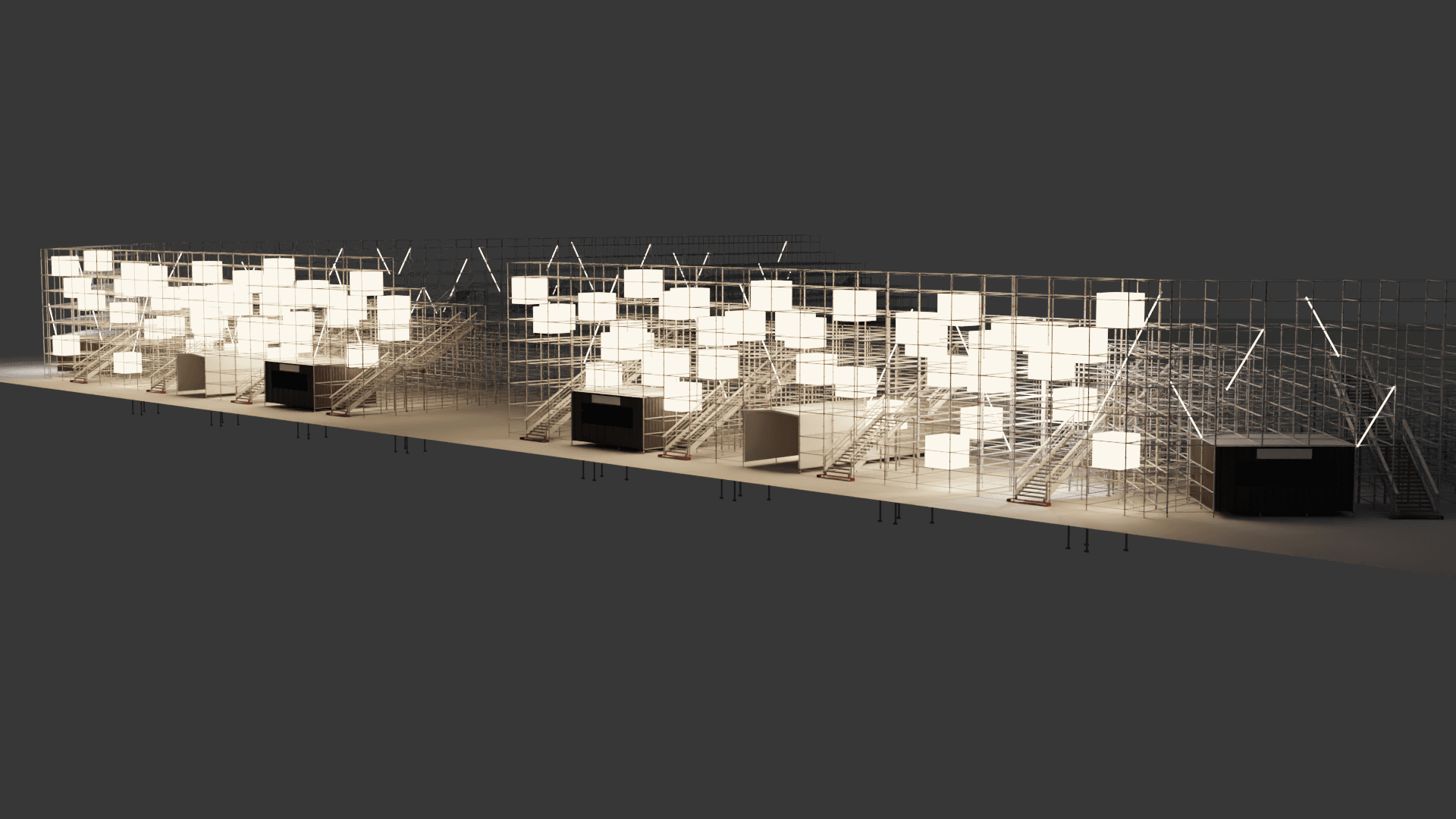
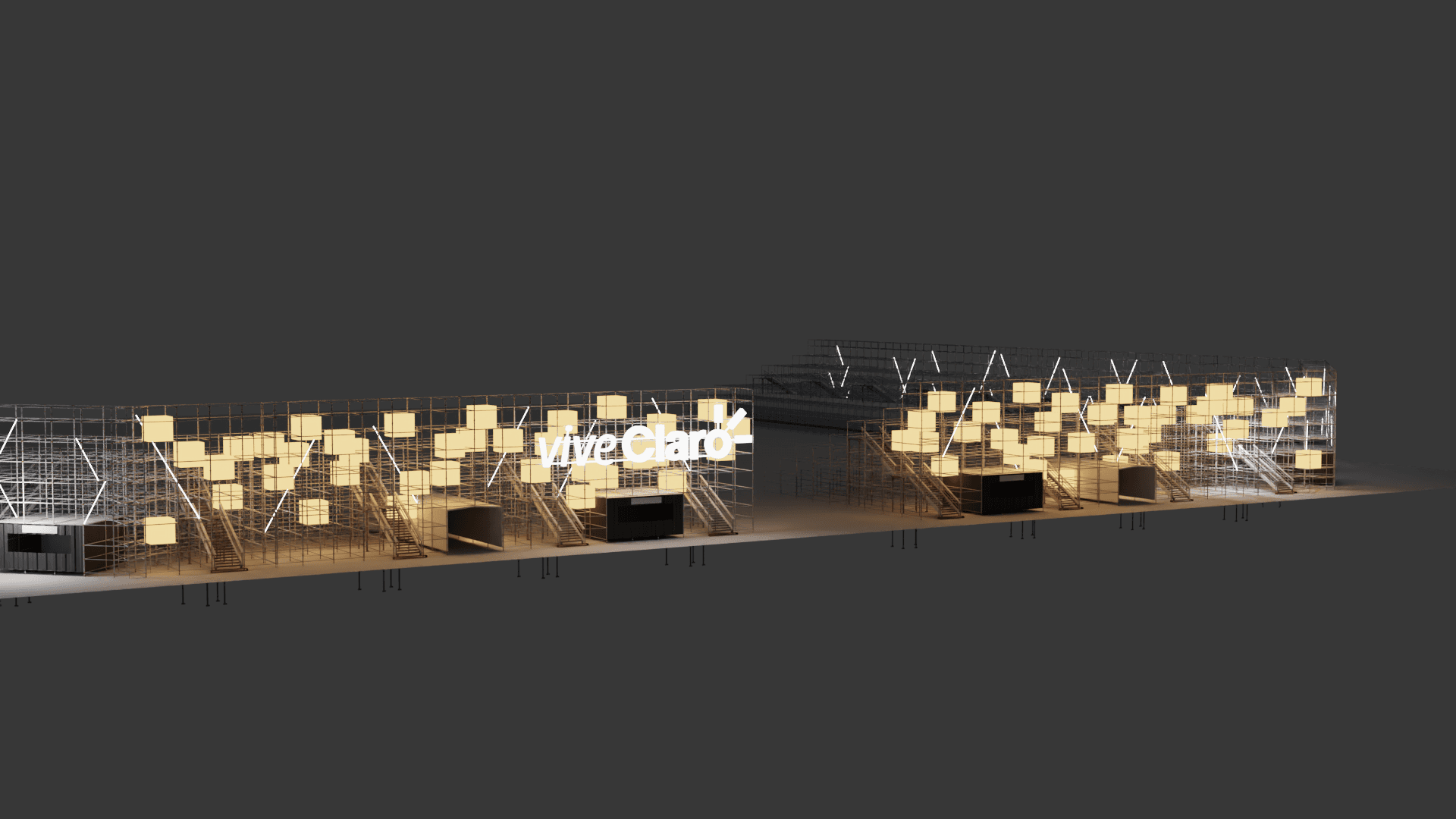
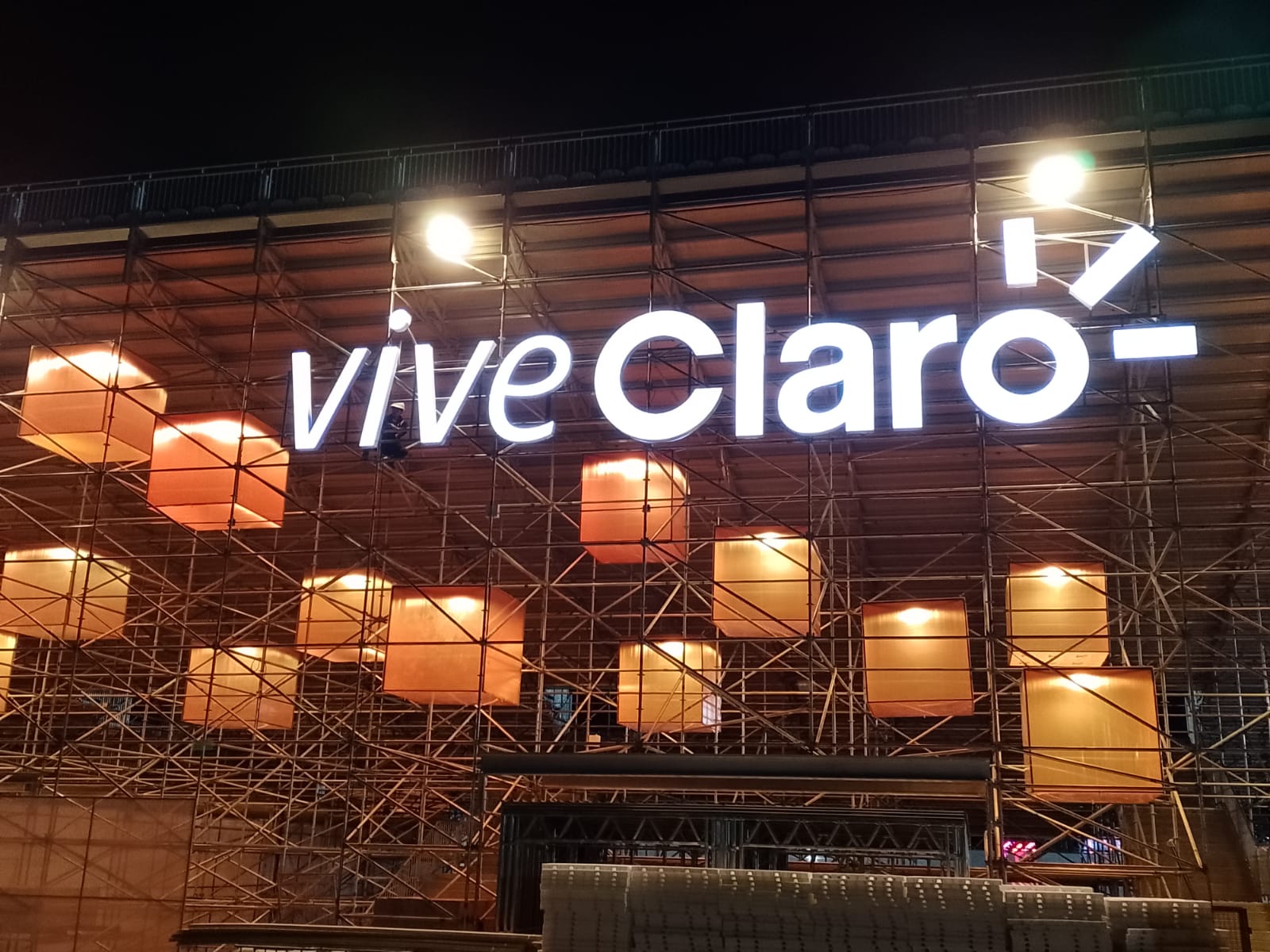
A second layer of the project was the design of a lighting cube system placed inside the empty spaces of the scaffolding structure. These cubes were intended to fill the voids inside the grandstands with light and pattern, creating a visual experience for people entering the venue.
The cube system was also developed parametrically so the client could quickly review different densities, quantities, and patterns depending on budget, visual impact, or event needs.
Implementation
The final model became a flexible digital reconstruction of the venue, capable of representing the modular grandstand system and testing different lighting-cube configurations. The workflow helped connect architectural plans, event capacity, stage placement, and visual atmosphere in one editable system.
The lighting cubes were conceived as a dynamic layer inside the scaffolding: a modular installation that could react to music, change through the night, and transform the arrival experience of the venue.
Results
The project delivered a parametric model that made the venue easier to study, adapt, and communicate. Instead of having a static 3D model, the team had a system that could respond to changes in stage location, capacity, structure, and lighting density.
It also created a visual strategy for turning the scaffolding structure into part of the experience. The lighting cubes transformed empty structural gaps into an interactive atmosphere, giving the venue a more memorable identity from the moment people entered.
Image courtesy of: NUSSLI