Biodiversity Festival - Urban Plan & Modular Stands
Client:
La Gallina de Oro
Industry:
Festival Design / Urban Activation / Brand Experience
Start:
End:
Duration:
3 months
Read time:
4 min
This project was developed for La Gallina de Oro for the Biodiversity Festival in Cali, Colombia. The festival celebrated Colombia’s natural and cultural diversity while creating a space for local entrepreneurs and larger brands to showcase food, products, and activities.
My role had two main parts: supporting the festival’s general urban plan for permits and contingencies, and designing a low-budget modular stand system for participating brands.
Starting point
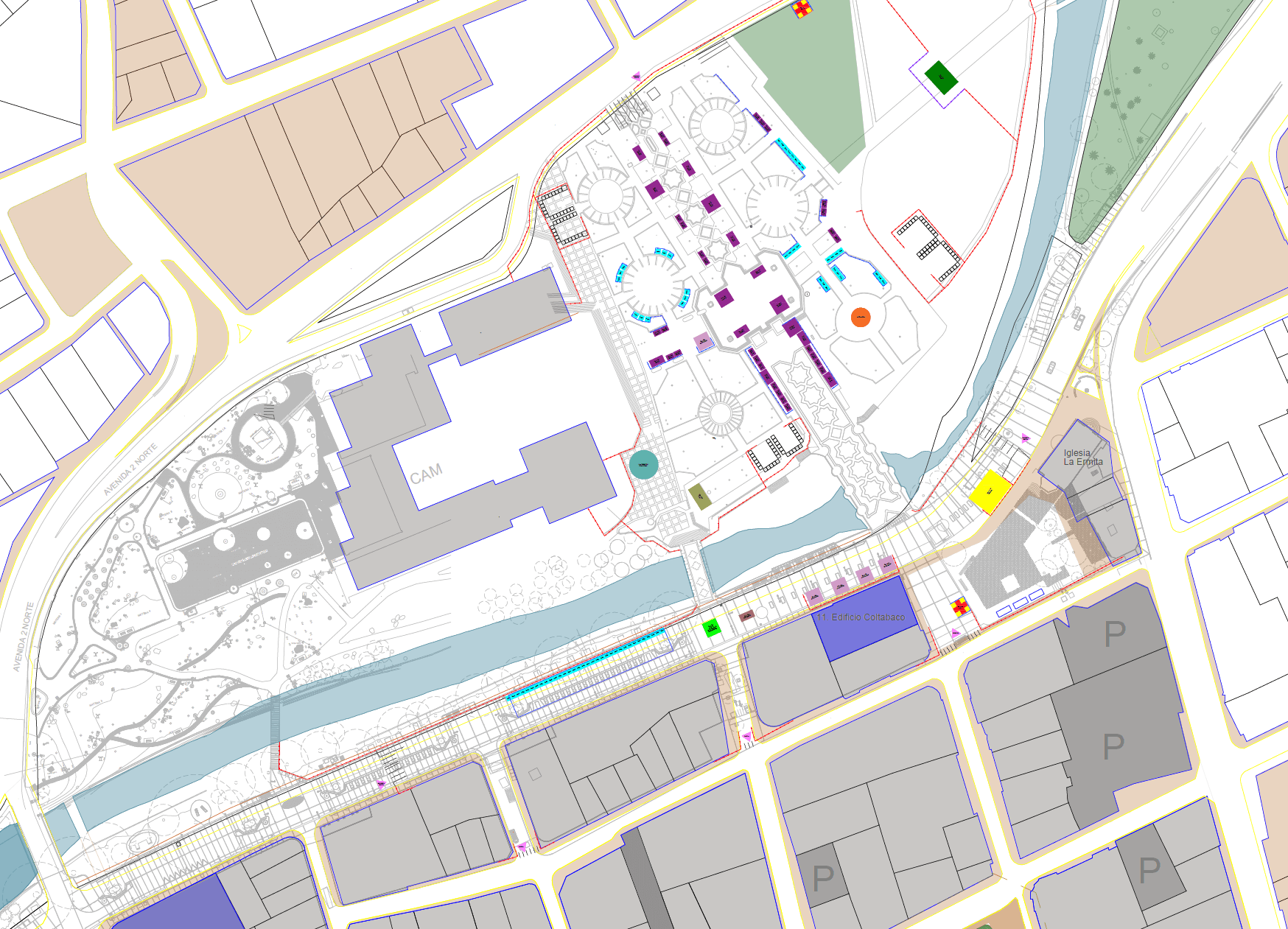
The project needed a clear urban layout to support permit approvals and festival organization. Although my main profile is not urban planning, this plan was necessary to define circulation, placement, access, and contingency logic for the event.
The second challenge was more directly connected to my work as a computational designer: creating flexible stands that could adapt to different brand needs while staying affordable, easy to repeat, and aligned with the festival’s environmental values.
Problem solving
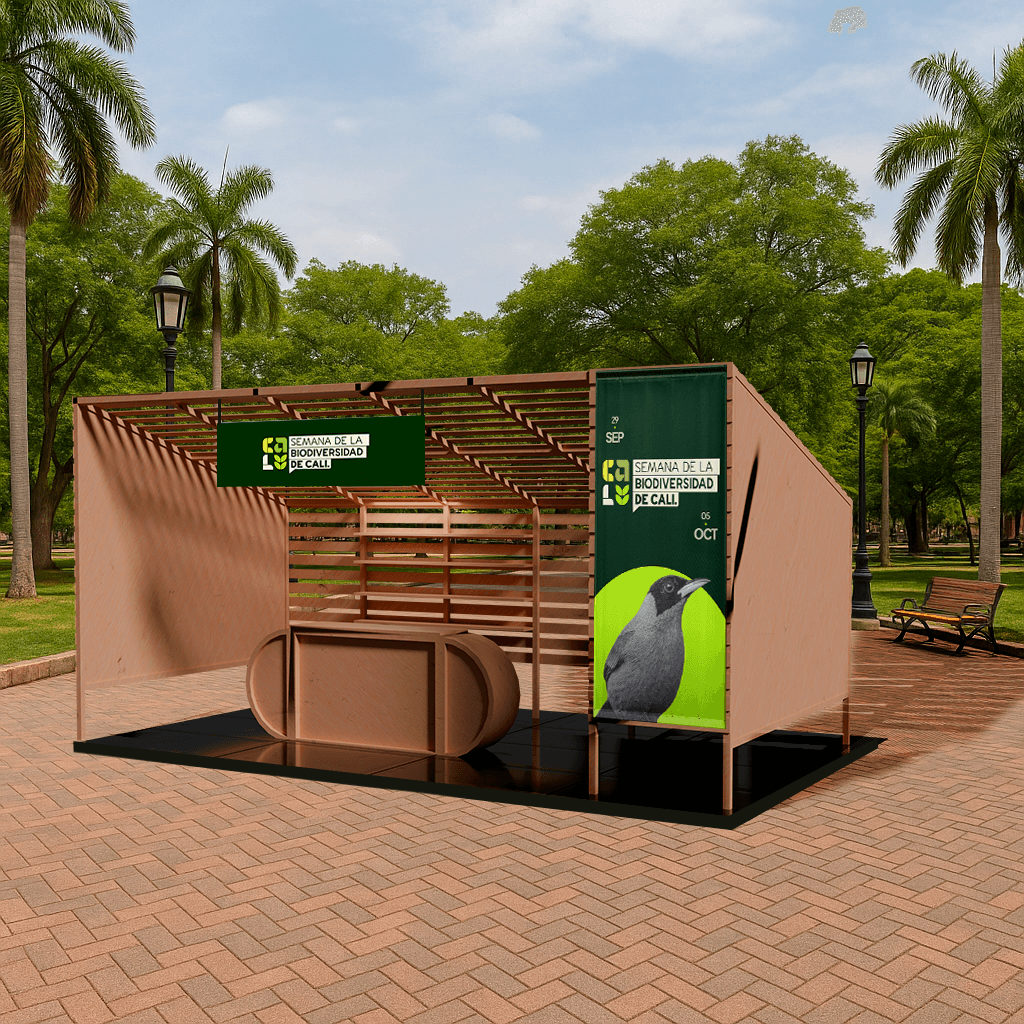
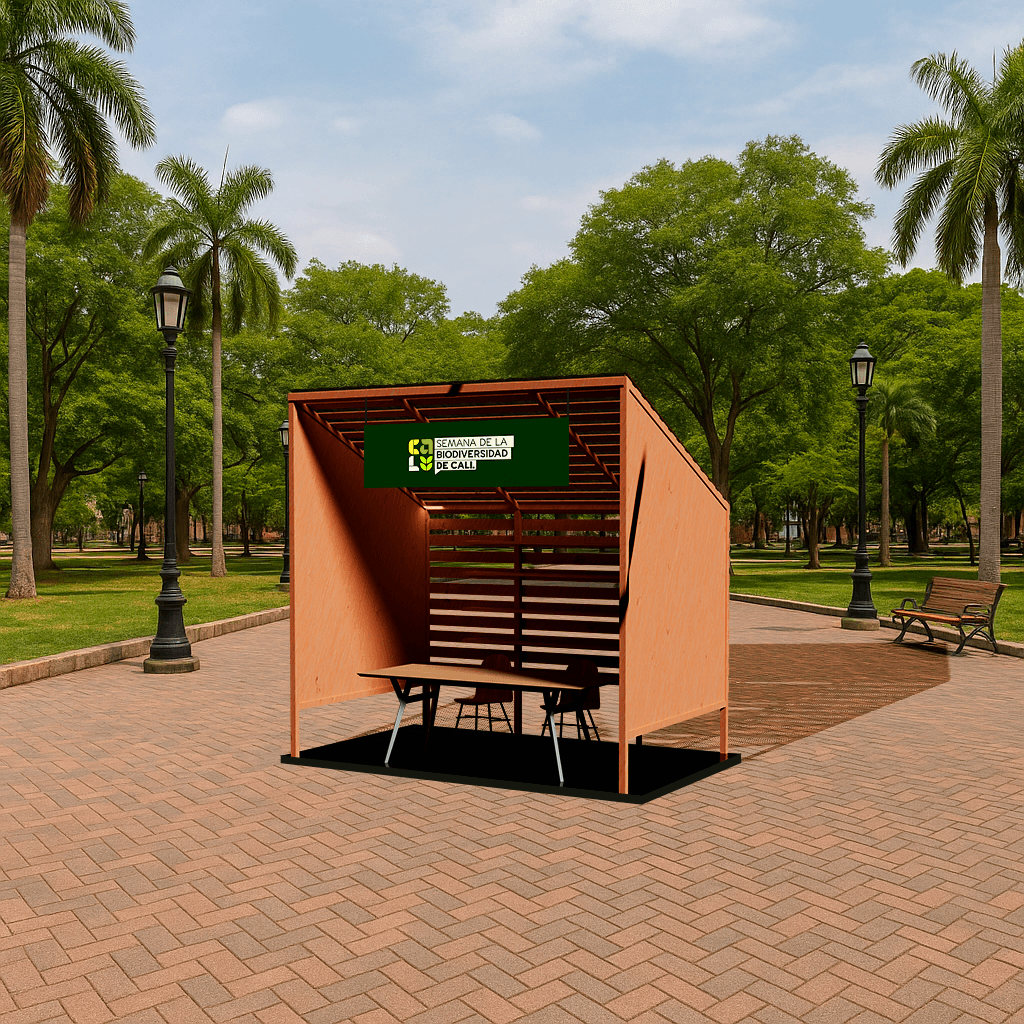
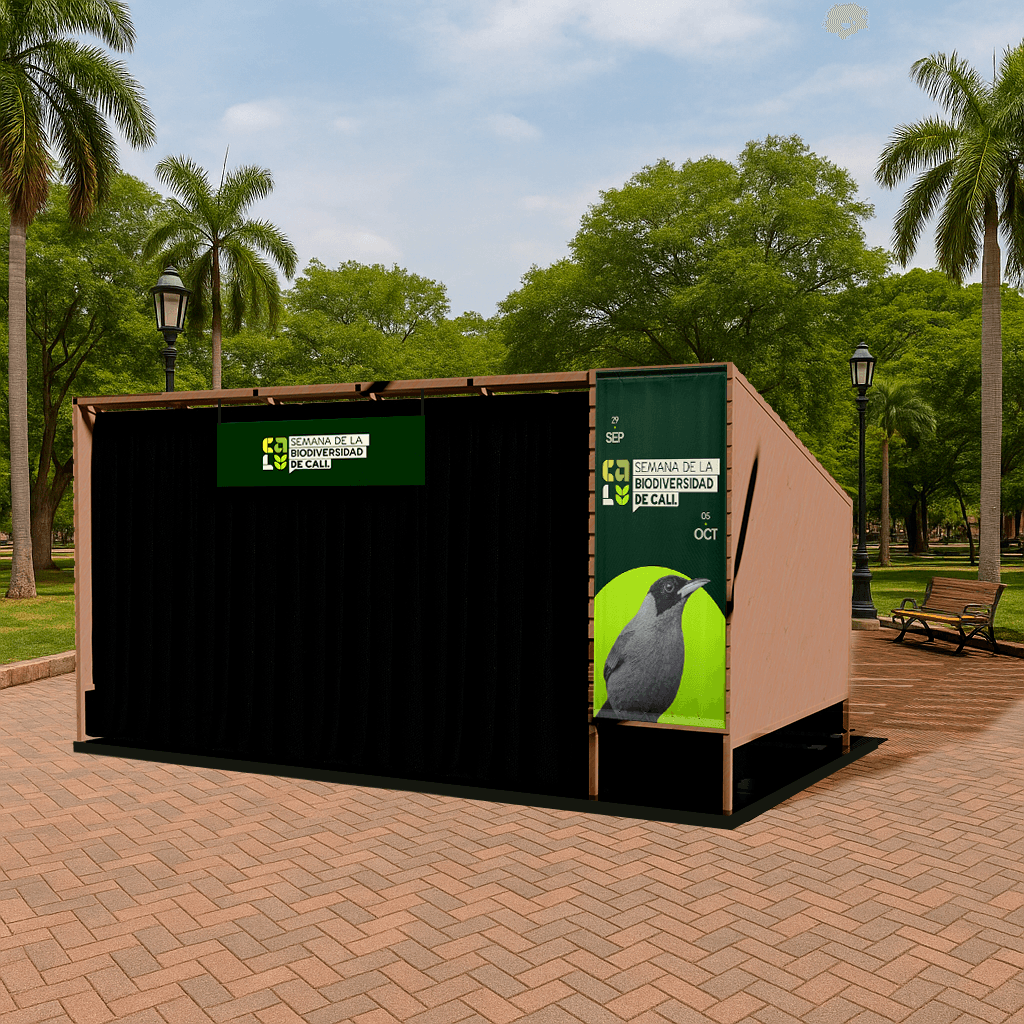
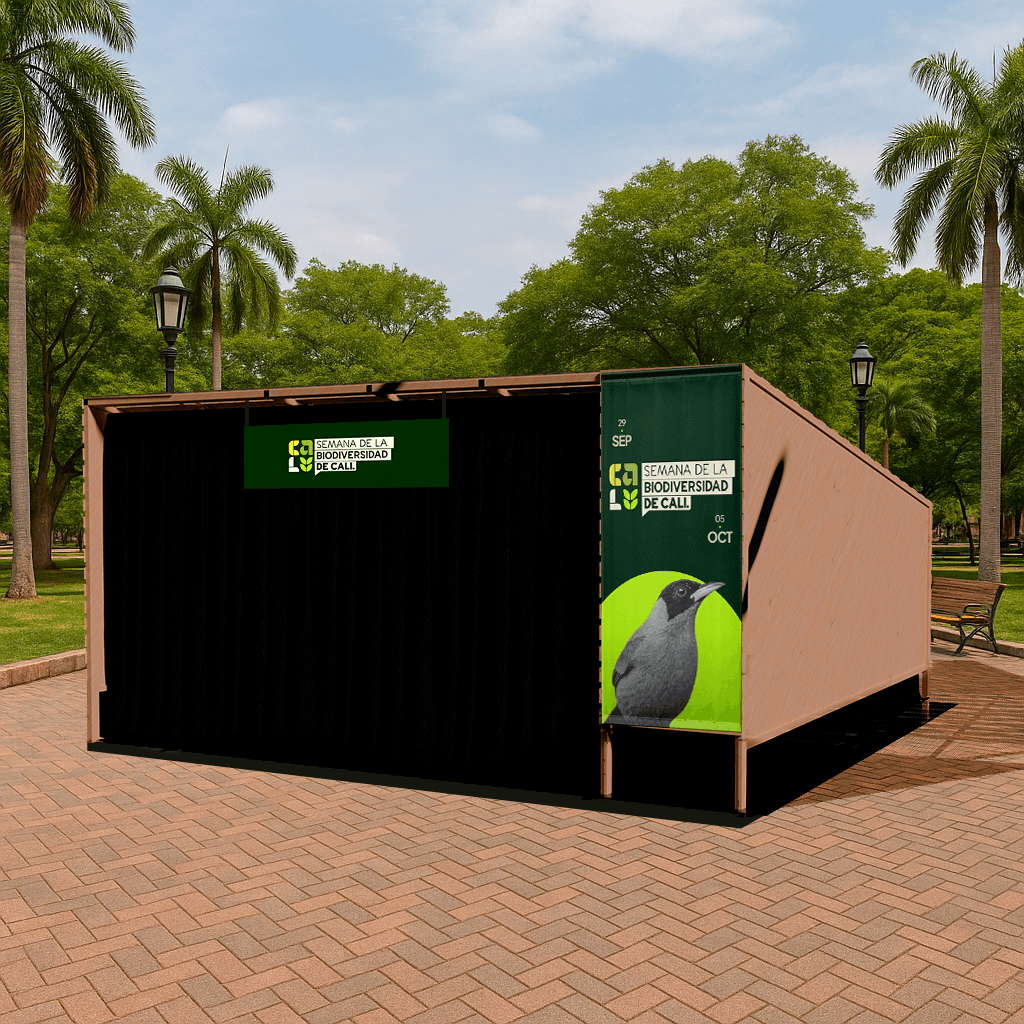
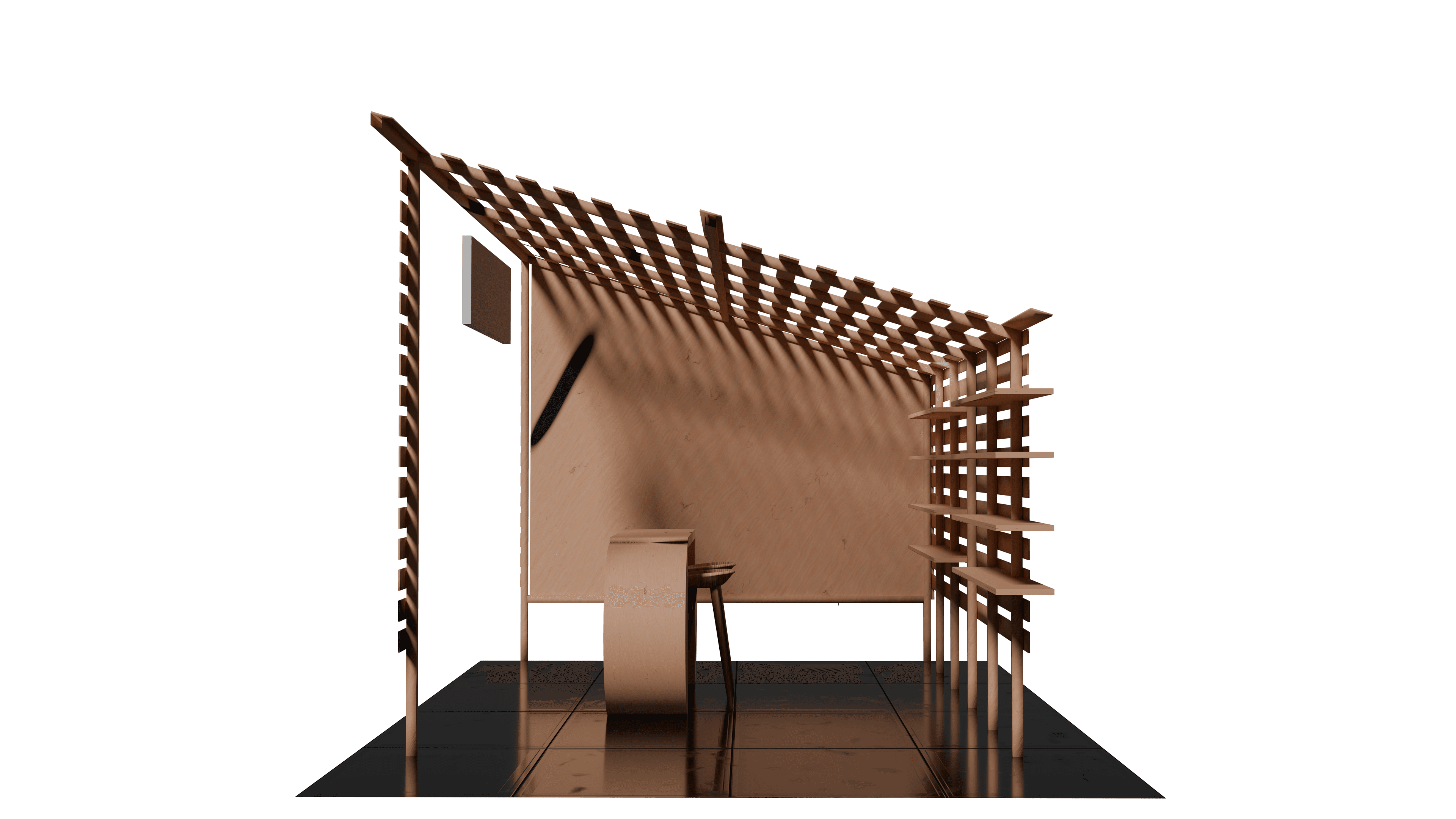
The stand system was developed around three possible sizes: 2 × 3 m, 3 × 6 m, and 6 × 6 m. Since the budget was limited, the design had to be simple, modular, and efficient, while still feeling connected to the festival’s brand book.
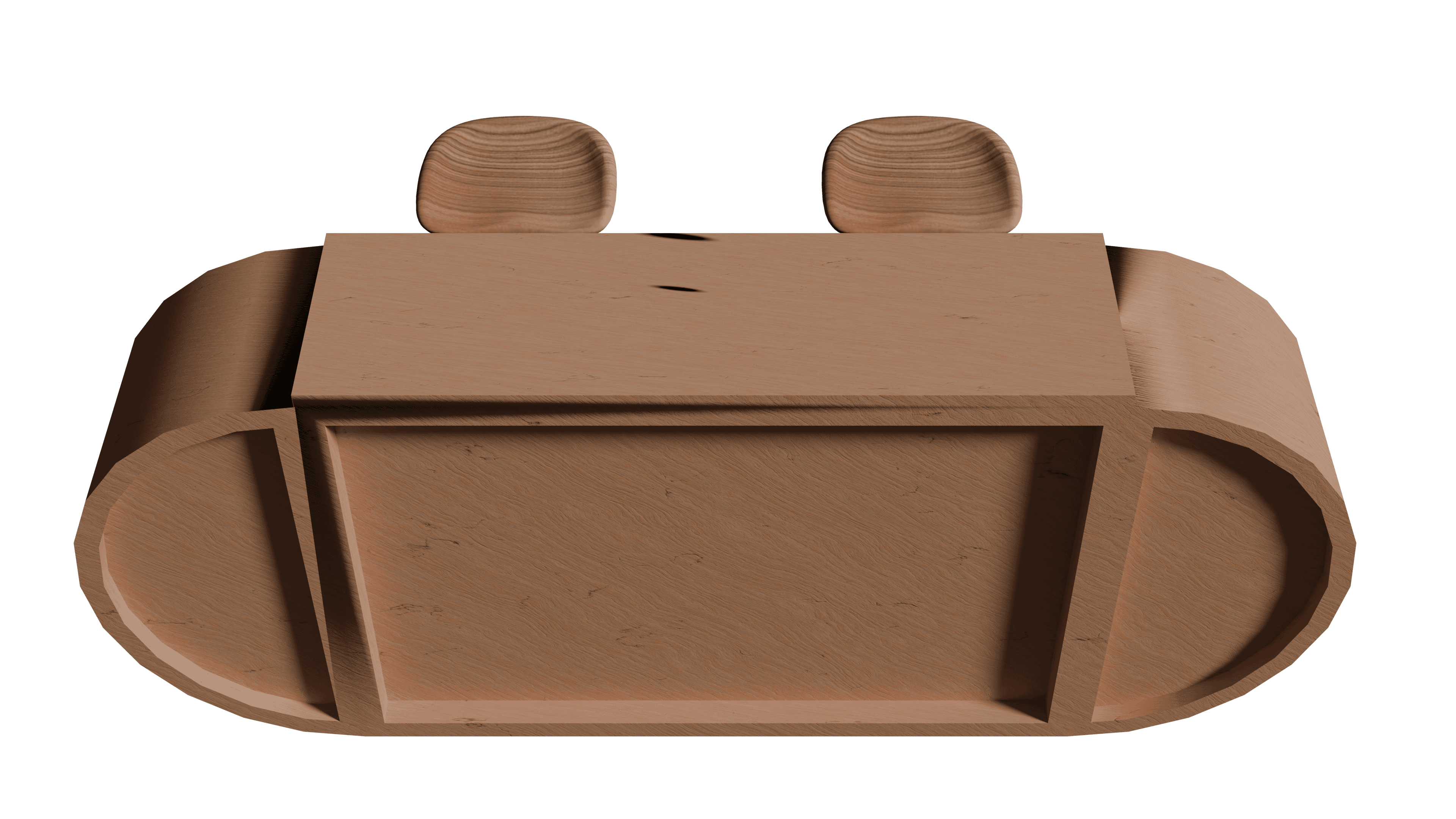
I created a parametric workflow to quickly test different configurations, proportions, and structural/visual variations across the three stand sizes. The goal was to make a system that could be repeated and adapted without redesigning each stand from zero.
The material direction focused on low-impact solutions, lightweight construction, and a visual language connected to biodiversity rather than heavy, disposable festival infrastructure.
Implementation
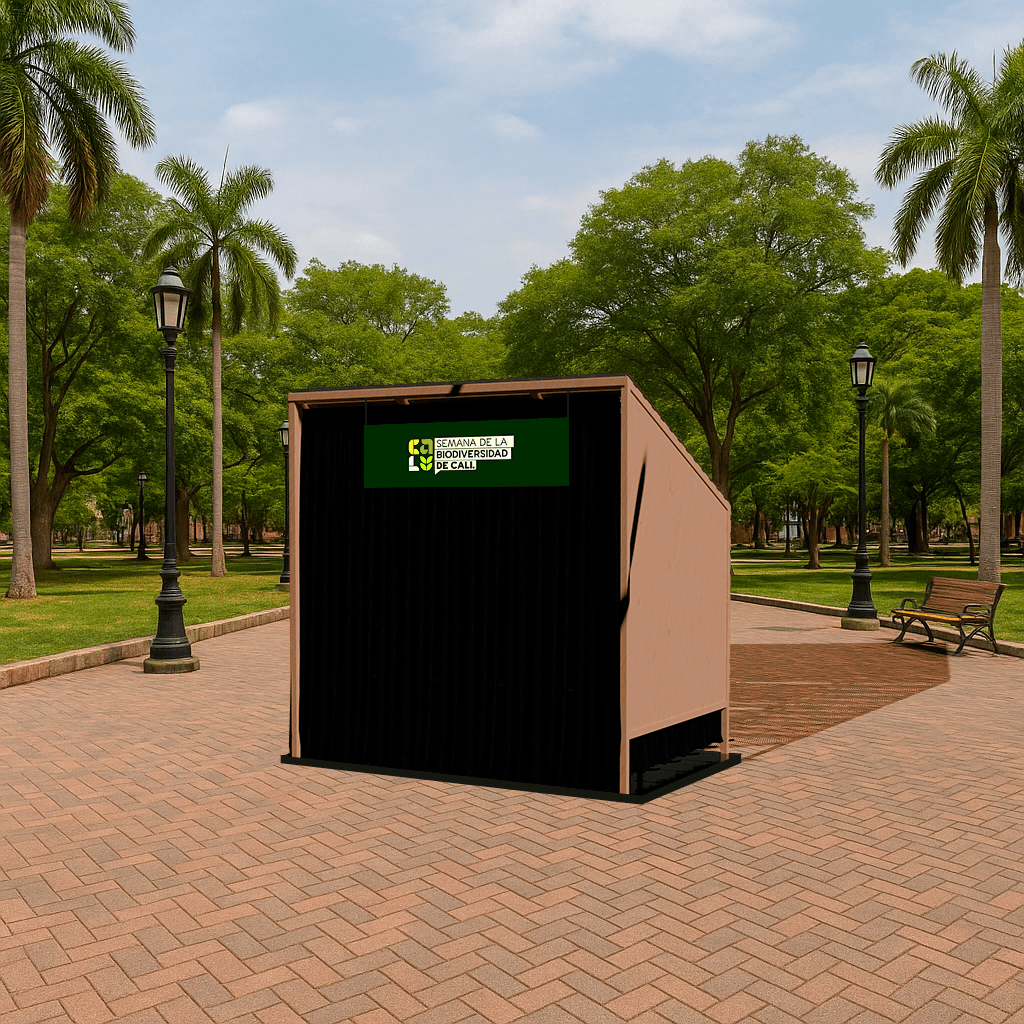
The final proposal included a general festival plan and a modular stand family that could support different types of participants, from small local entrepreneurs to larger brands. Each stand size followed the same design logic, making the system easier to produce, organize, and adapt on site.
The design balanced budget, identity, and environmental responsibility, using parametric thinking to make the process faster and more flexible.
Results
The project delivered a practical spatial system for a public festival with real logistical and budget constraints. The urban plan supported the event’s organization and permit process, while the modular stands created a flexible identity for the commercial and cultural activity of the festival.
It became a clear example of how computational design can help in real-world event production: not by making things more complex, but by making iteration, adaptation, and decision-making faster.