Mediateca M16
Client:
Bachelor Architecture Thesis
Industry:
Architecture / Urban Design / Computational Design
Start:
End:
Duration:
4 months
Read time:
4 min
Mediateca M16 was my final architecture bachelor thesis at Universidad de los Andes. The project imagined the 16th station of Bogotá’s future metro system as more than a transportation stop: a cultural node capable of activating its surroundings through learning, media, public space, and urban development.
For decades, Bogotá did not have a metro system, so the project worked from both a real urban need and an imaginative possibility. The proposal explored how a metro station could become a destination, not only a point of transit.
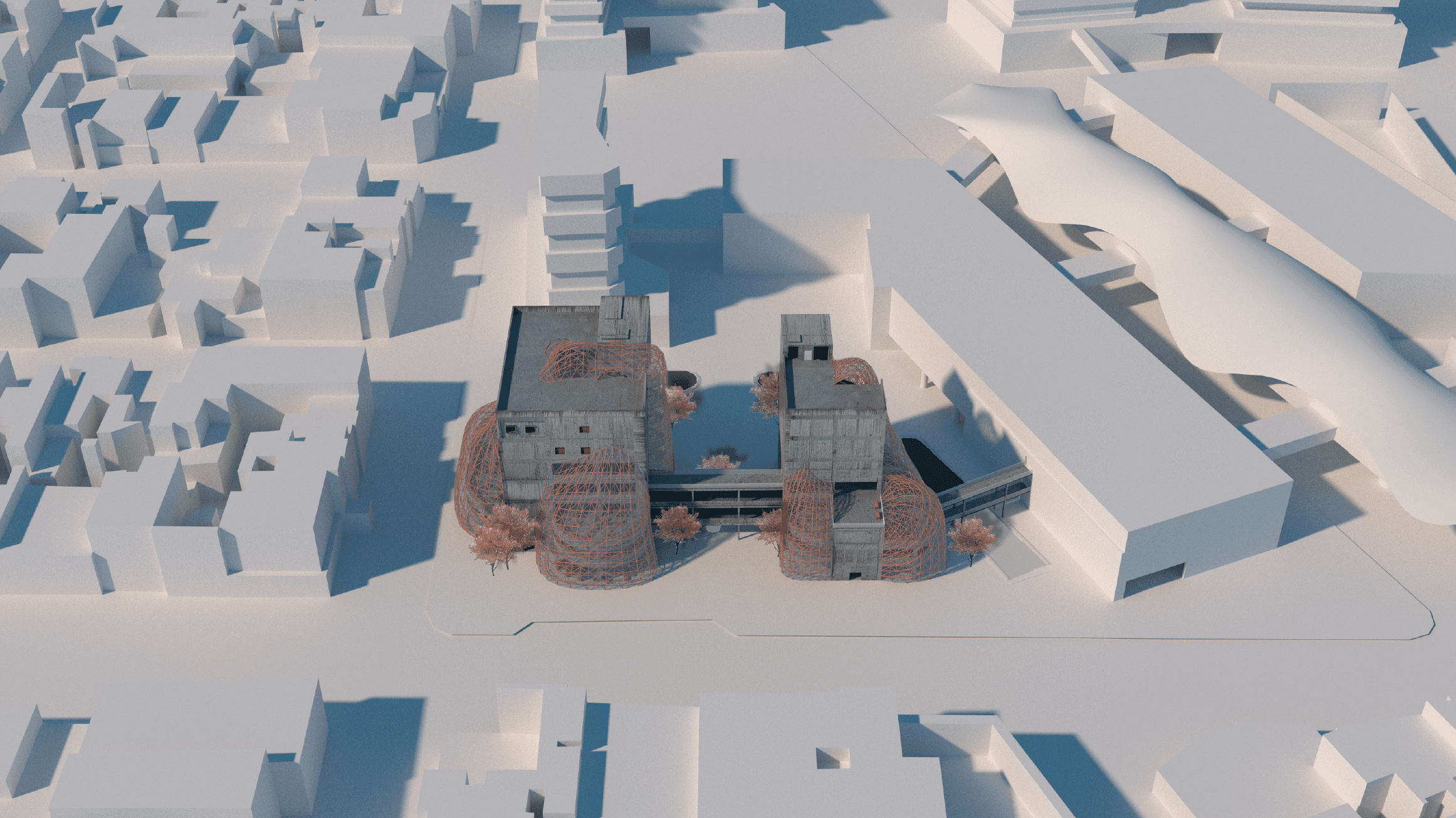
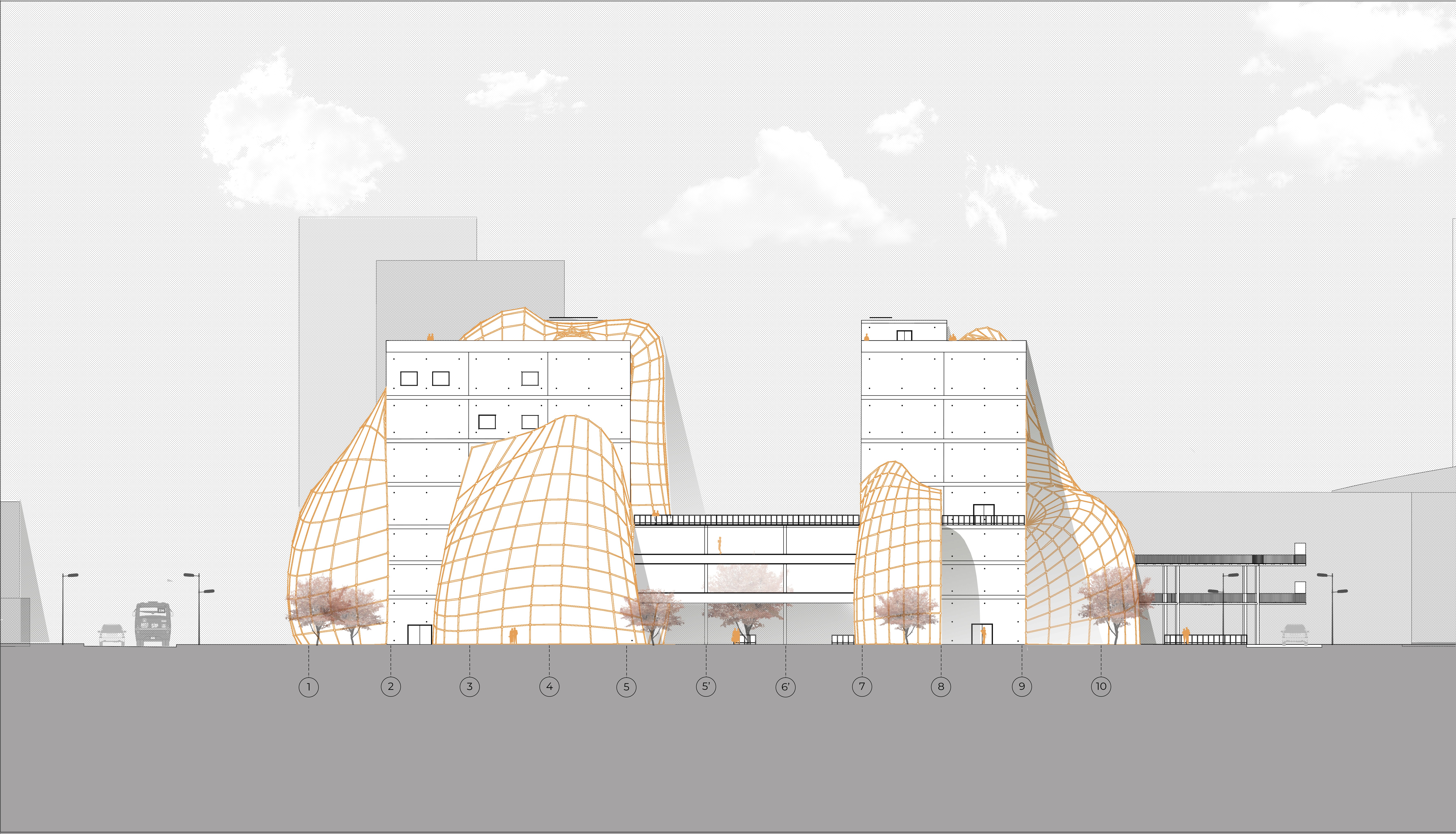
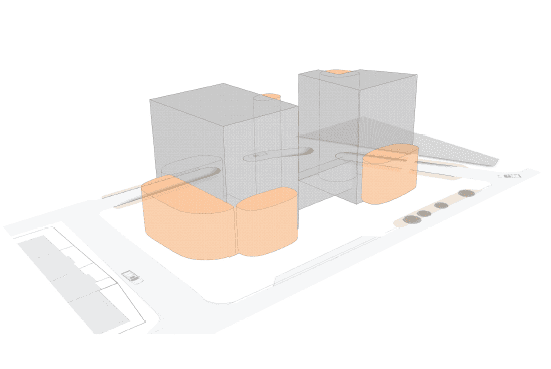
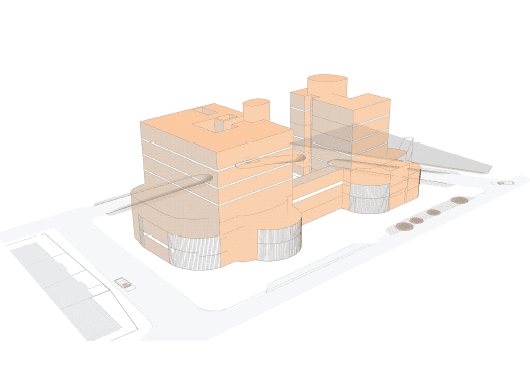
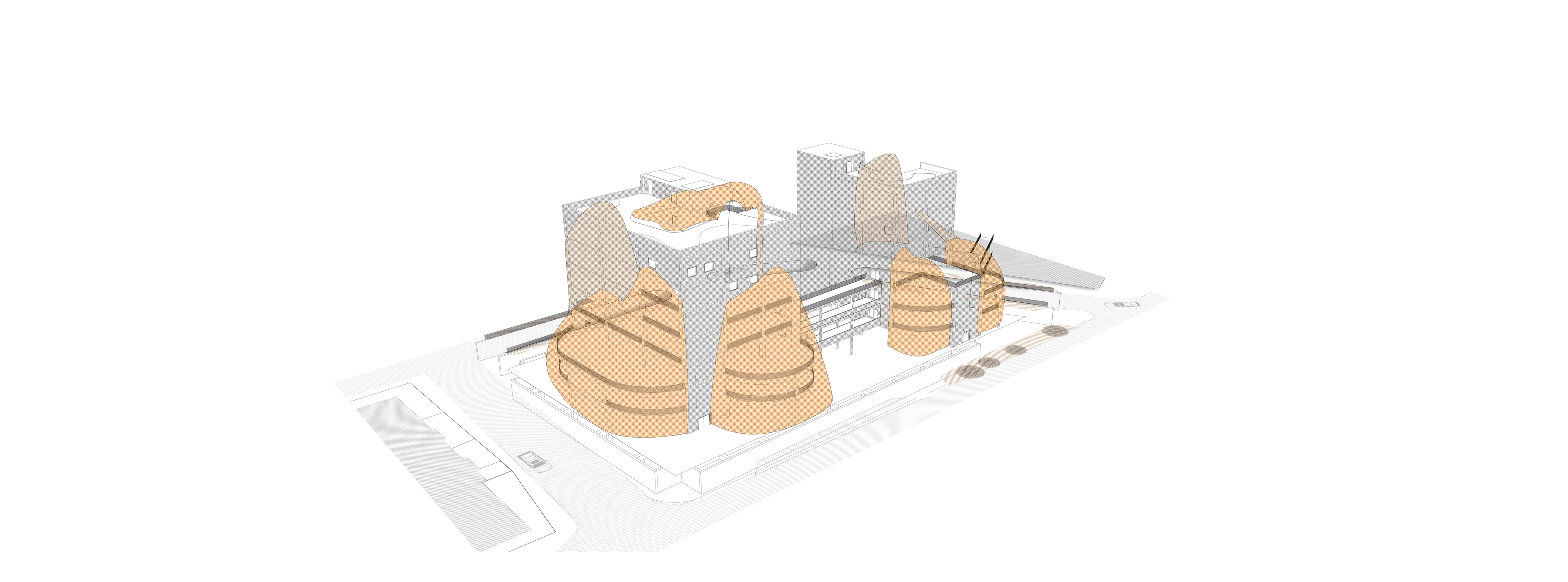
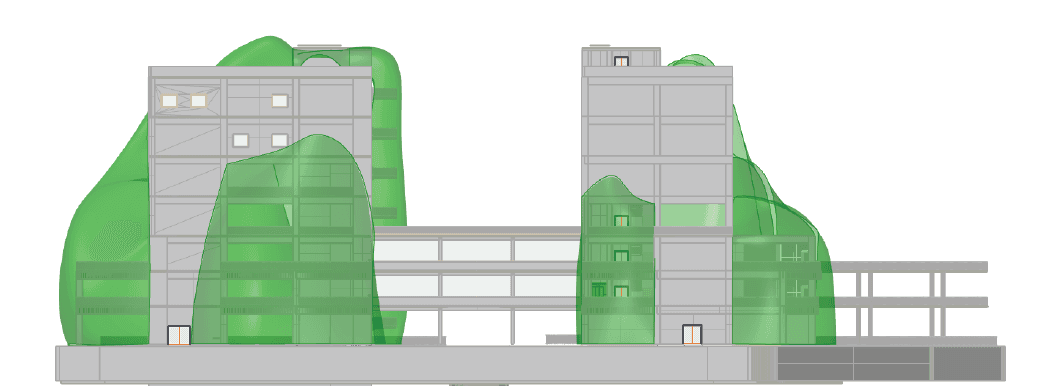
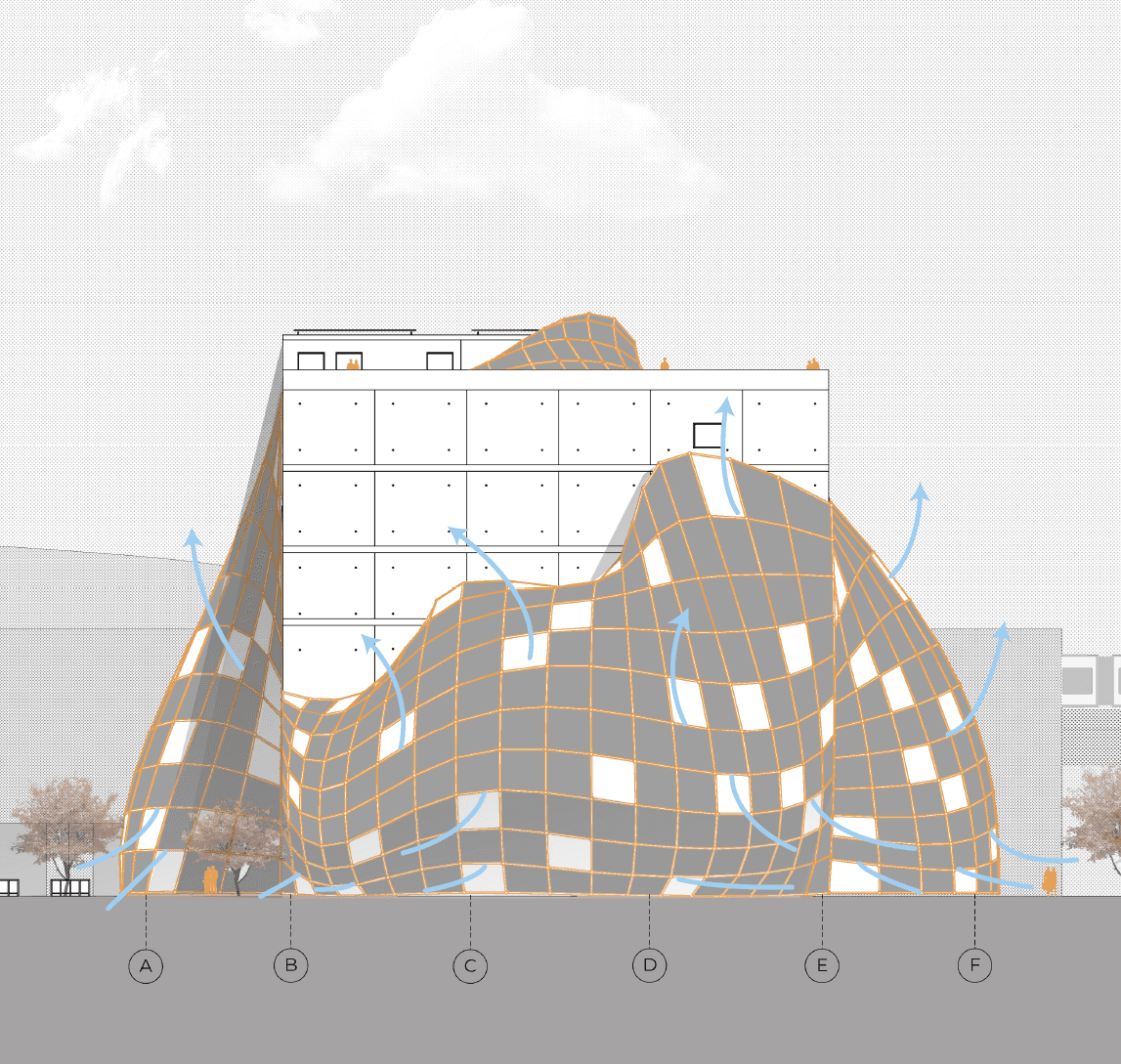
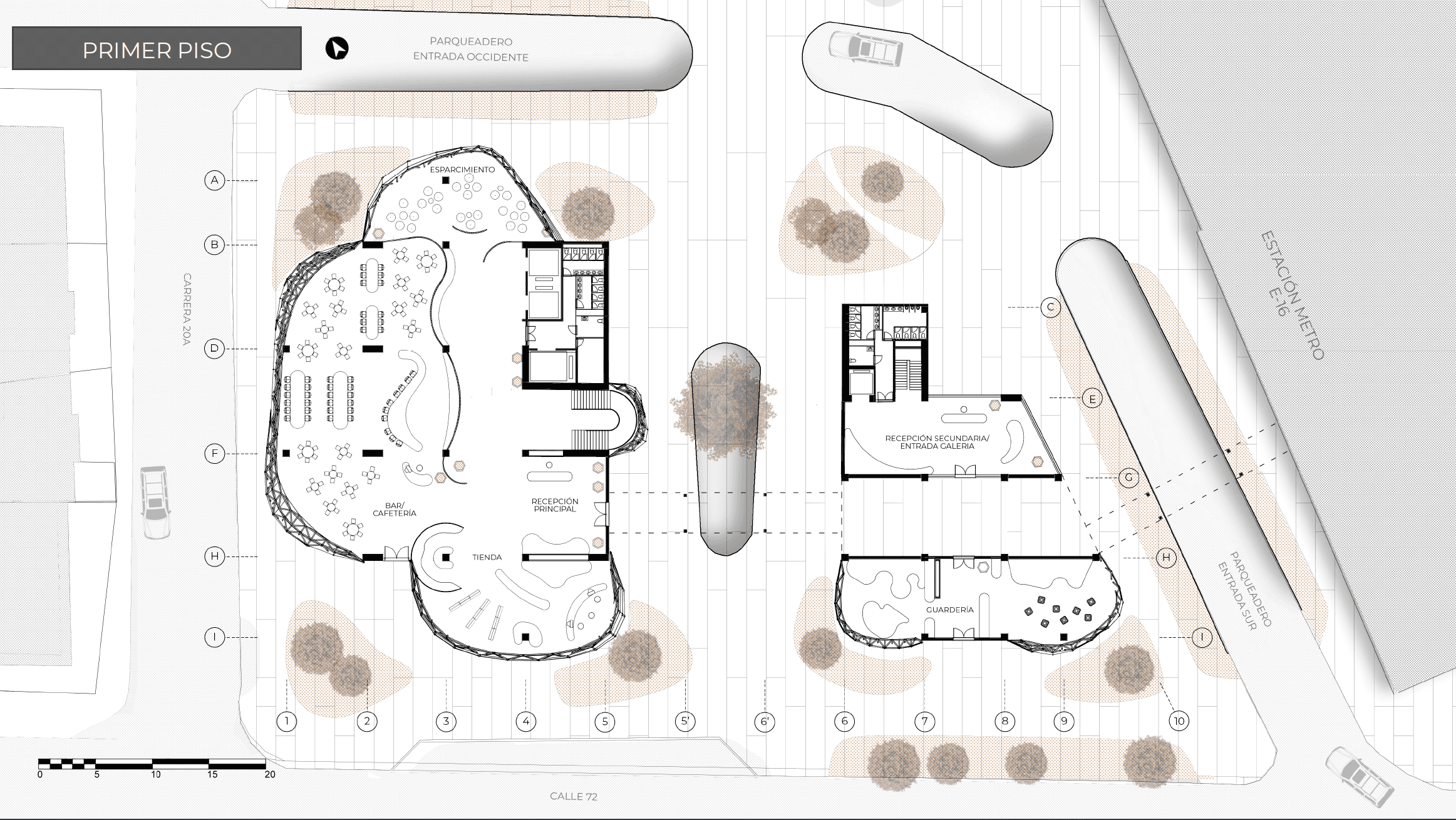
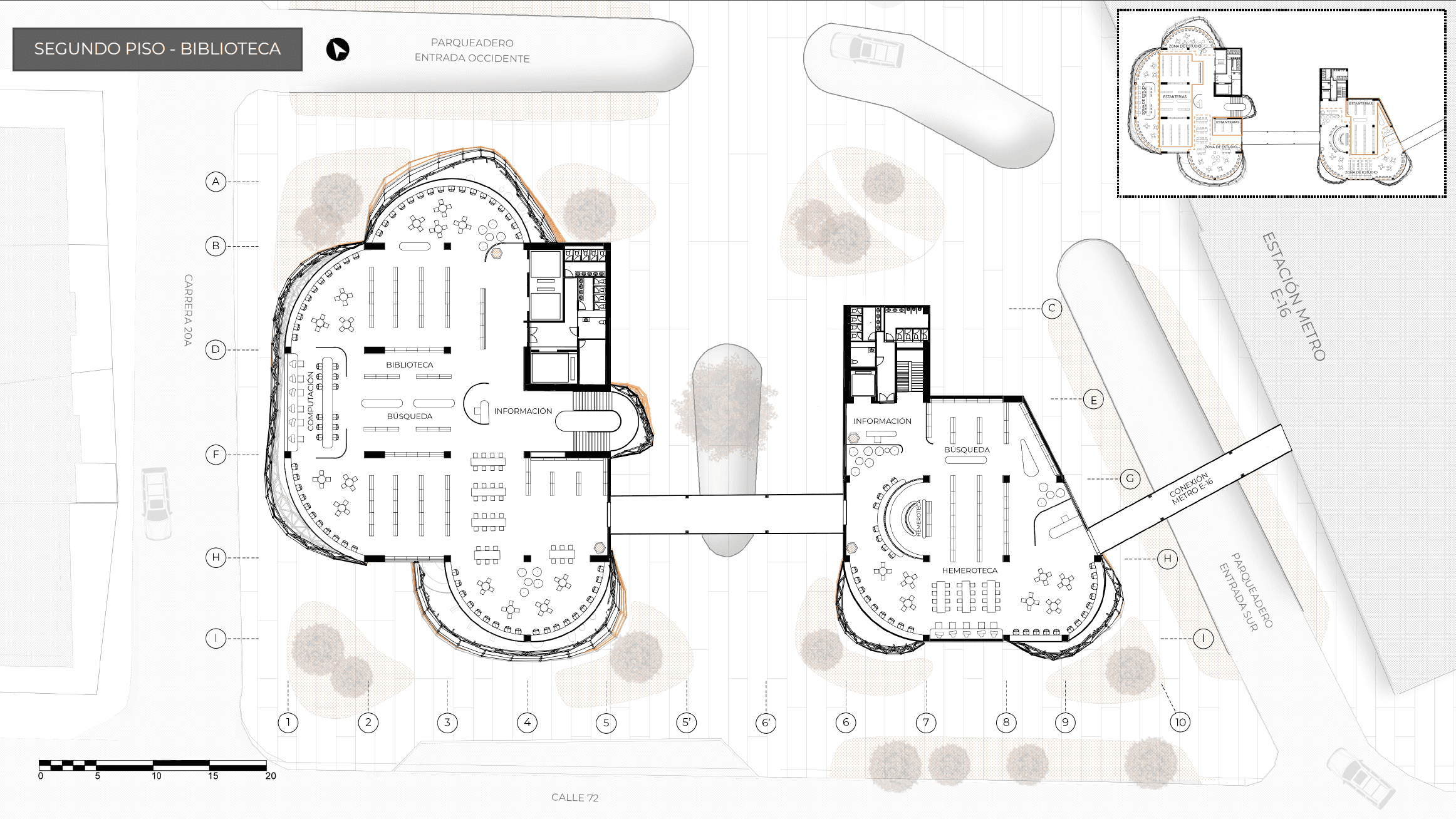
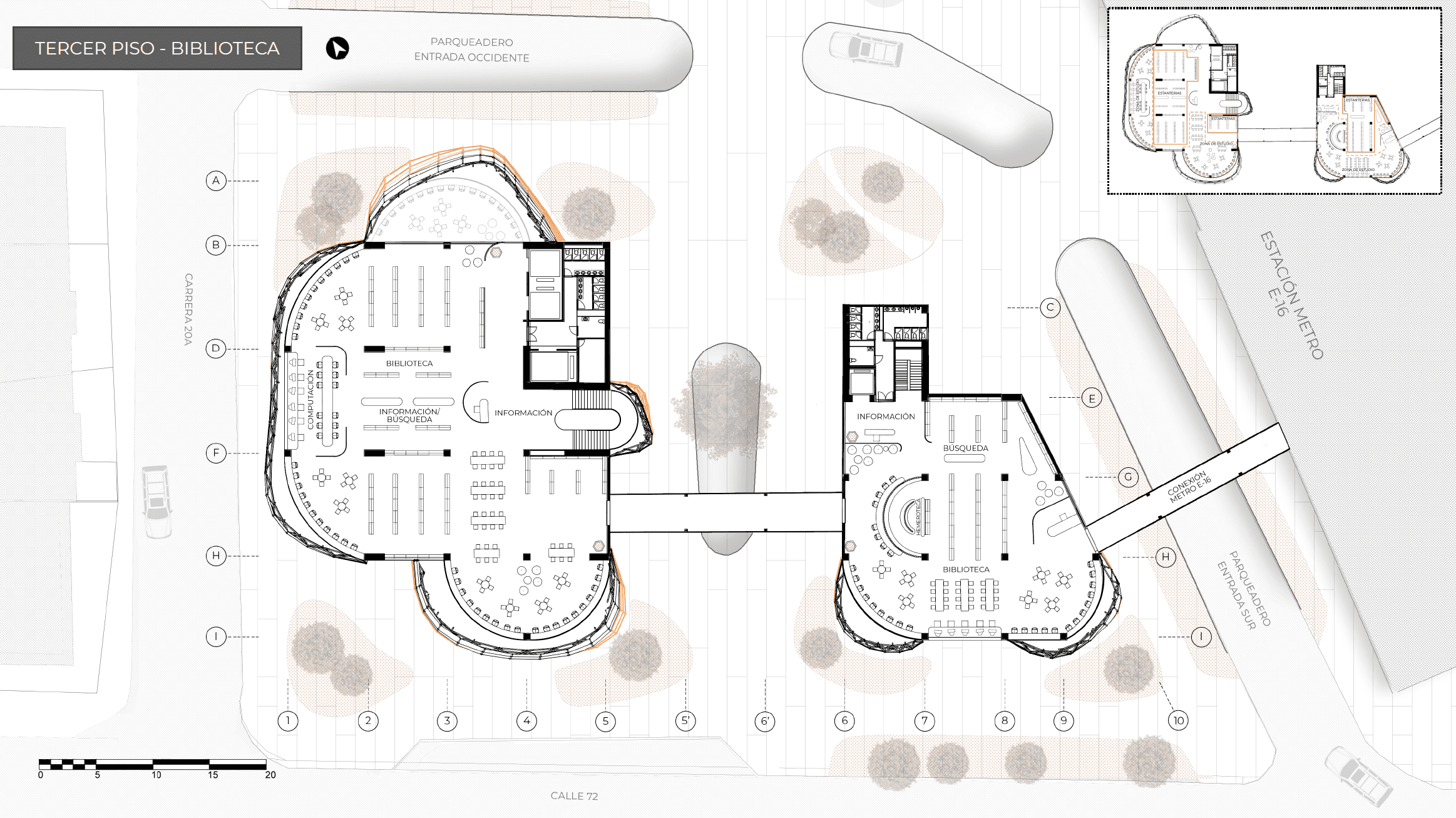
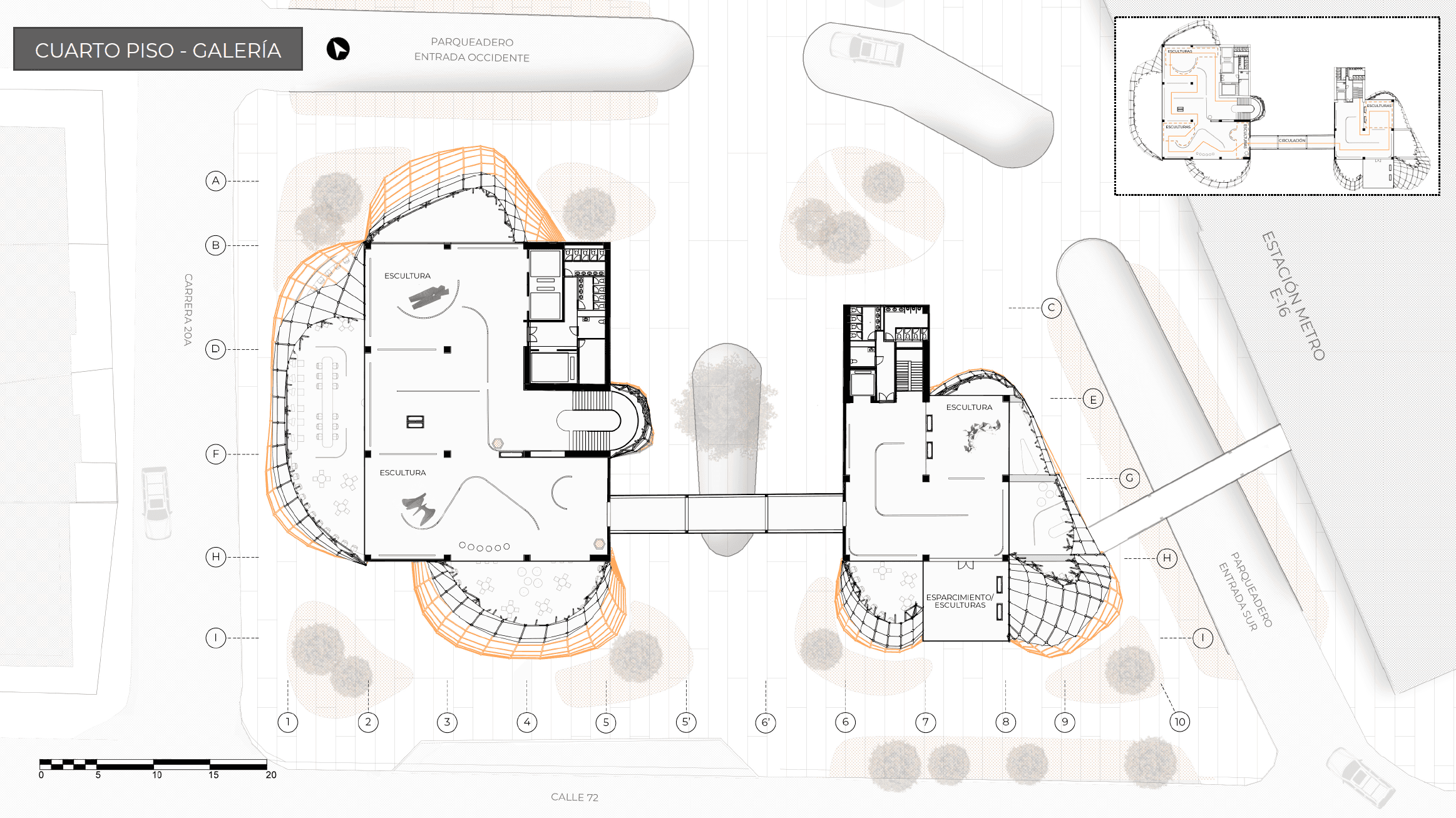
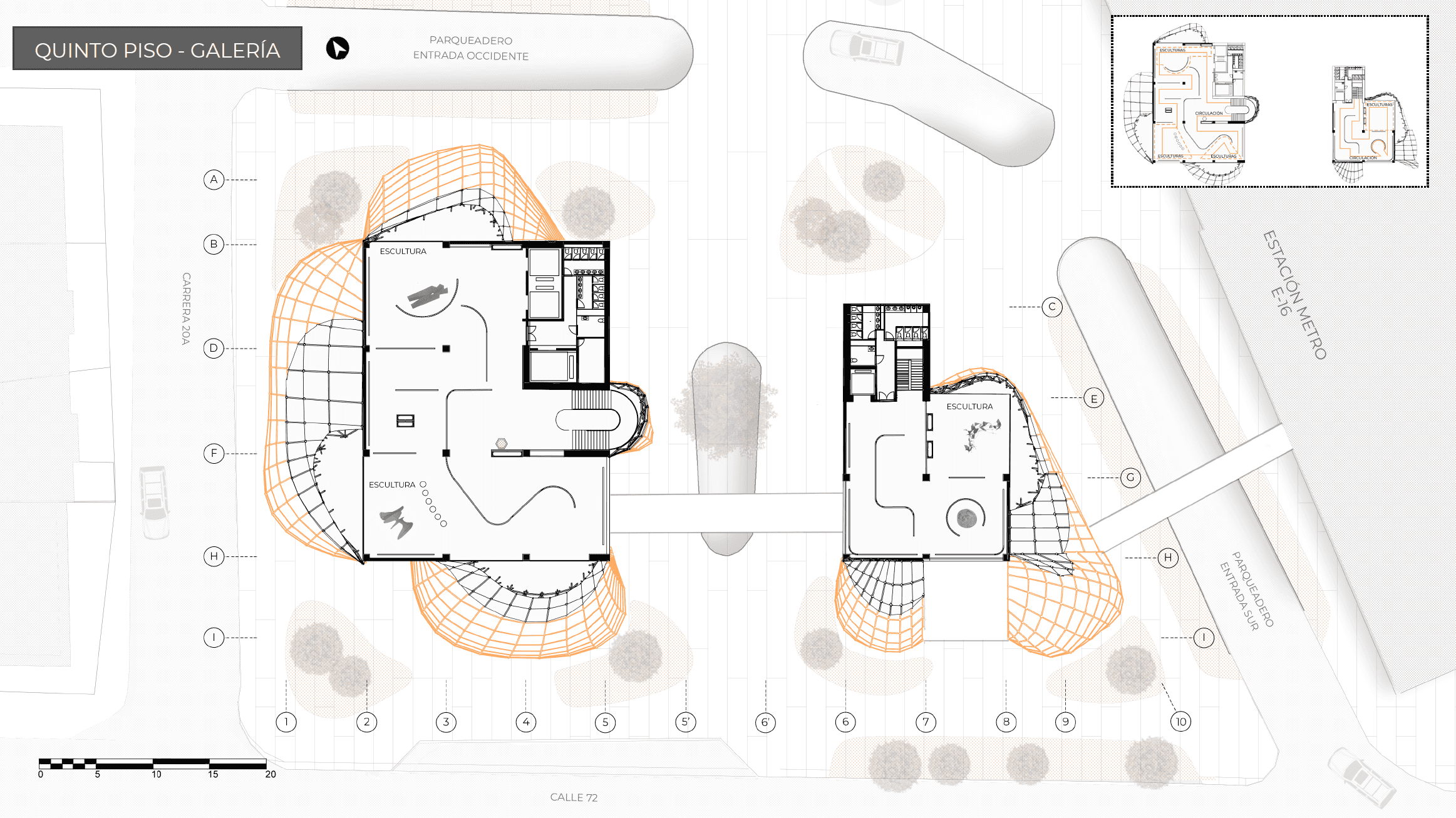
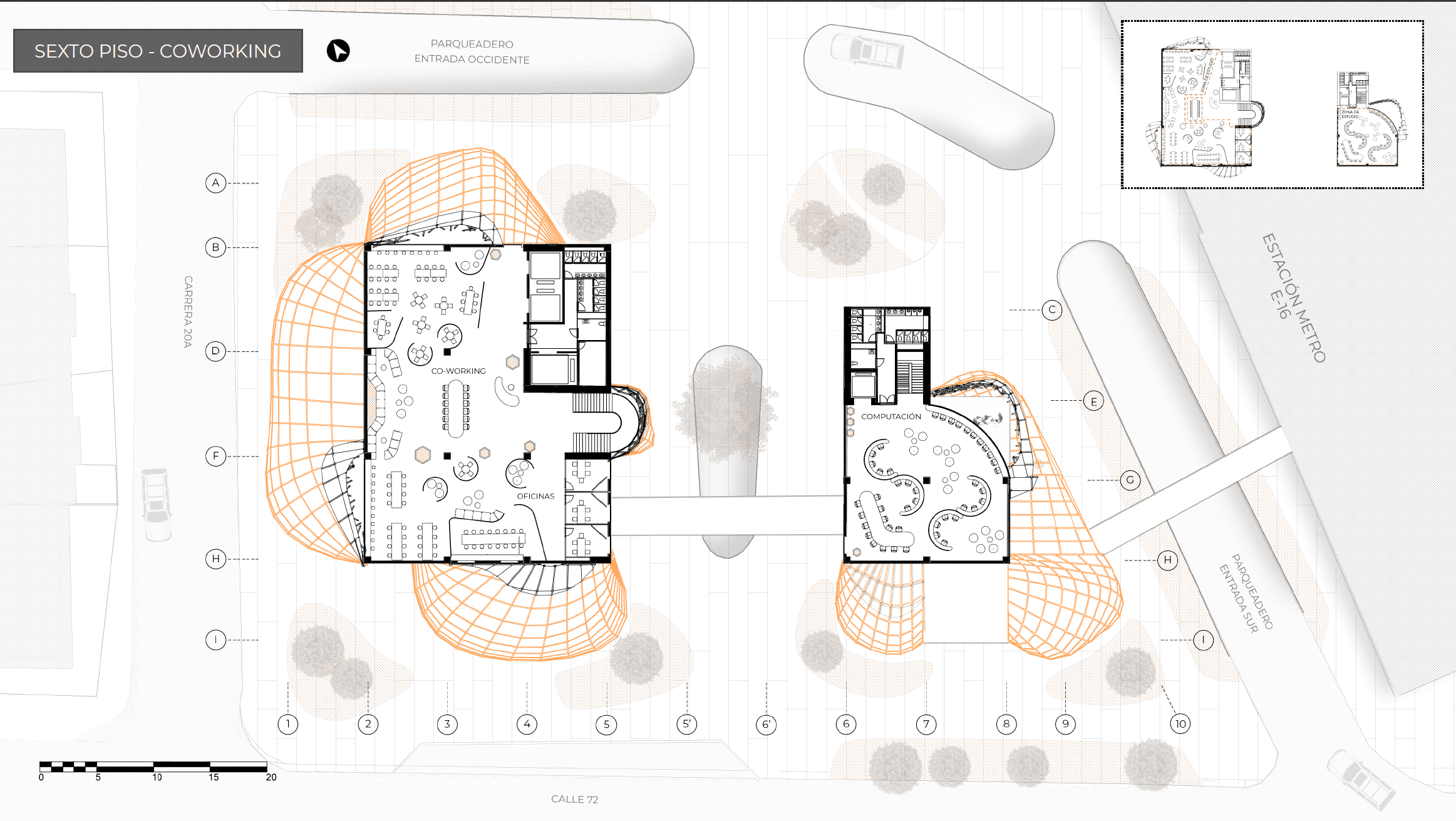
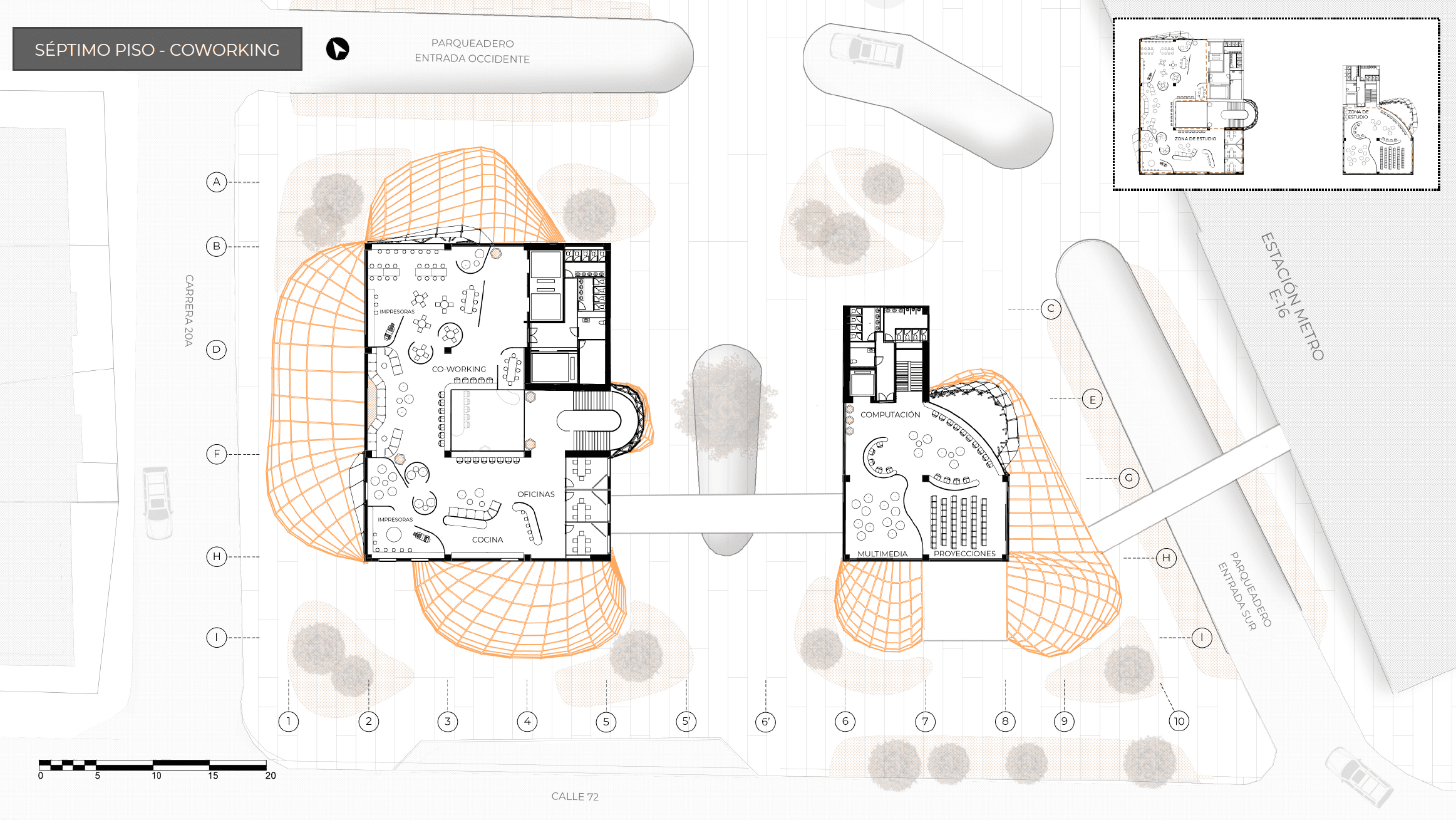
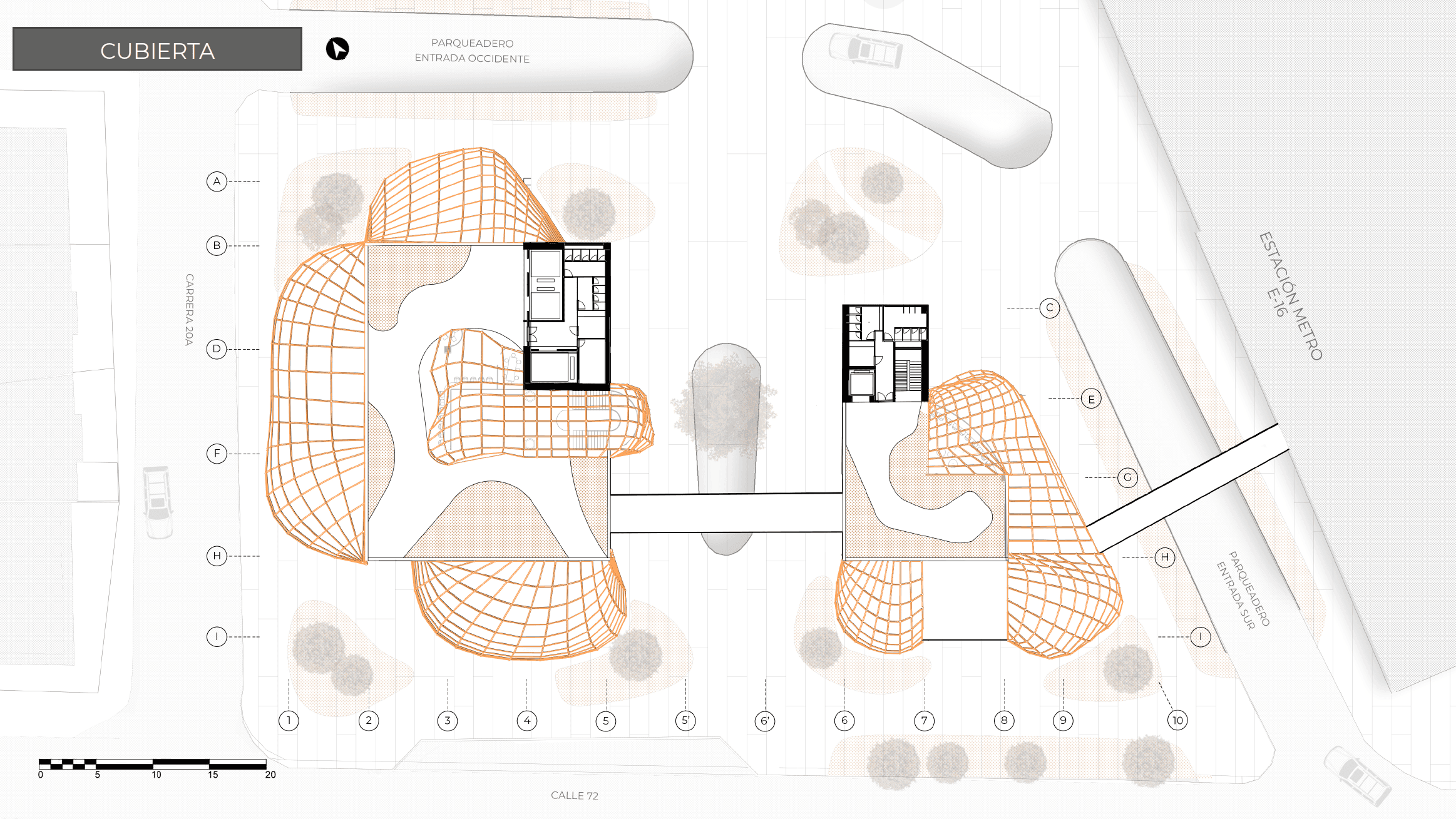
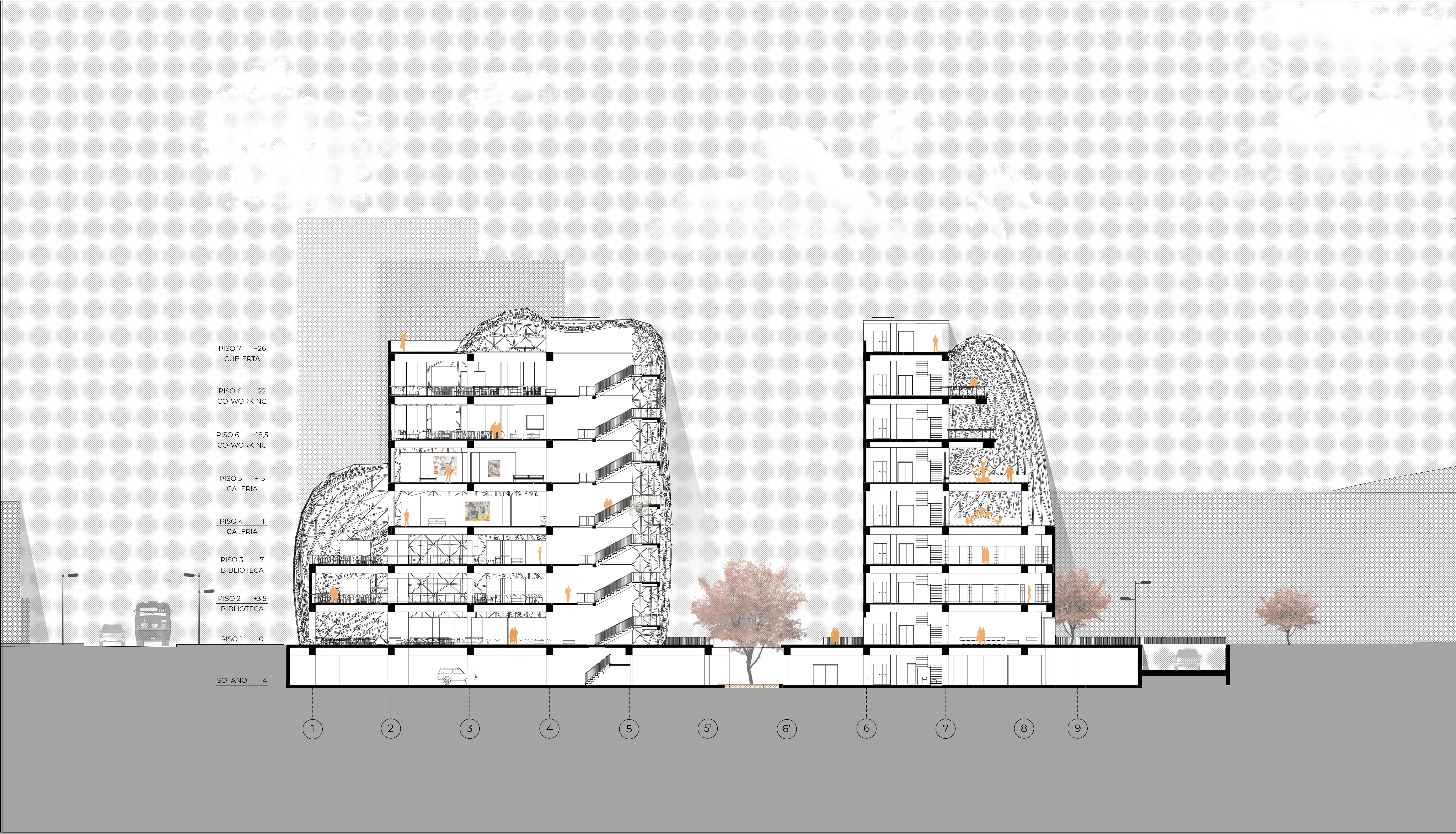
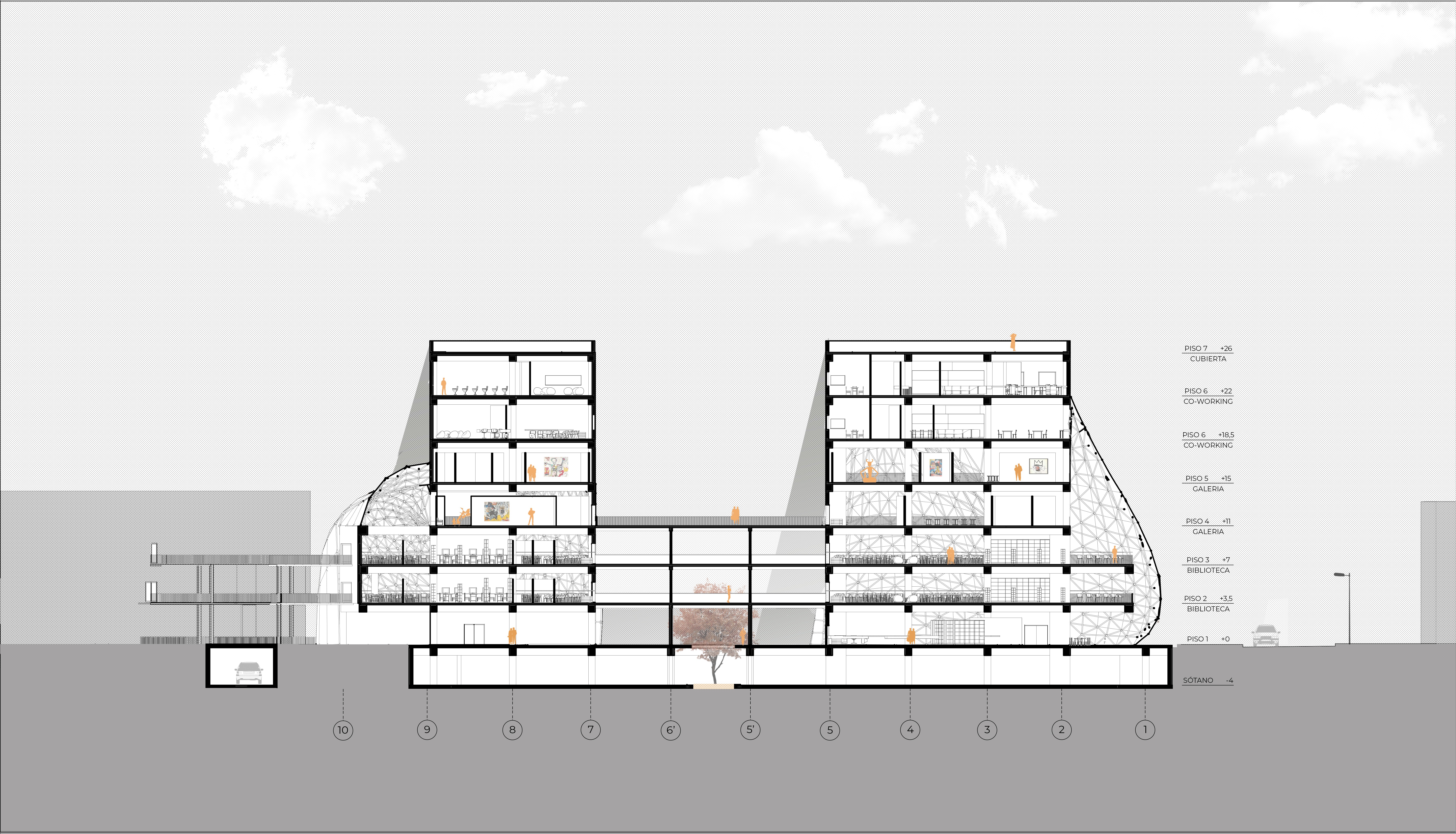
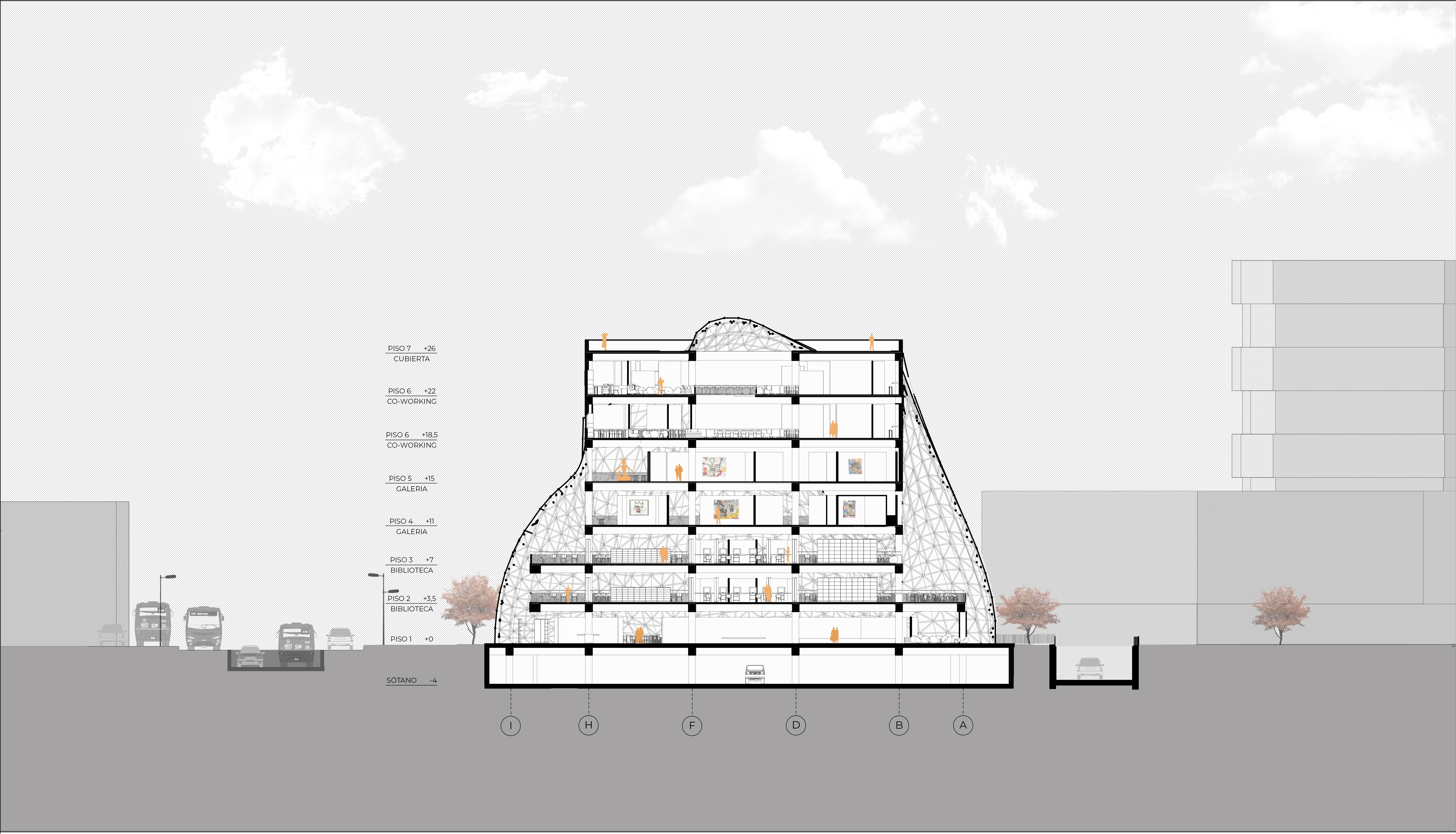
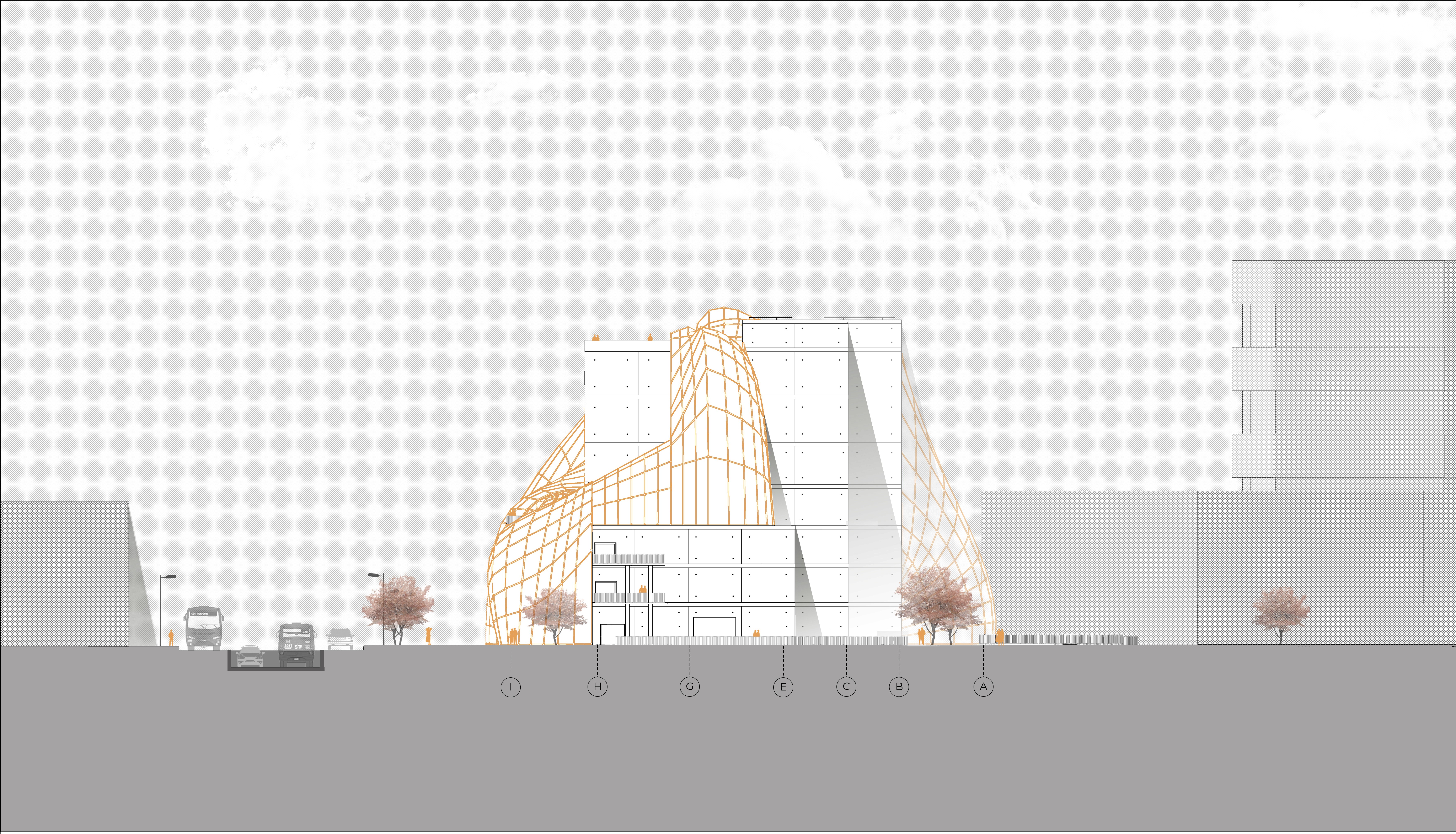
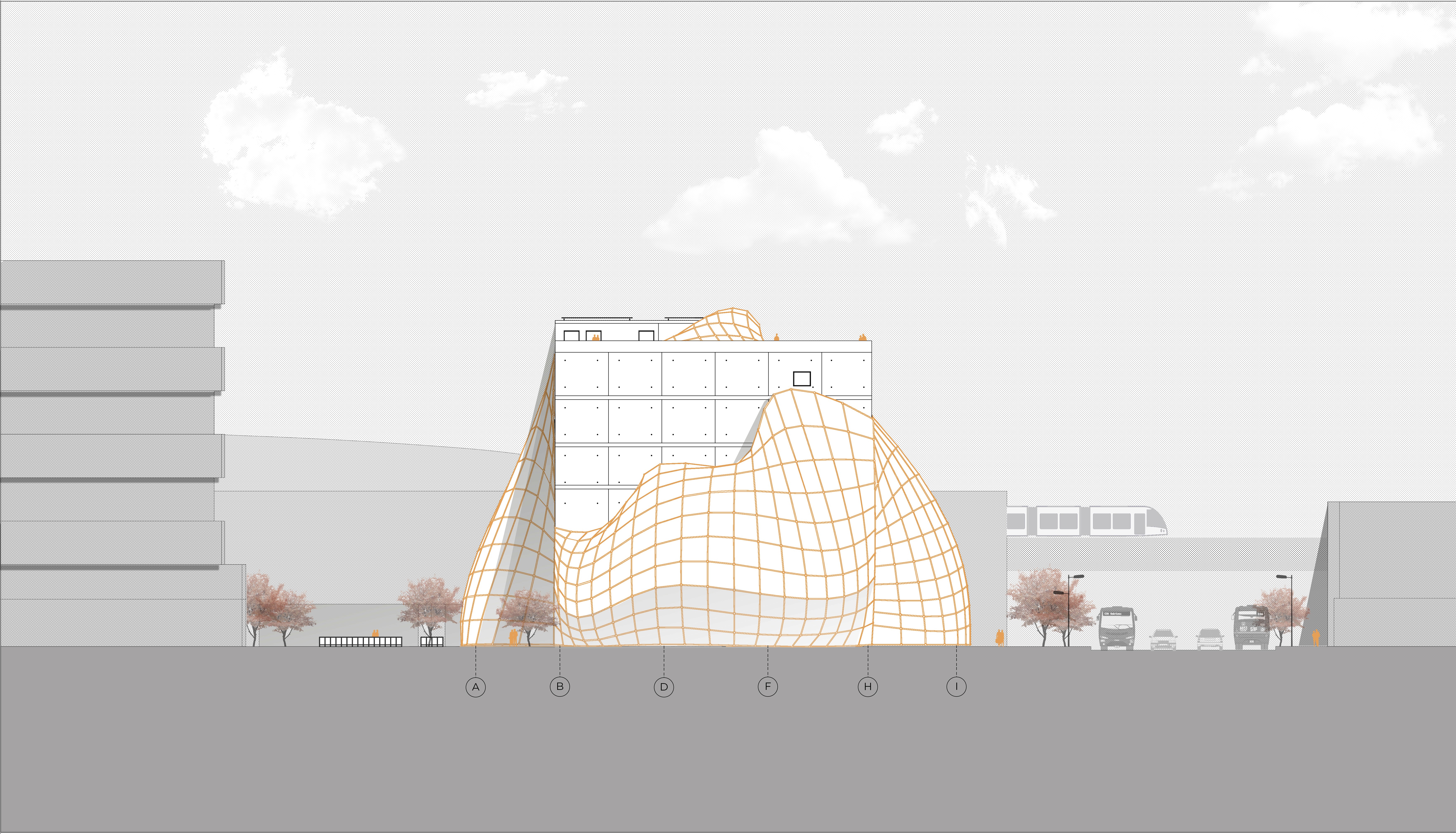
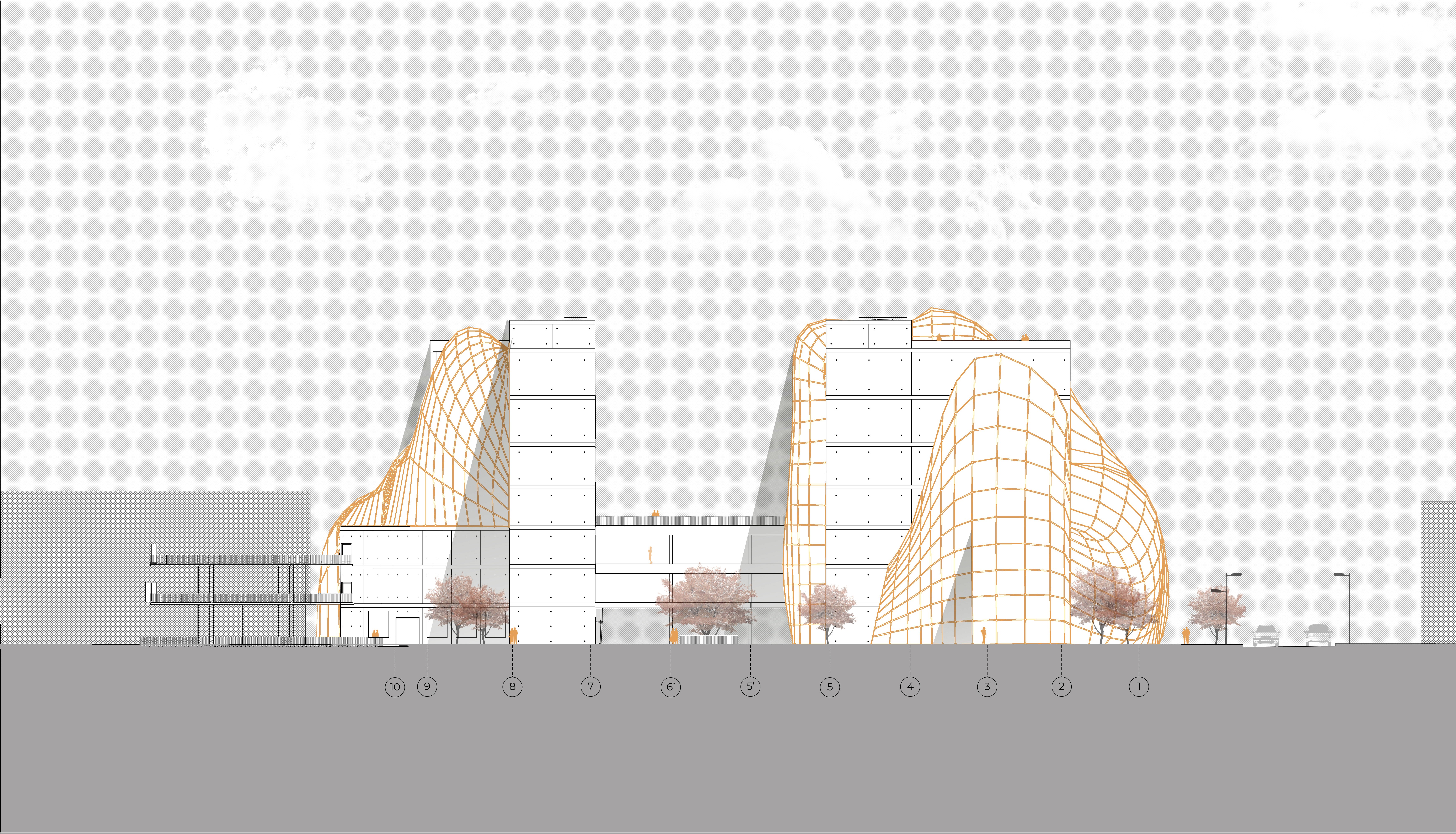
The building combines a mediatheque program with cultural spaces, public circulation, galleries, coworking areas, and urban connections. Around this structure, a parametric façade system wraps the project, creating movement against the orthogonal logic of the main building.
Starting point
The project started from the idea that infrastructure can carry cultural value. Instead of treating the metro station as a purely functional object, M16 proposes a civic building where mobility, public life, and cultural access happen together.
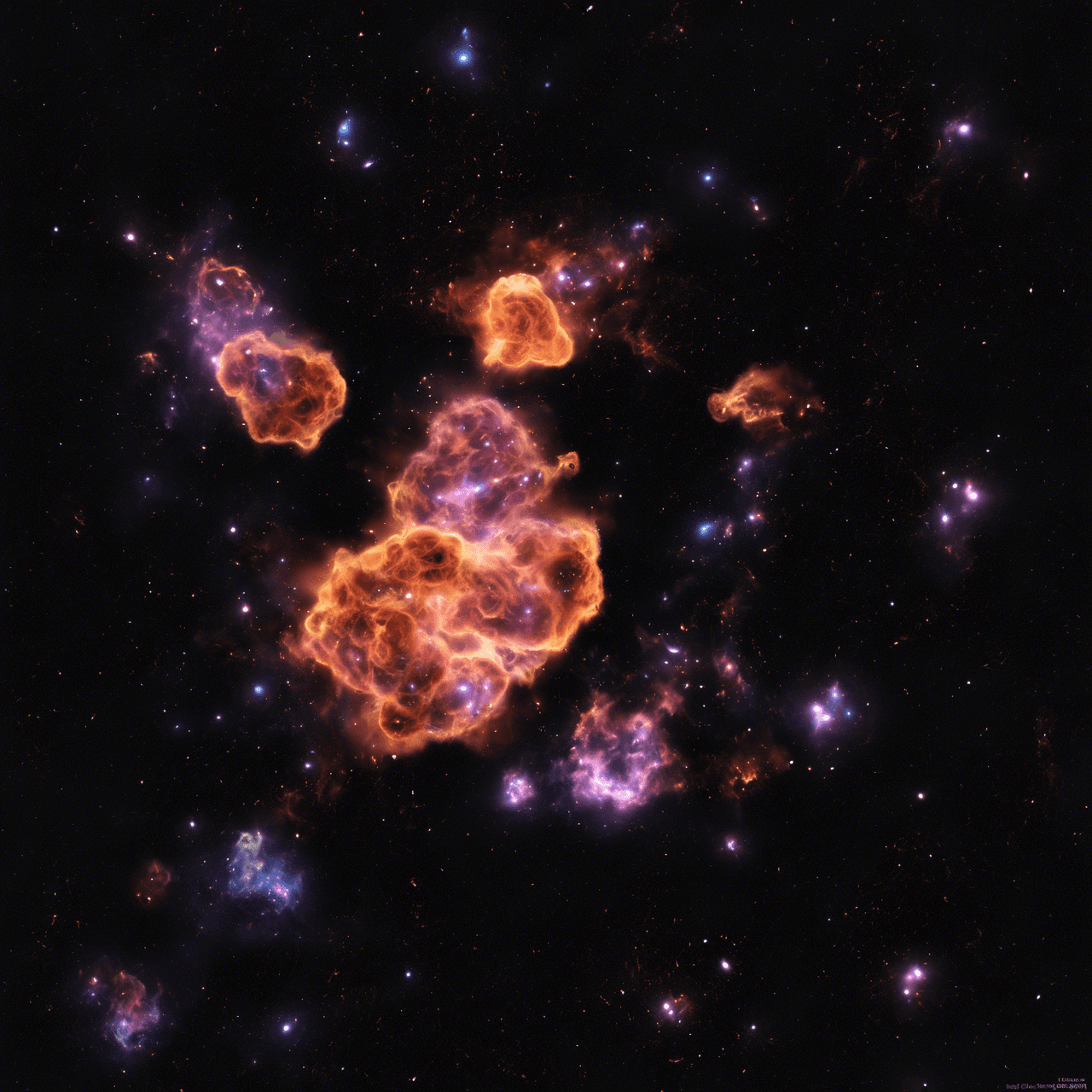
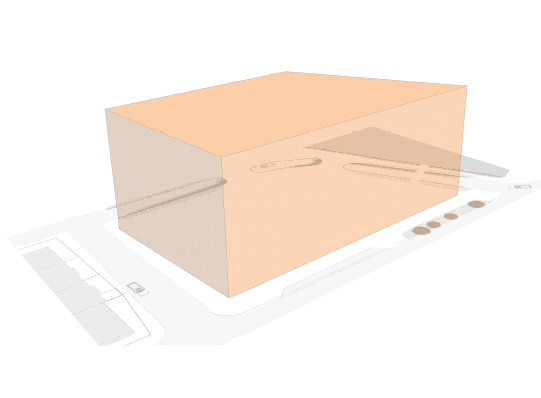
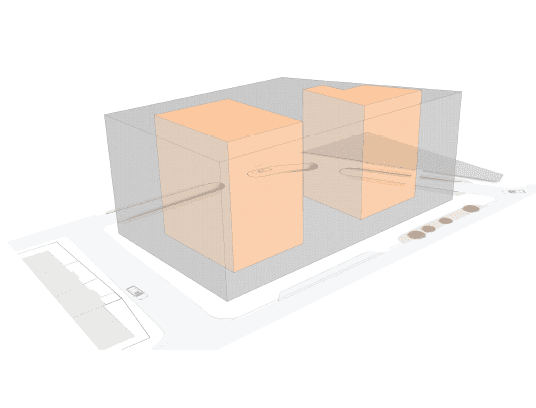
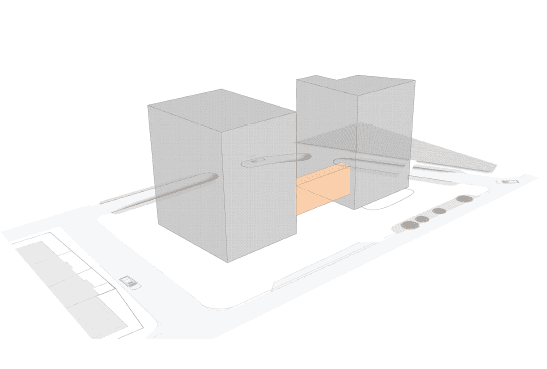
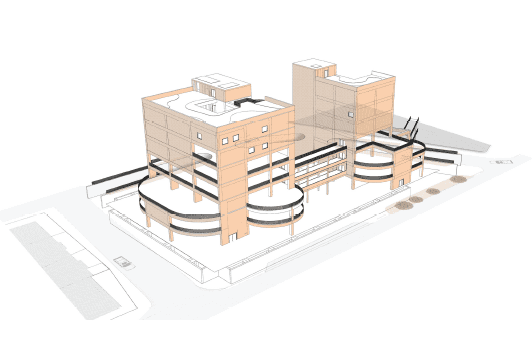
The architectural massing began with a clear orthogonal structure, organizing program, circulation, and urban connections. From there, the façade became the experimental layer: a softer, more dynamic system that responded to movement, air, and the symbolic energy of the metro arriving to Bogotá.
Problem solving
The main challenge was connecting two different architectural languages: the rational structure of the building and the fluid behavior of the exterior envelope. The project needed to feel buildable, but also carry the emotional and symbolic force of a city imagining a new future around public transportation.
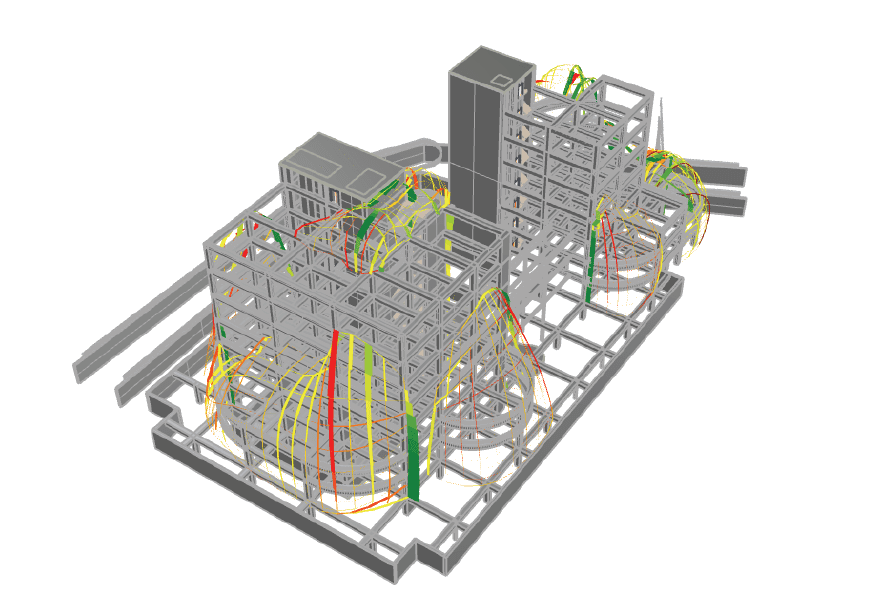
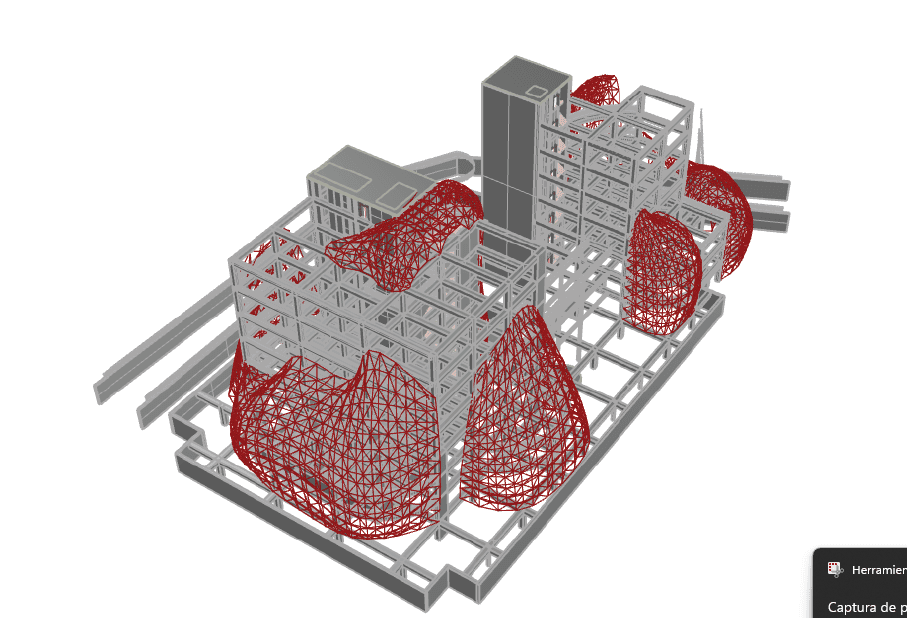
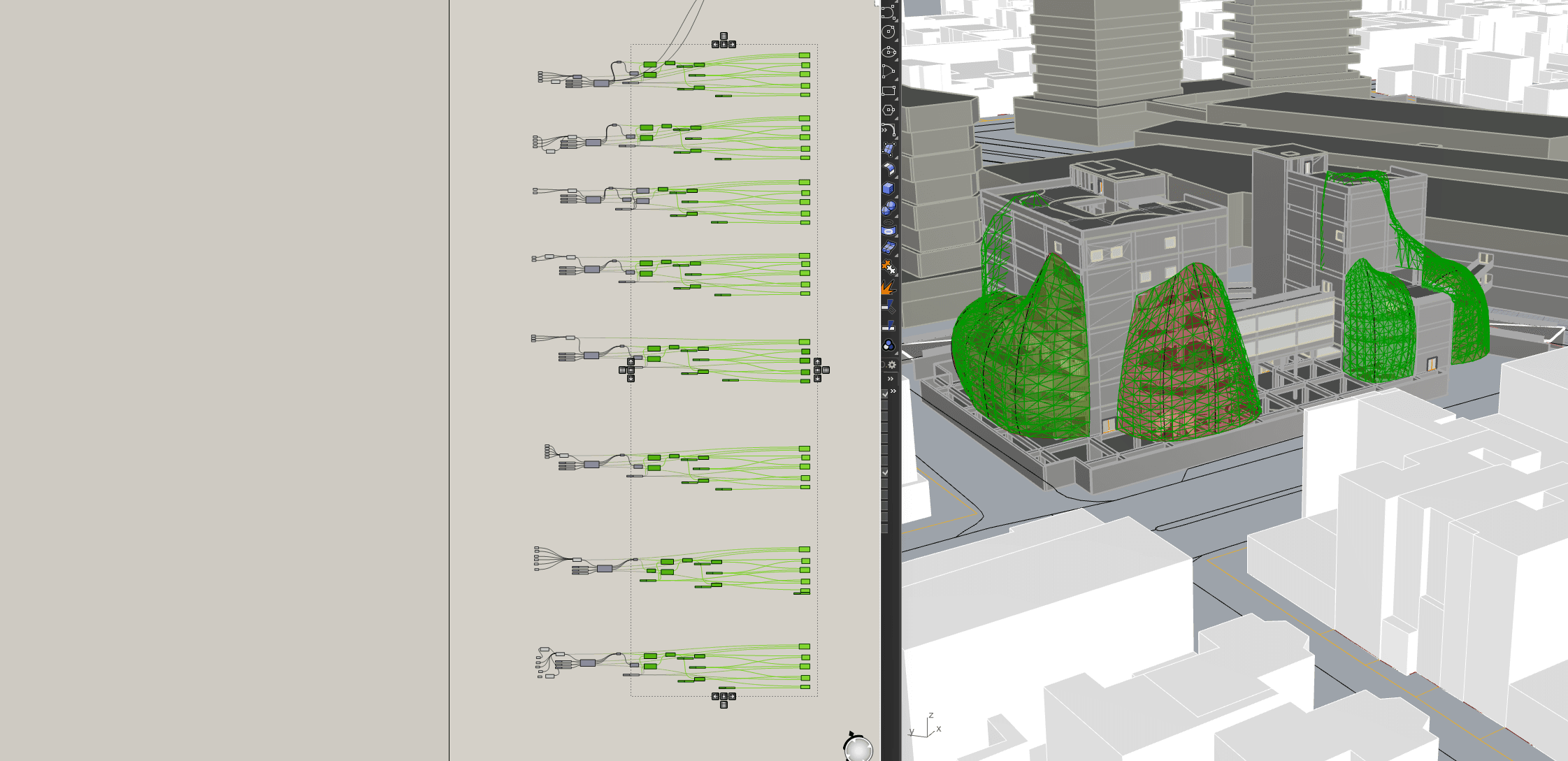
To solve this, I developed the façade as a parametric system instead of a fixed sculptural form. The envelope follows a computational logic where each element can be analyzed, adjusted, and organized according to its position, curvature, and structural behavior.
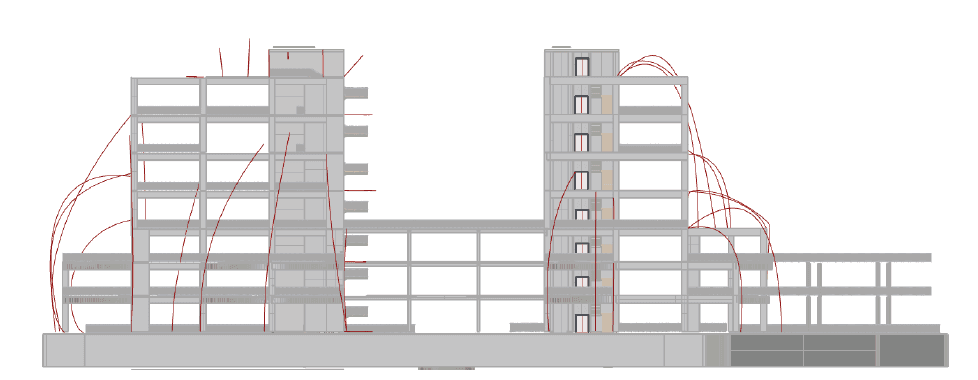
This allowed the façade to move beyond a purely formal gesture. The system could calculate tension, contraction, and variation across the surface, making the idea of a complex urban skin more precise and technically grounded.
Implementation
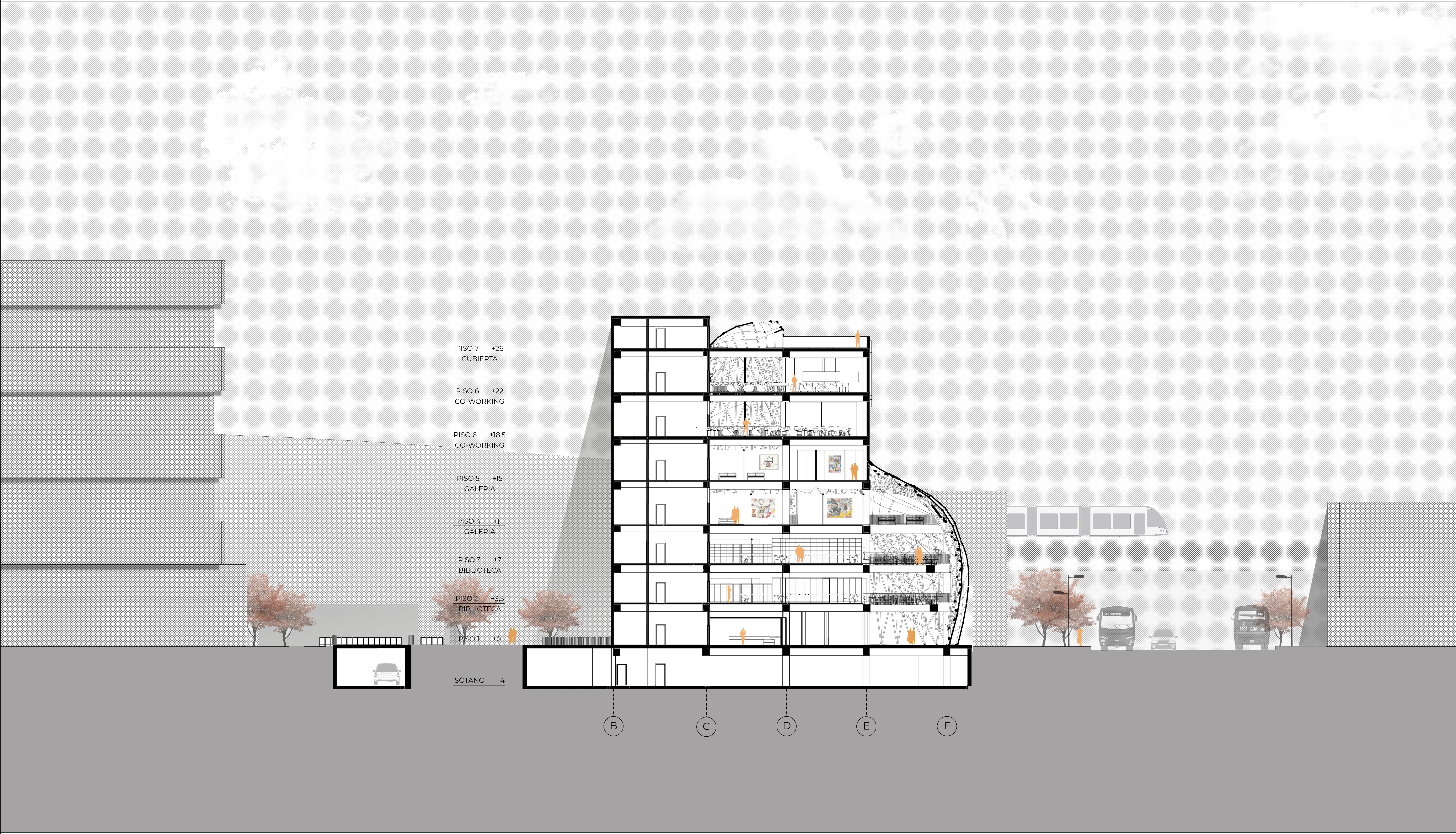
The project was developed through architectural modeling, section drawings, urban diagrams, and parametric façade exploration. The main building was organized through orthogonal volumes, while the exterior skin was generated as a computational surface that wraps, opens, and contracts around specific areas.
The custom parametric logic calculated how the façade elements reacted across the surface, giving each zone a different degree of tension and movement. This created a contrast between the stable internal program and the expressive external envelope.
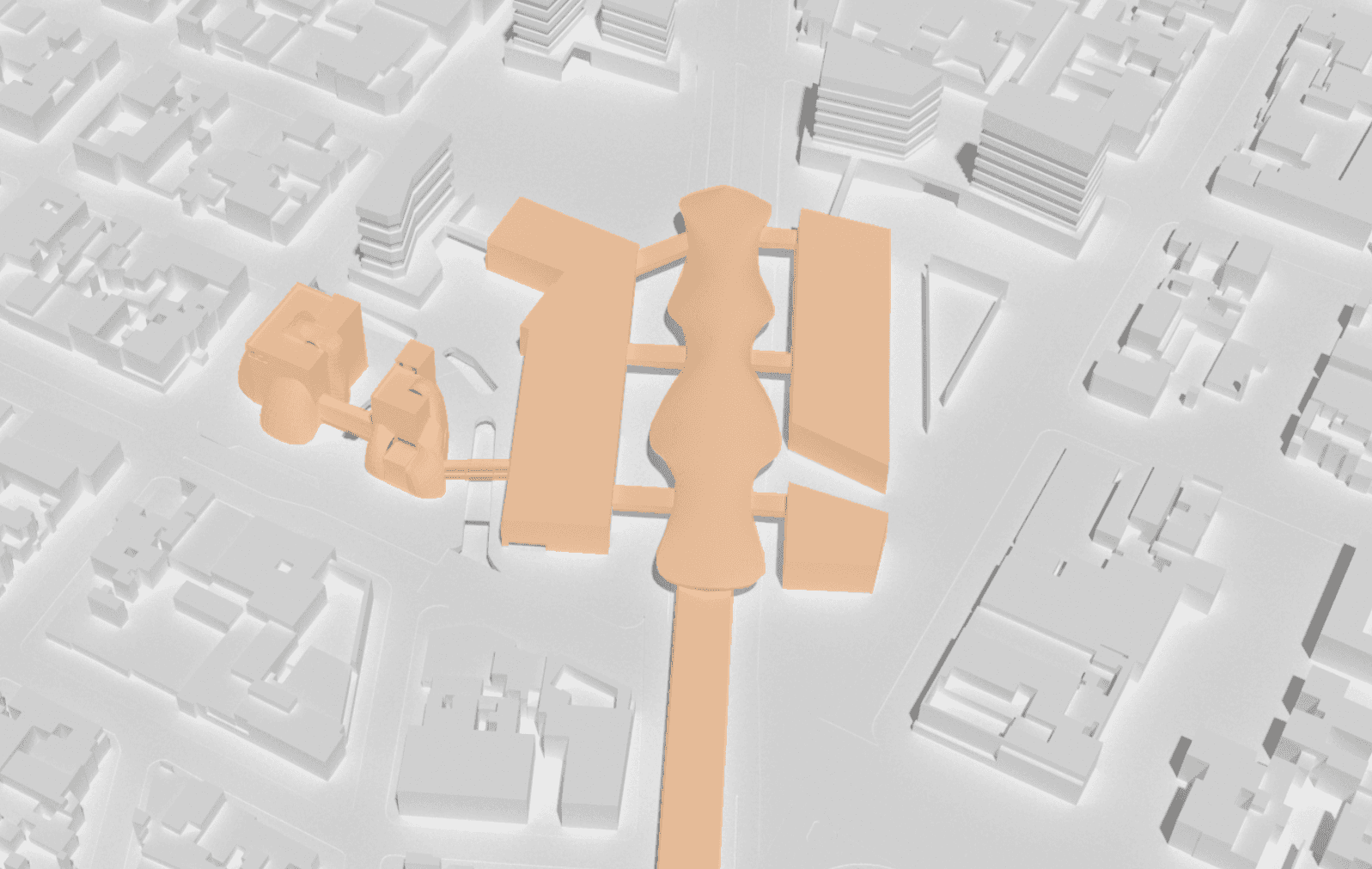
The final documentation included elevations, sections, massing studies, façade diagrams, and urban-scale representations showing how the mediatheque could become part of a larger cultural and mobility network.
Results
The final proposal presents M16 as a speculative cultural infrastructure for Bogotá: a mediatheque connected to the future metro and designed as a public catalyst for the surrounding area.
The project combines architectural planning, urban imagination, and computational design. Even though it was an academic thesis and was not built, it became an important foundation for my interest in parametric systems, programmable façades, and the relationship between structure, movement, and public space.