Sine
Client:
Personal Research
Industry:
Computational Design
Start:
End:
Duration:
1 year
Read time:
3 min
Sine is a personal research project exploring Blender as a parametric geometry environment through Geometry Nodes. The project works with sinusoidal behavior, recursive logic, and procedural repetition to create geometries that feel closer to light, sound, and motion than to static objects.
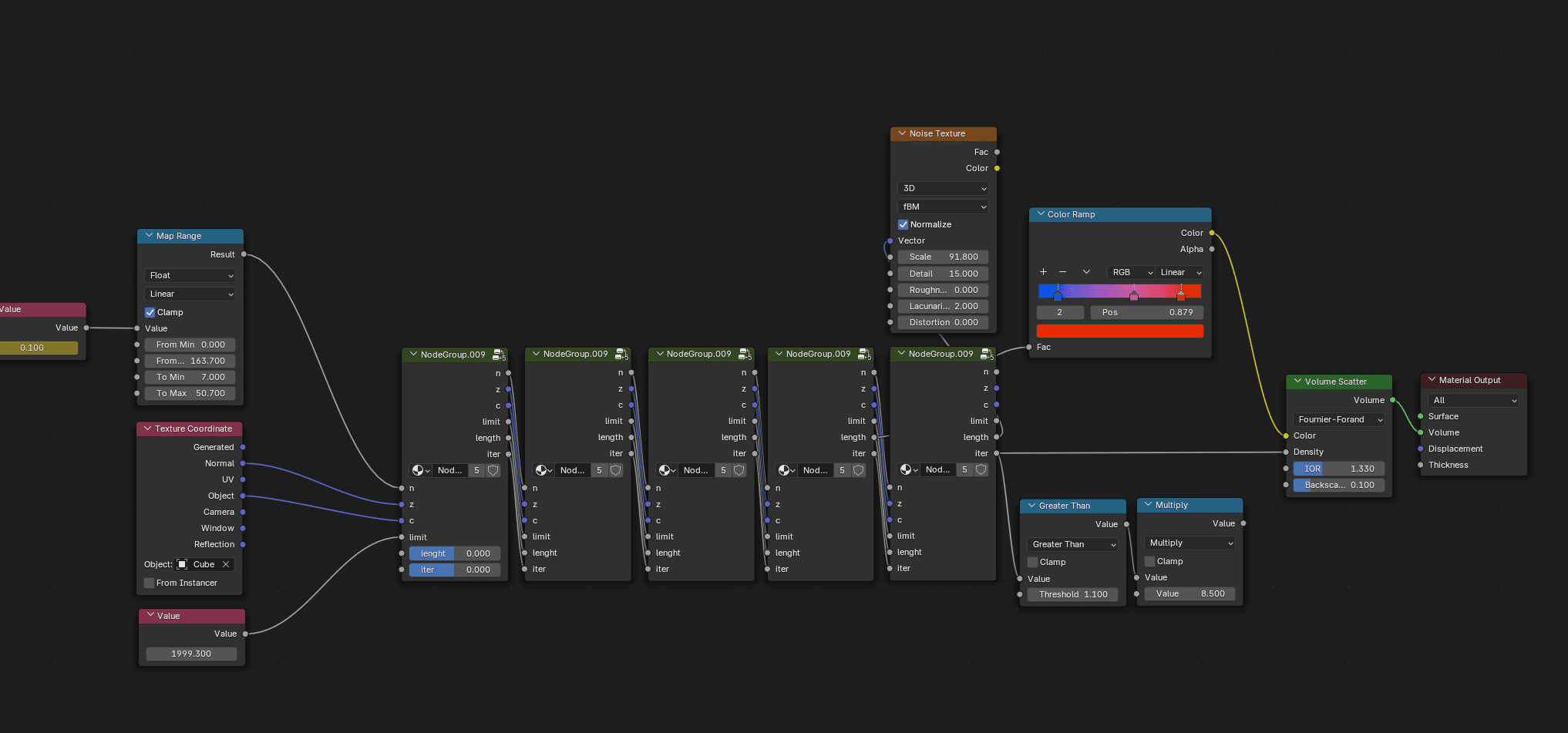
The system is built from a custom reusable node group that can be connected repeatedly to itself. Each connection adds another layer of transformation, allowing the geometry to expand, accumulate density, and produce new visual conditions from the same base logic.
Starting point
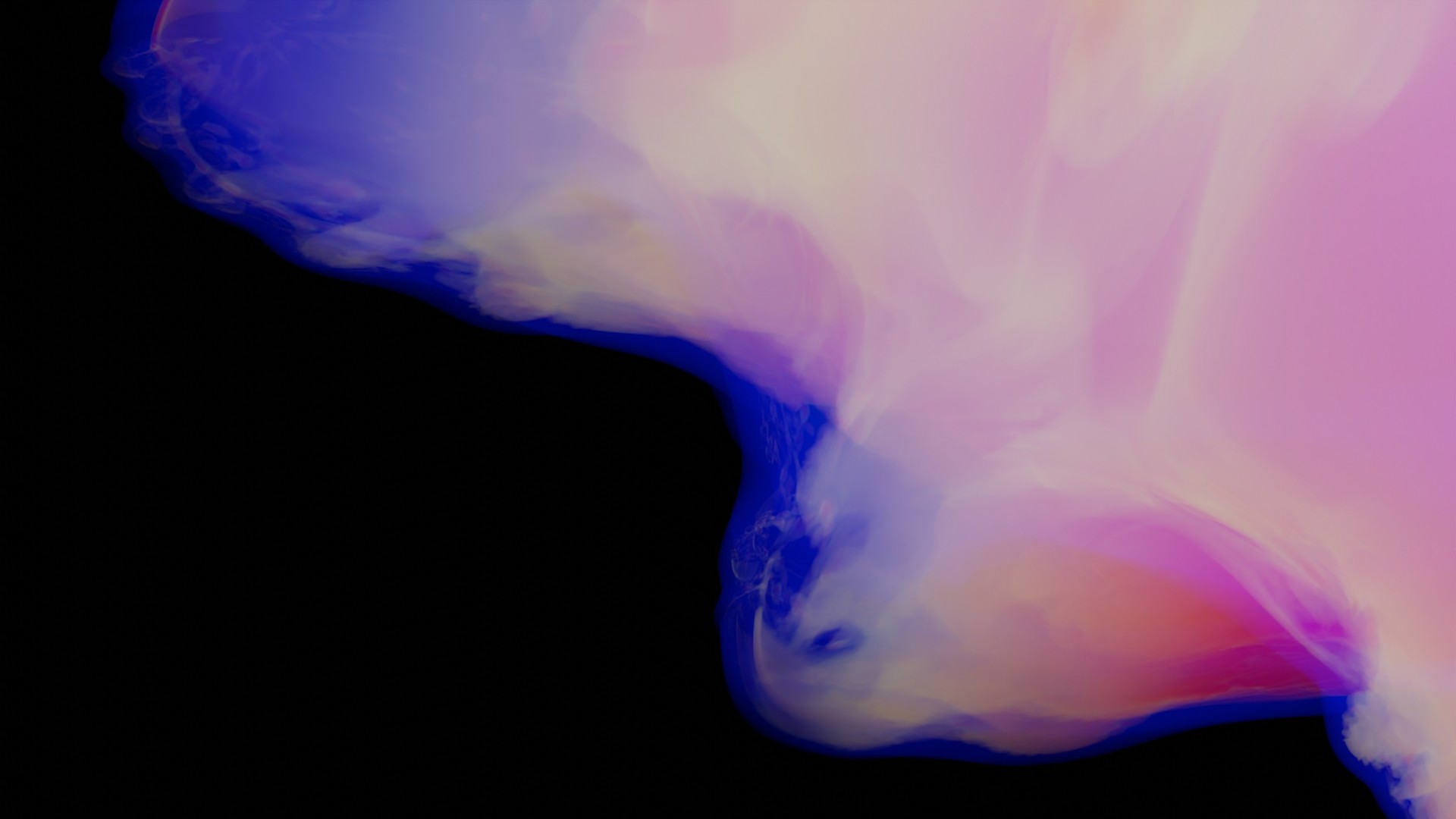
The project began as an exploration of repetition as a generative force. Instead of designing a final form directly, I built a procedural module capable of producing variation through parameters, recursion, and wave-based transformation.
The focus was not only the object itself, but the rule behind it: a system where one operation could become the input for the next, creating increasingly complex geometries from a controlled sequence of transformations.
Problem solving
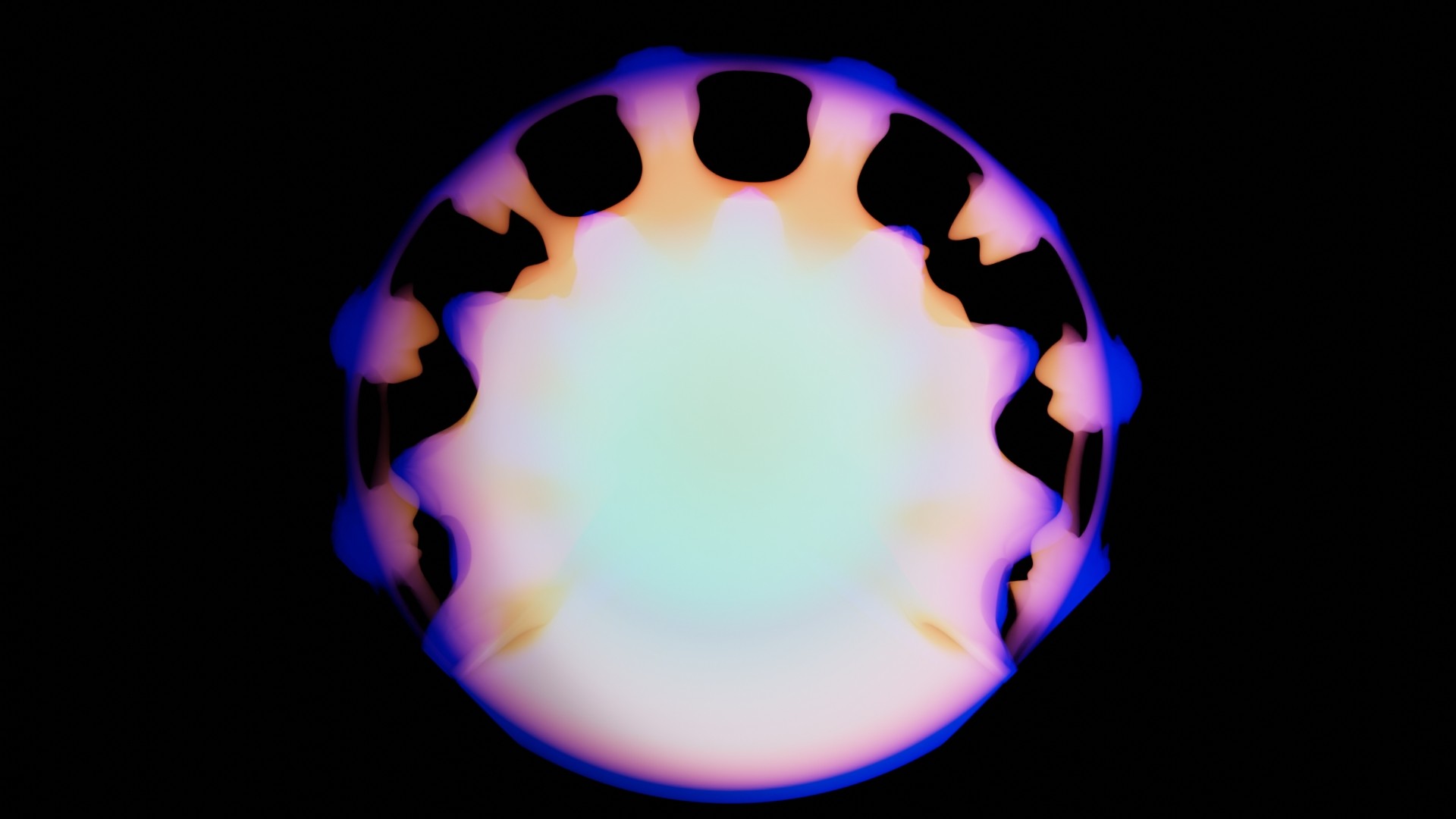
The main challenge was creating a system that could grow without becoming a fixed model. The geometry needed to stay flexible, editable, and capable of producing different outputs from the same internal logic.
To solve this, I structured the project as a reusable Geometry Nodes module with adjustable parameters controlling openness, density, wave behavior, and recursive complexity. This allowed the system to move between simple circular formations, dense luminous shells, and more open wave-like structures.
Implementation
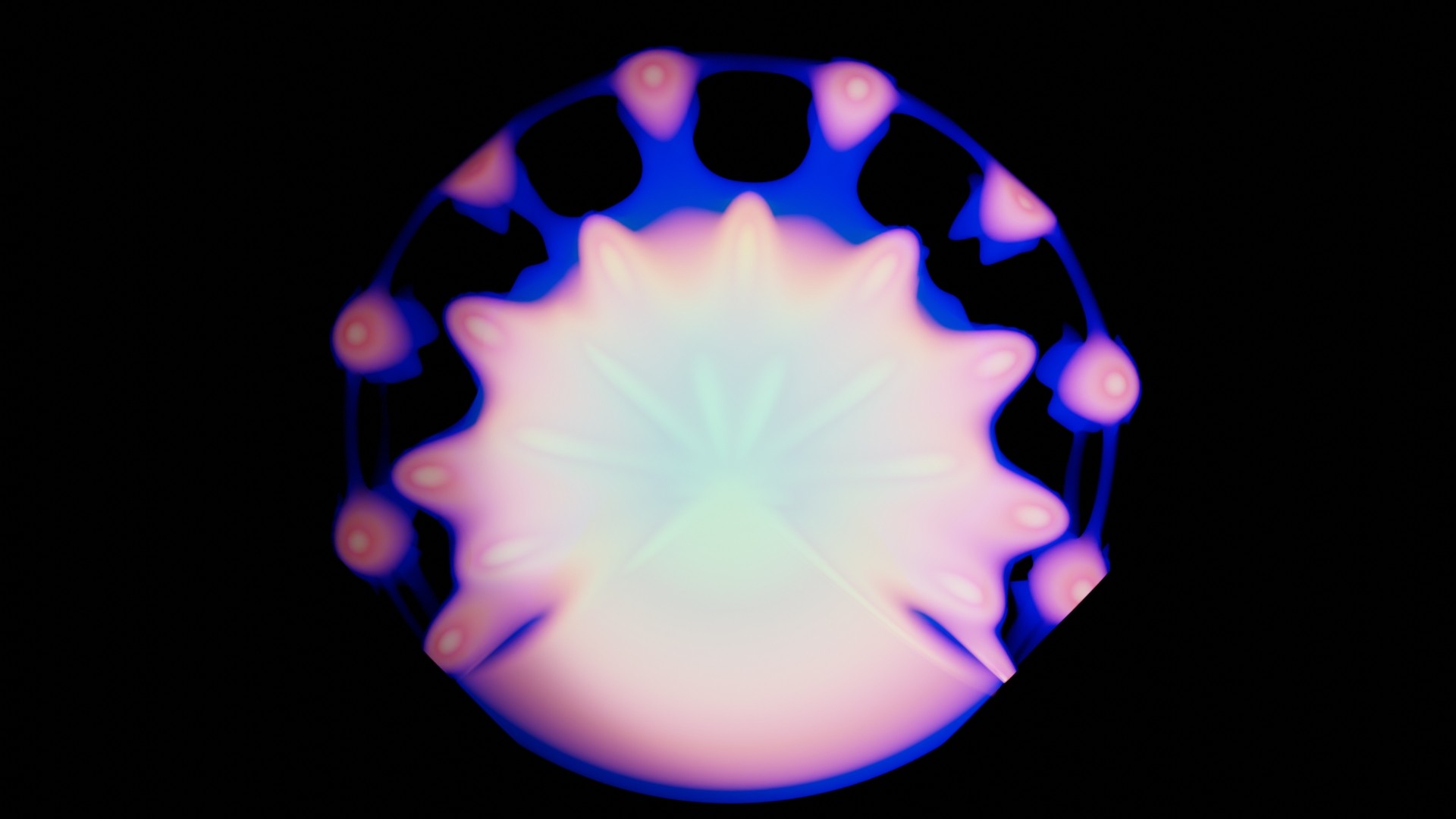
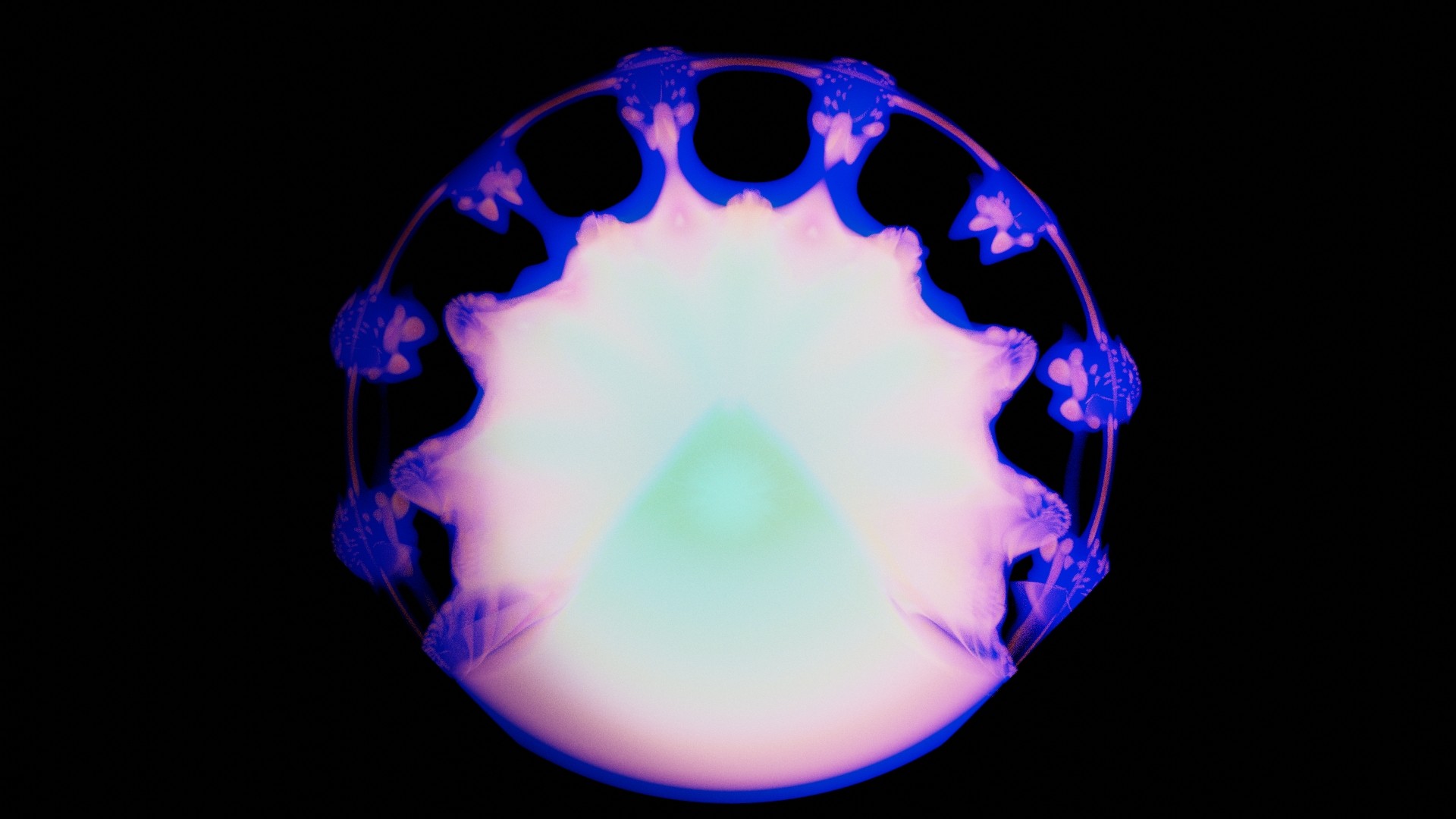
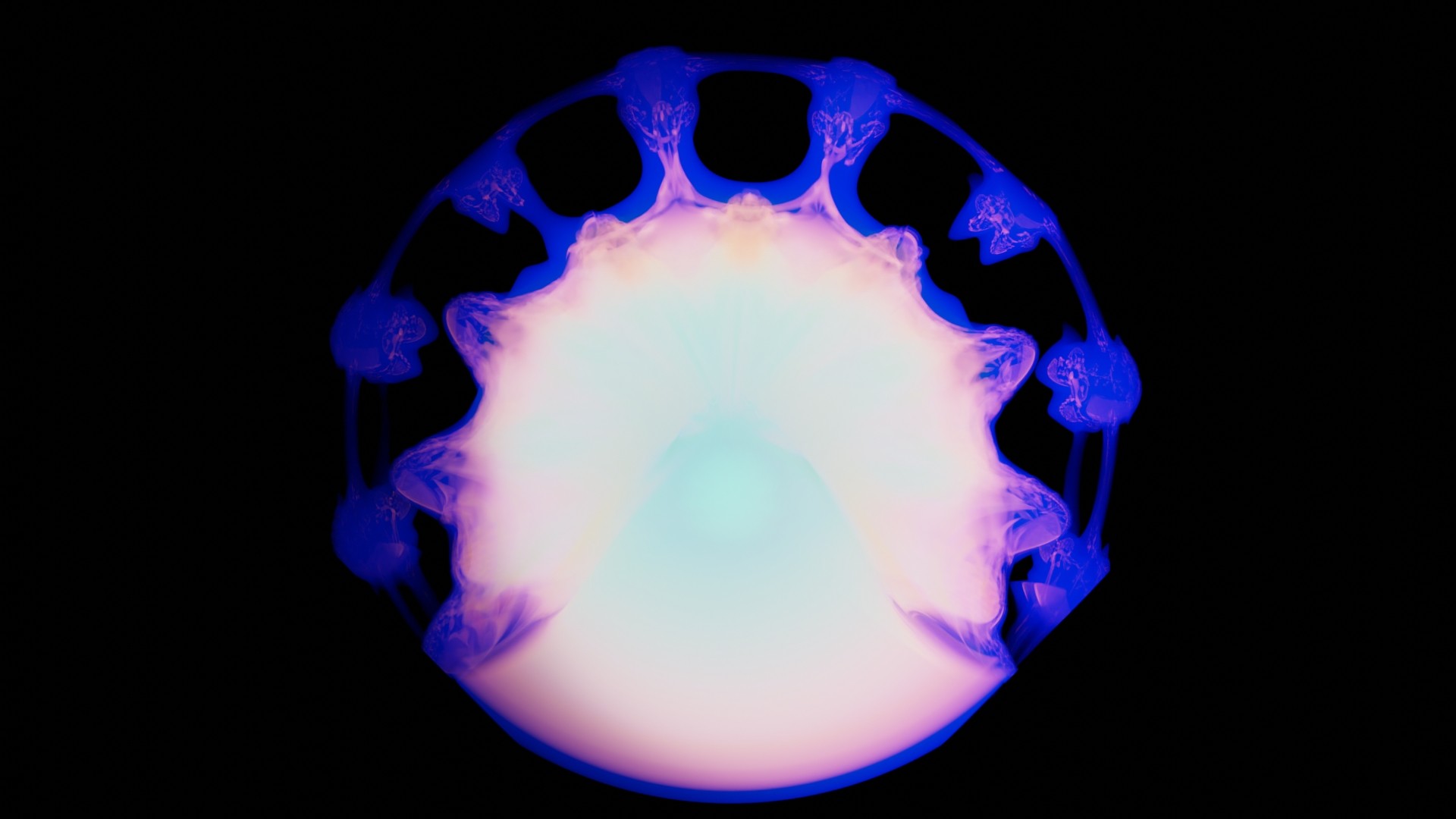
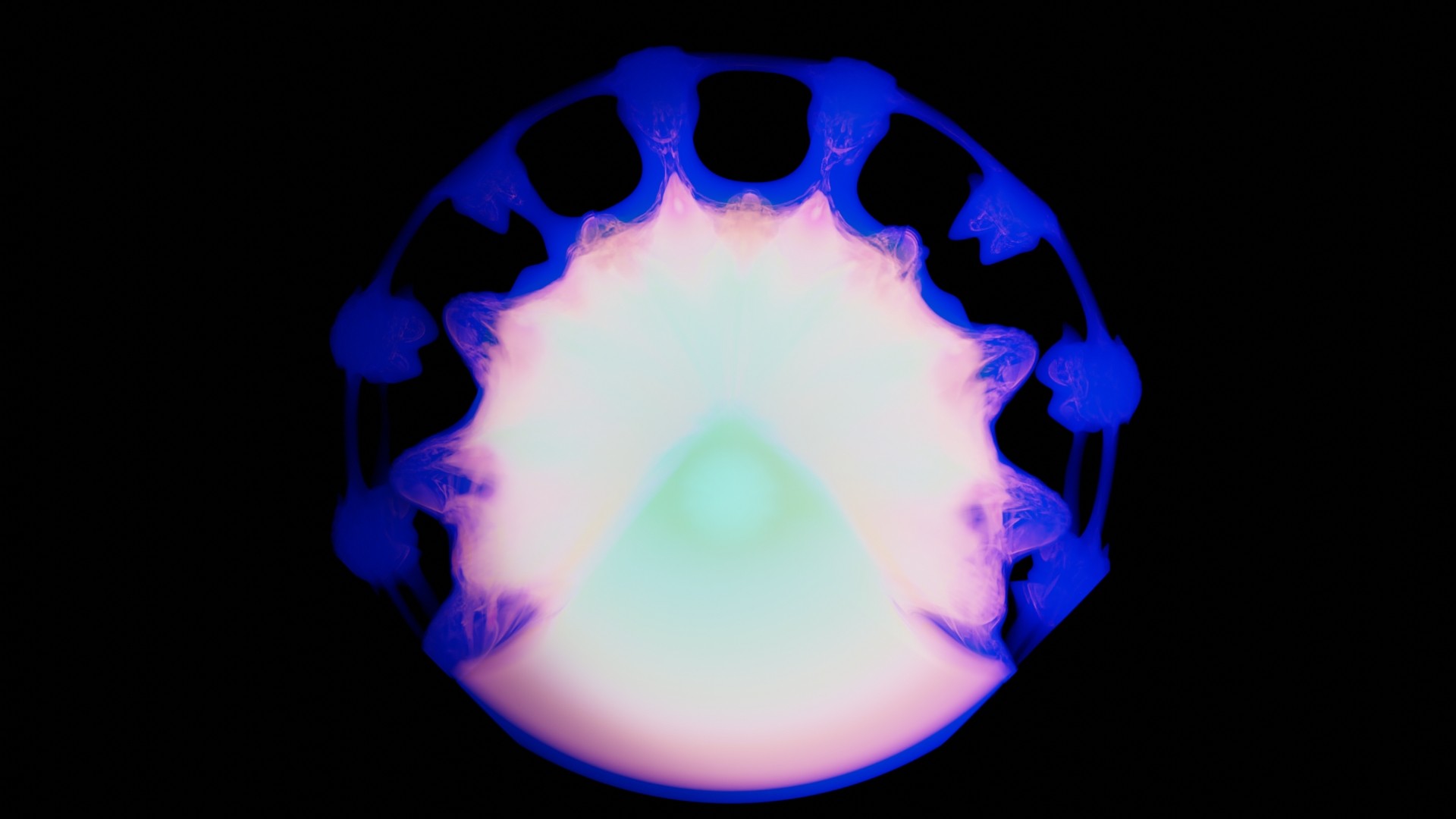
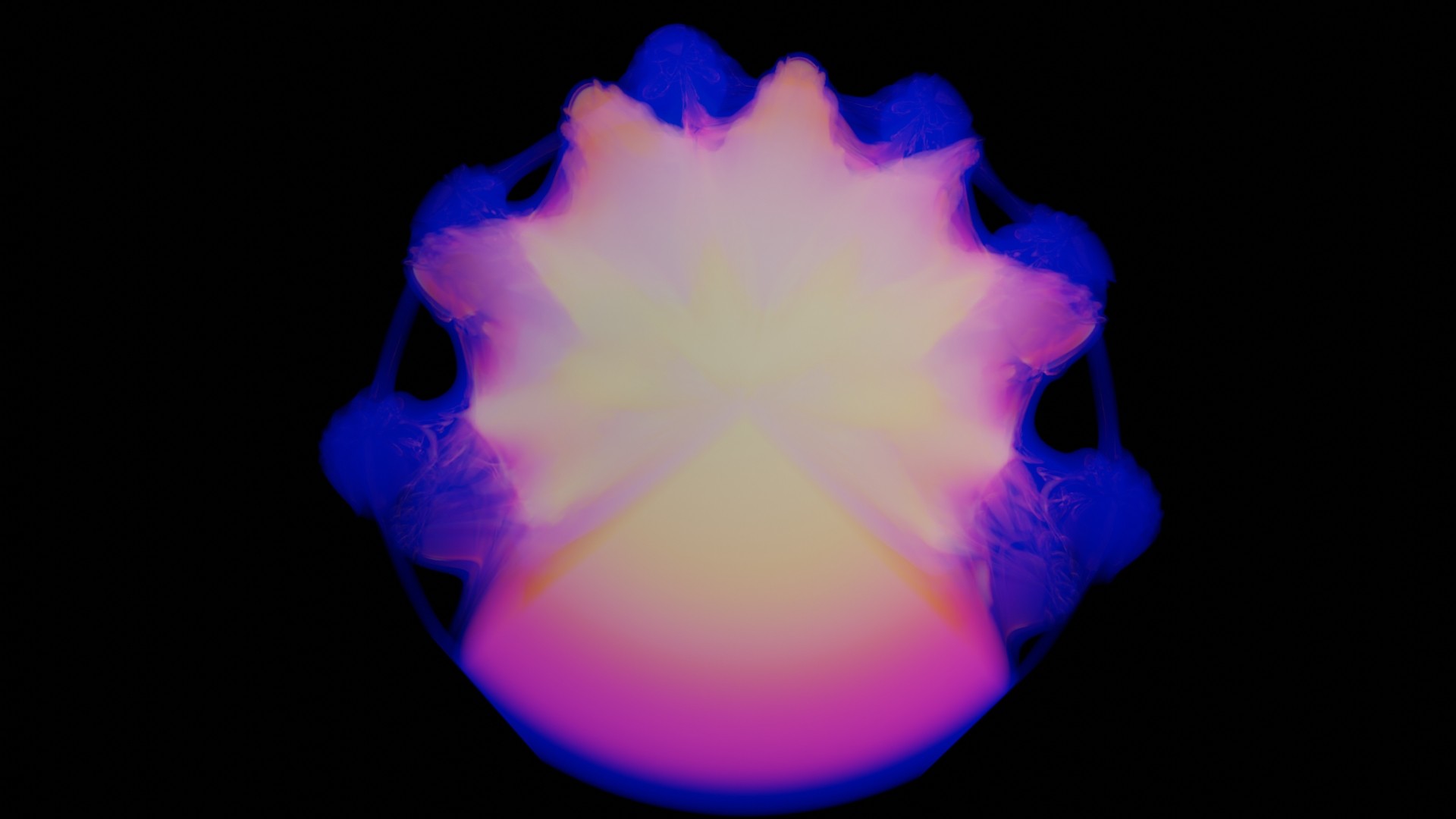
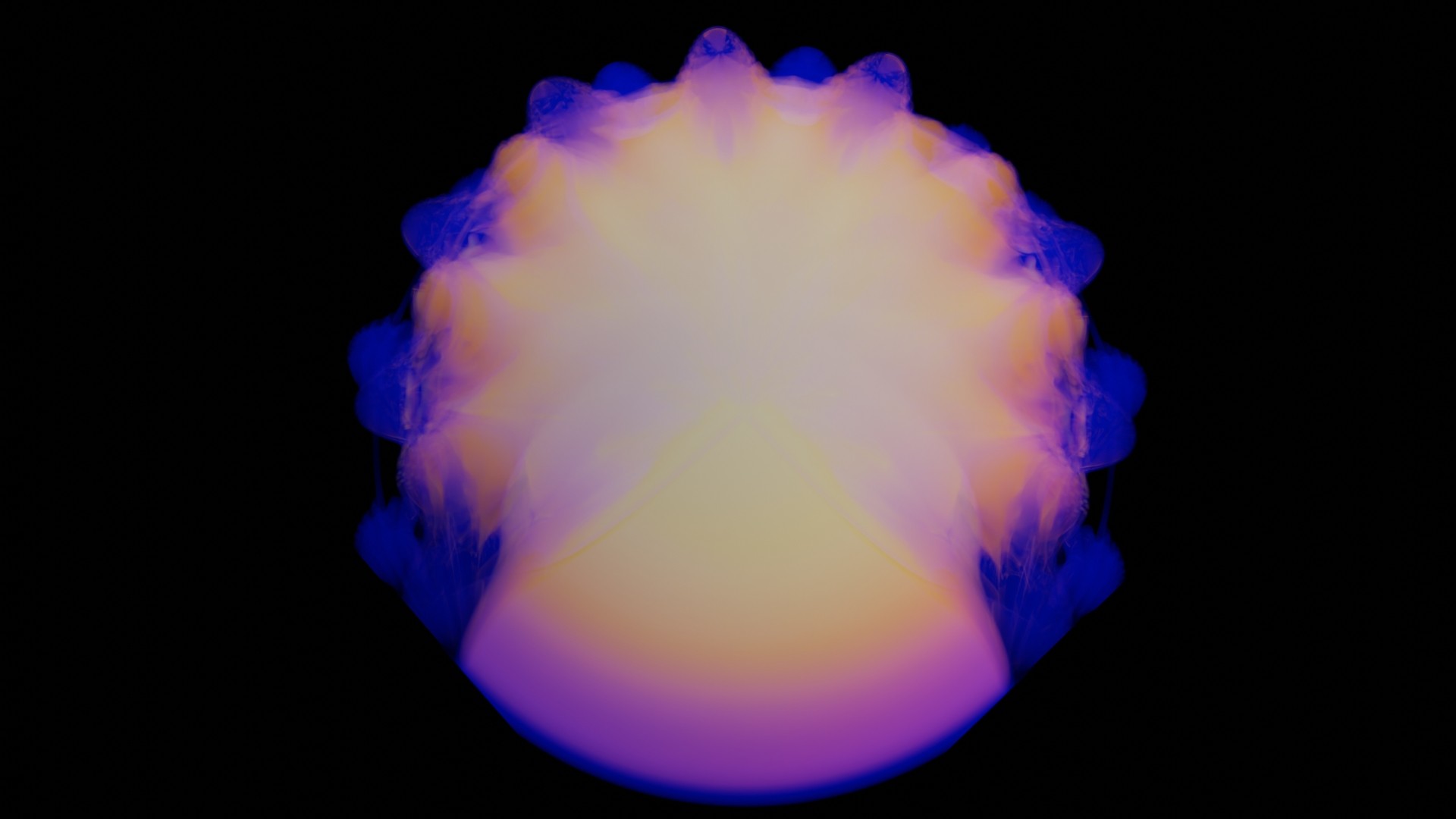
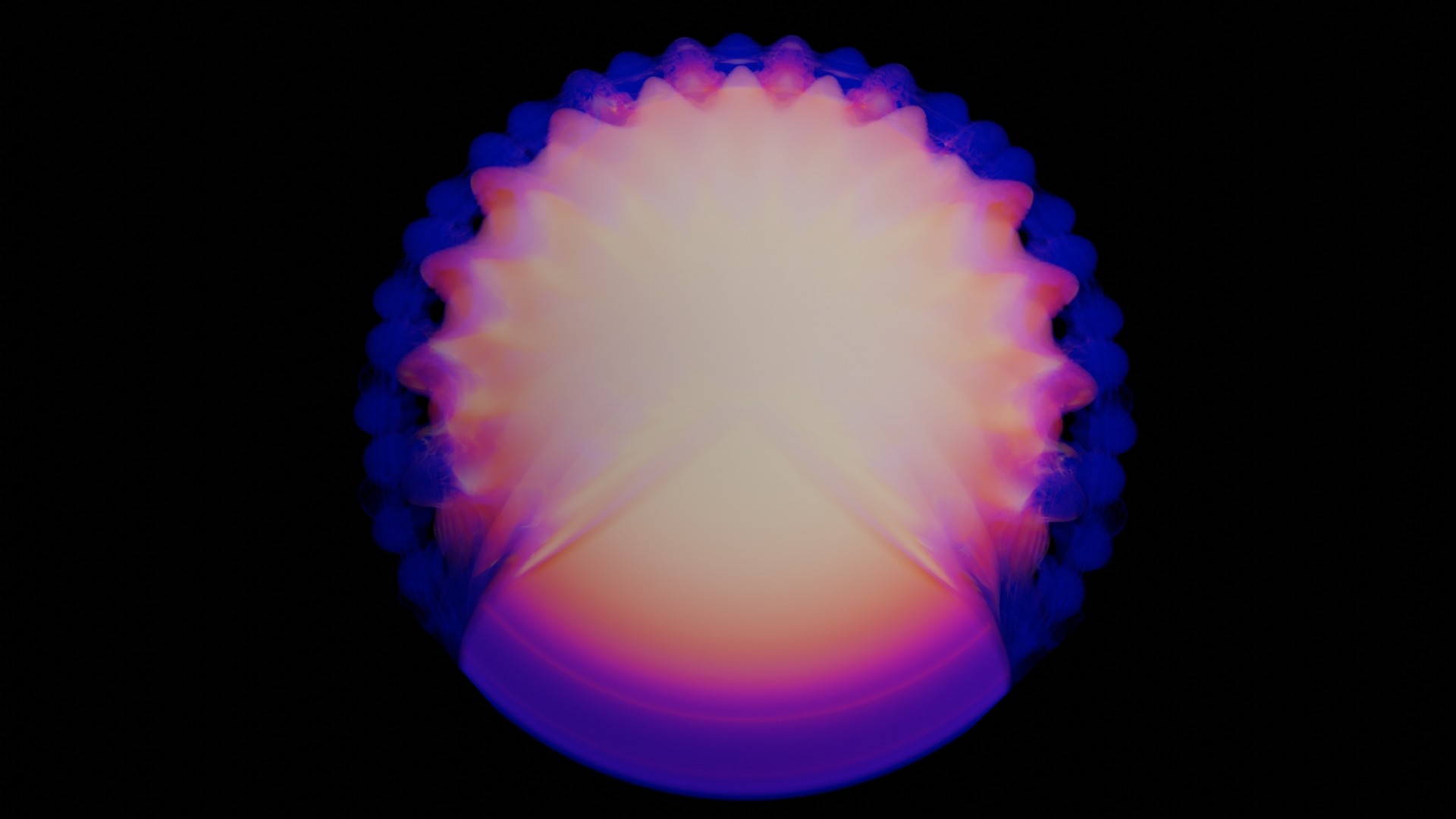
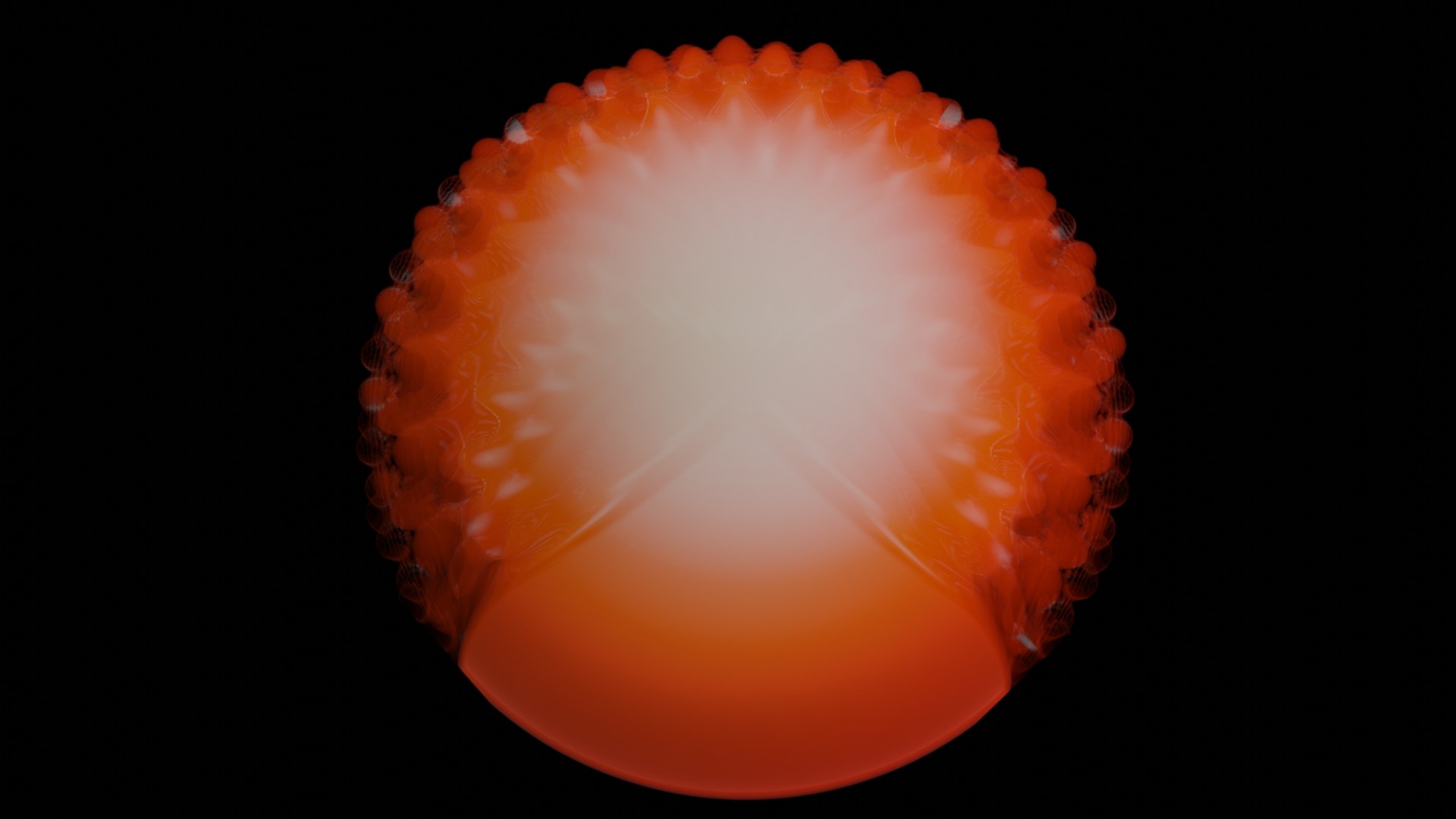
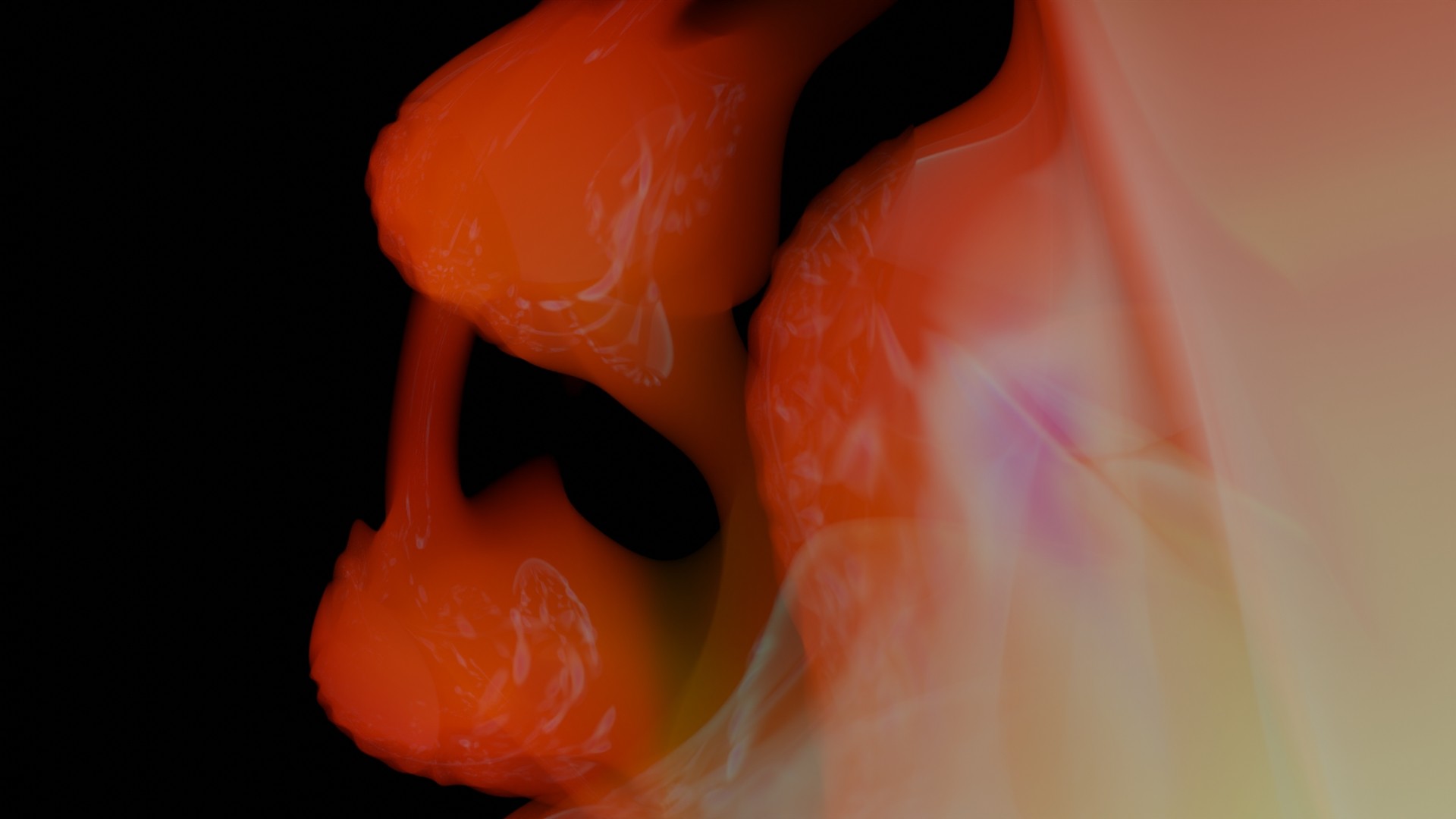
The project was developed in Blender using Geometry Nodes and custom procedural logic. The images shown in the project document the evolution of the system from one active module to five connected modules, showing how the geometry becomes more complex as the node chain grows.
Each module receives the previous geometry as input, transforms it, and passes it forward. By connecting the same custom node group multiple times, the system builds a recursive sequence where every new connection adds another layer of movement, density, and spatial complexity.
Material and volume settings were also explored to create a translucent visual effect, using color gradients, noise, and volumetric scattering to make the geometry feel like a combination of light, and sound.
Results
The result is a series of luminous geometries generated from a single procedural rule. Each output keeps the same internal logic but changes through parameter variation, recursive depth, and material behavior.
The next step is to connect the system to Ableton, allowing the sinusoidal wave to react to music and the fractal-like geometry to shift depending on chords, rhythm, or sound intensity.