Museum of Emotions
Client:
Architectural Competition
Industry:
Architecture / Experiential Design / Public Space
Start:
End:
Duration:
2 months
Read time:
3 min
Museum of Emotions was an architectural competition proposal developed with Chiara Volpi as part of the Design of Emotions research team from Universidad de los Andes.
The project explored how architecture can create emotional transitions through space. Instead of designing a traditional museum with rooms and objects, we proposed a soft, inhabitable structure that people could enter, climb, press, and move through.
The experience was based on contrast: first a feeling of being contained or trapped inside a flexible body, and then a sense of relief when reaching the open exterior. The result was closer to a playground than a conventional museum, designed for people of different ages to experience emotion through movement, pressure, and spatial discovery.
Starting point
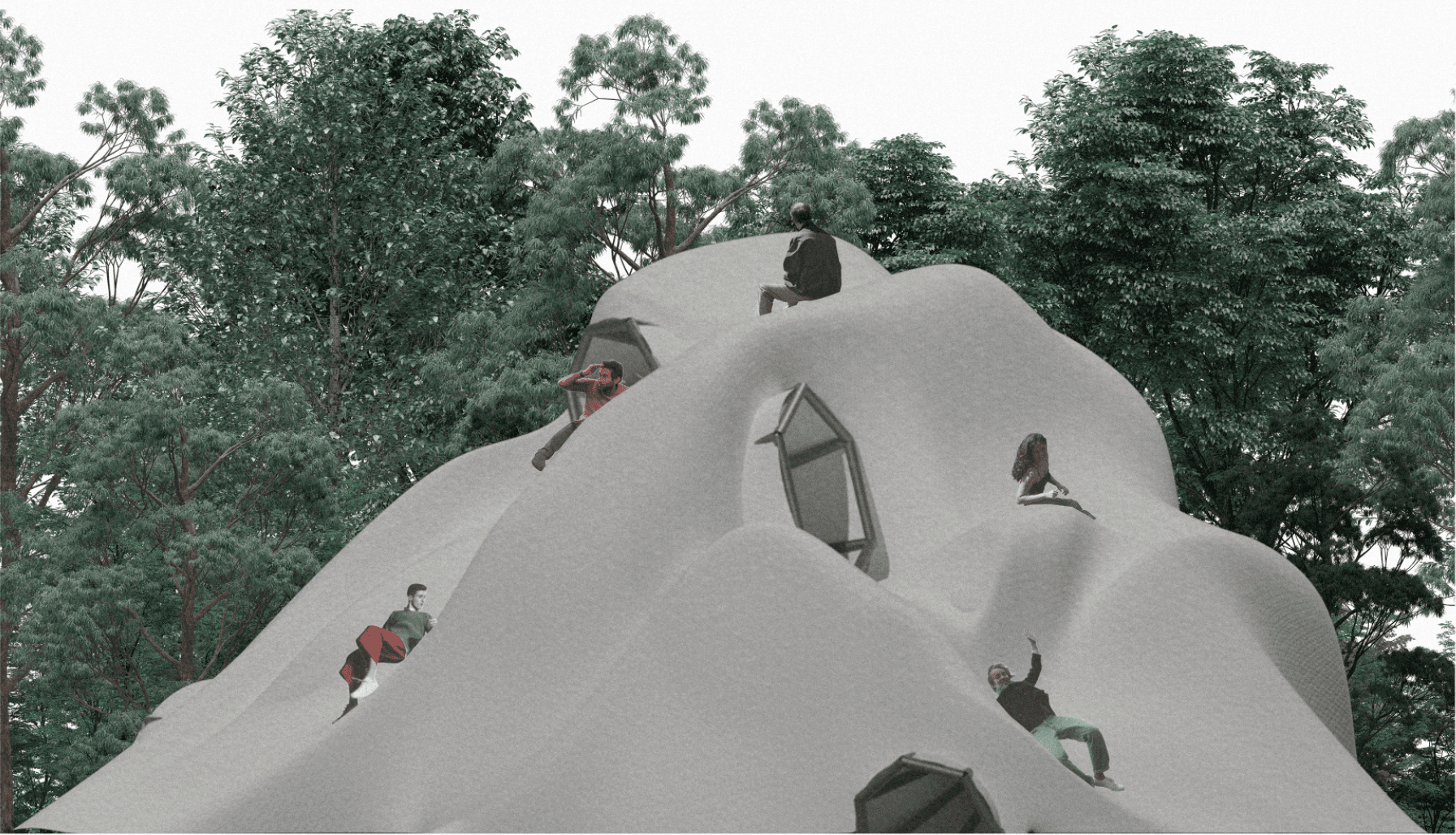
The project began with the idea that emotion can be produced by the body’s relationship with space. We wanted the visitor to feel architecture physically, not only visually.
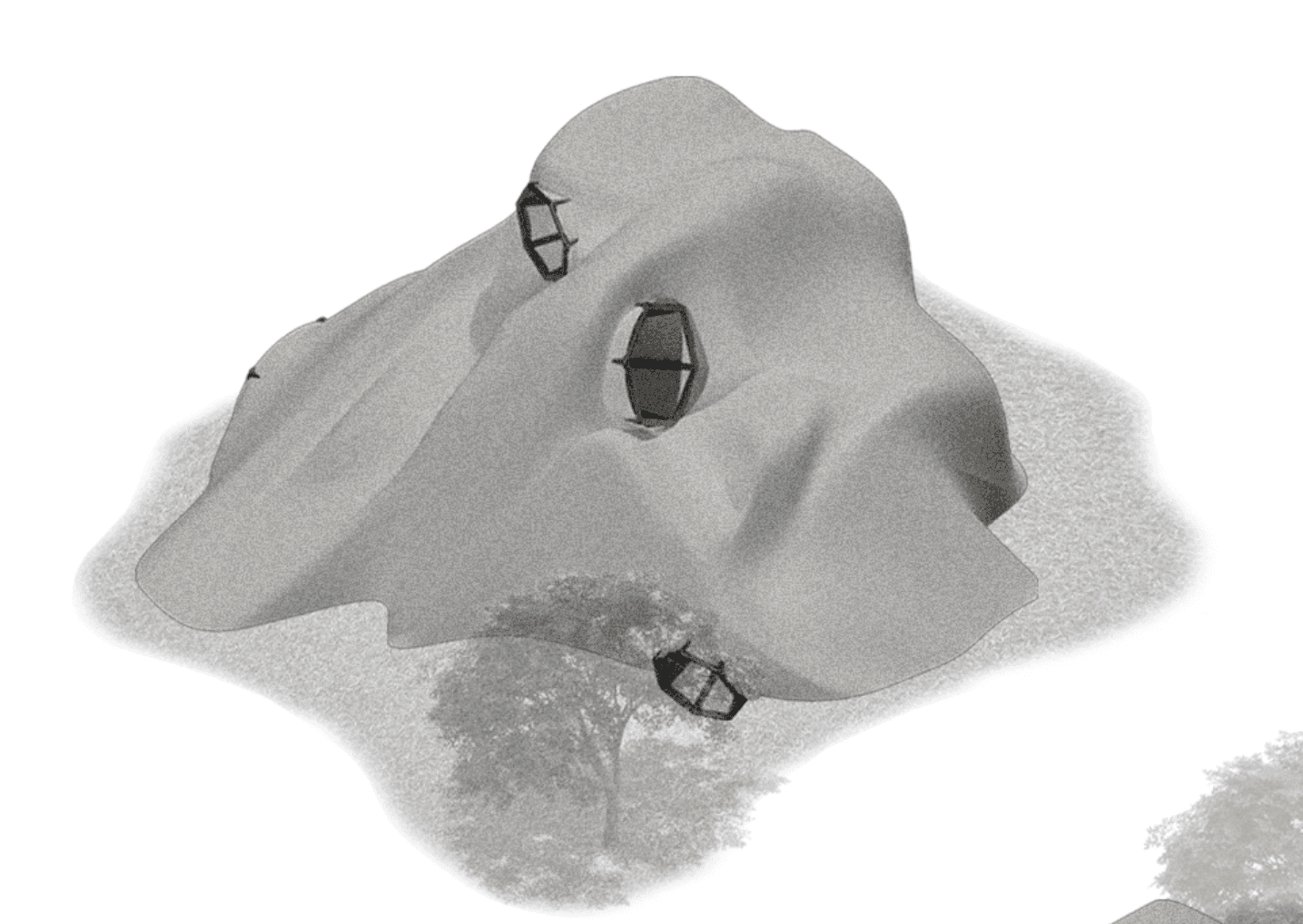
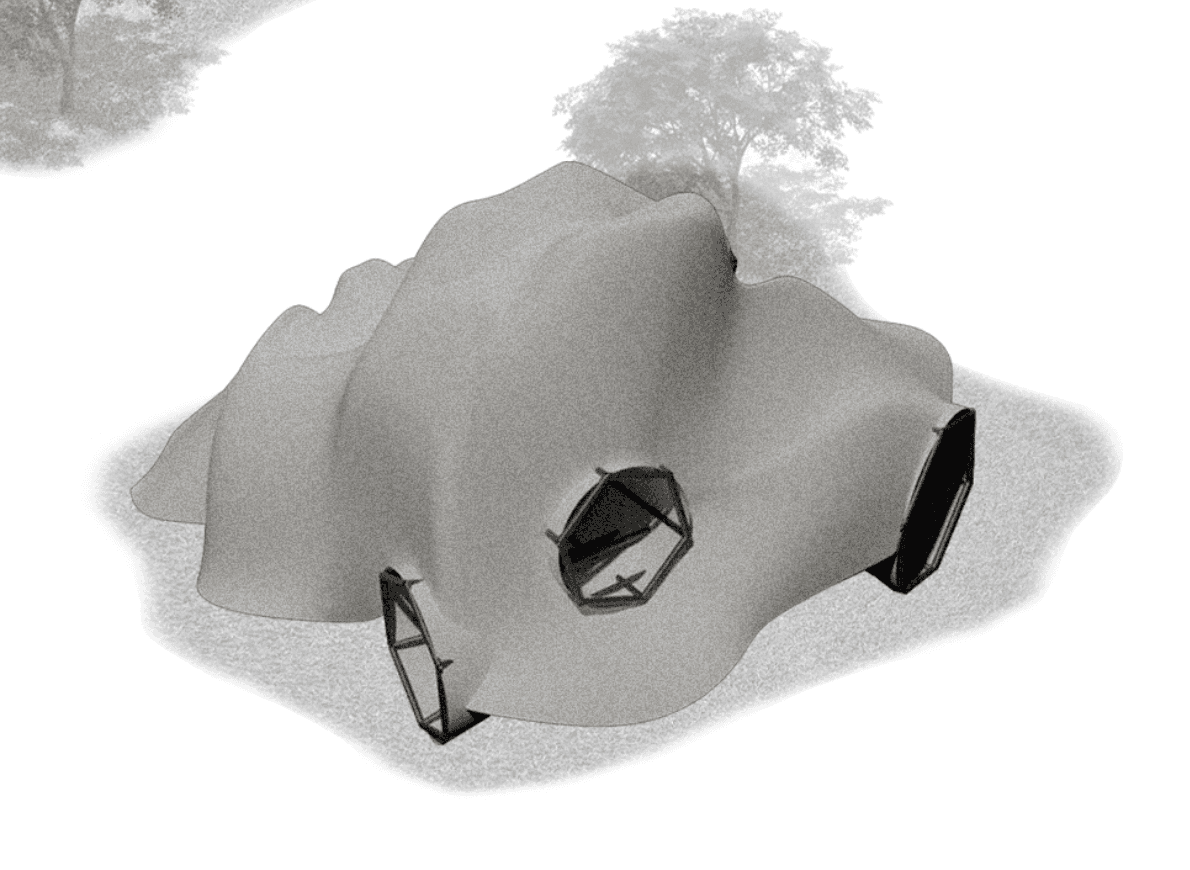
The form was developed as a continuous landscape: part shelter, part tunnel, part playground. Its geometry allowed people to move above, inside, and around the structure, creating different levels of exposure, compression, and release.
Problem solving
The main challenge was designing a space that could feel soft, reactive, and emotional while still having a clear constructive logic.
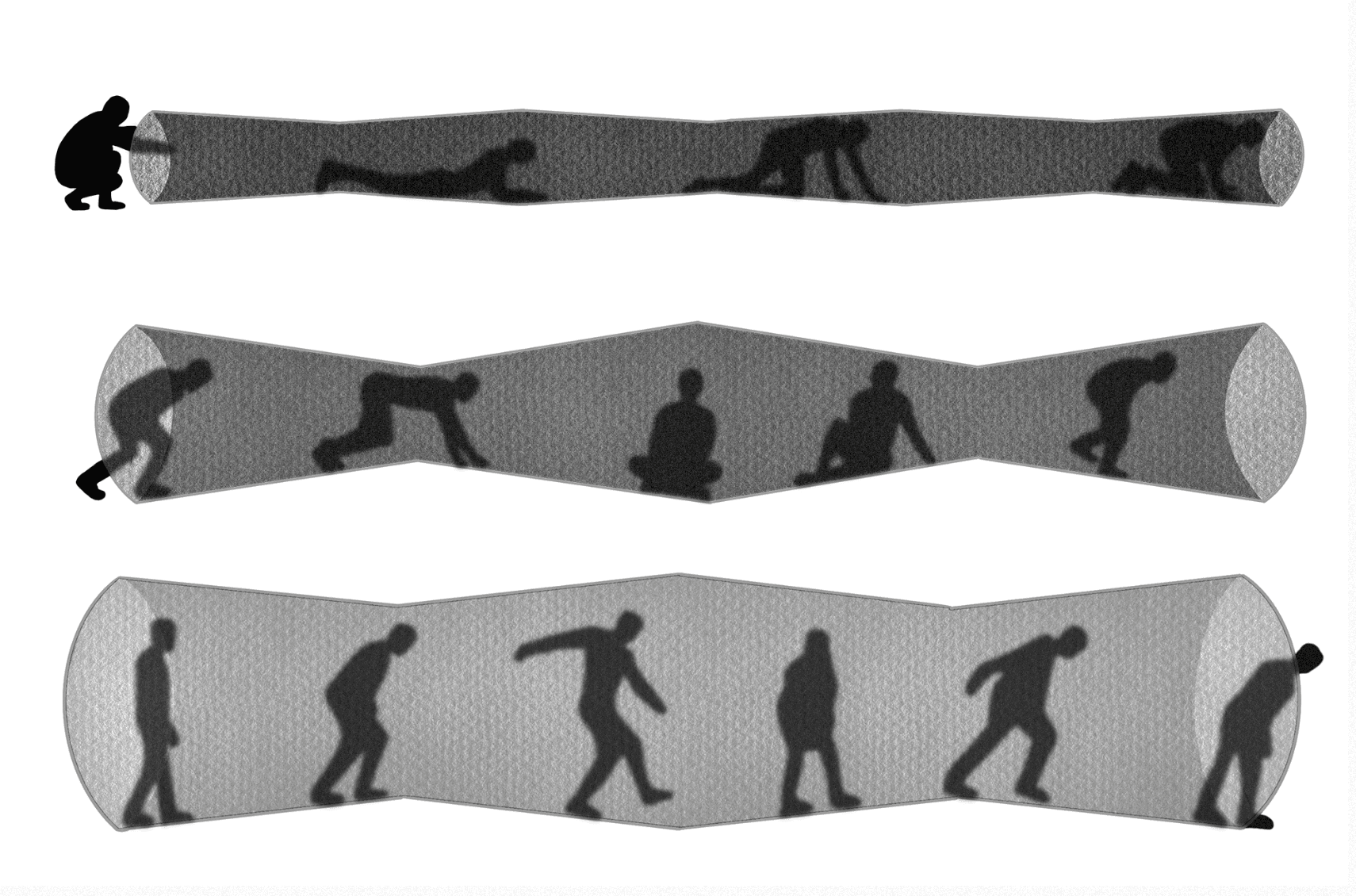
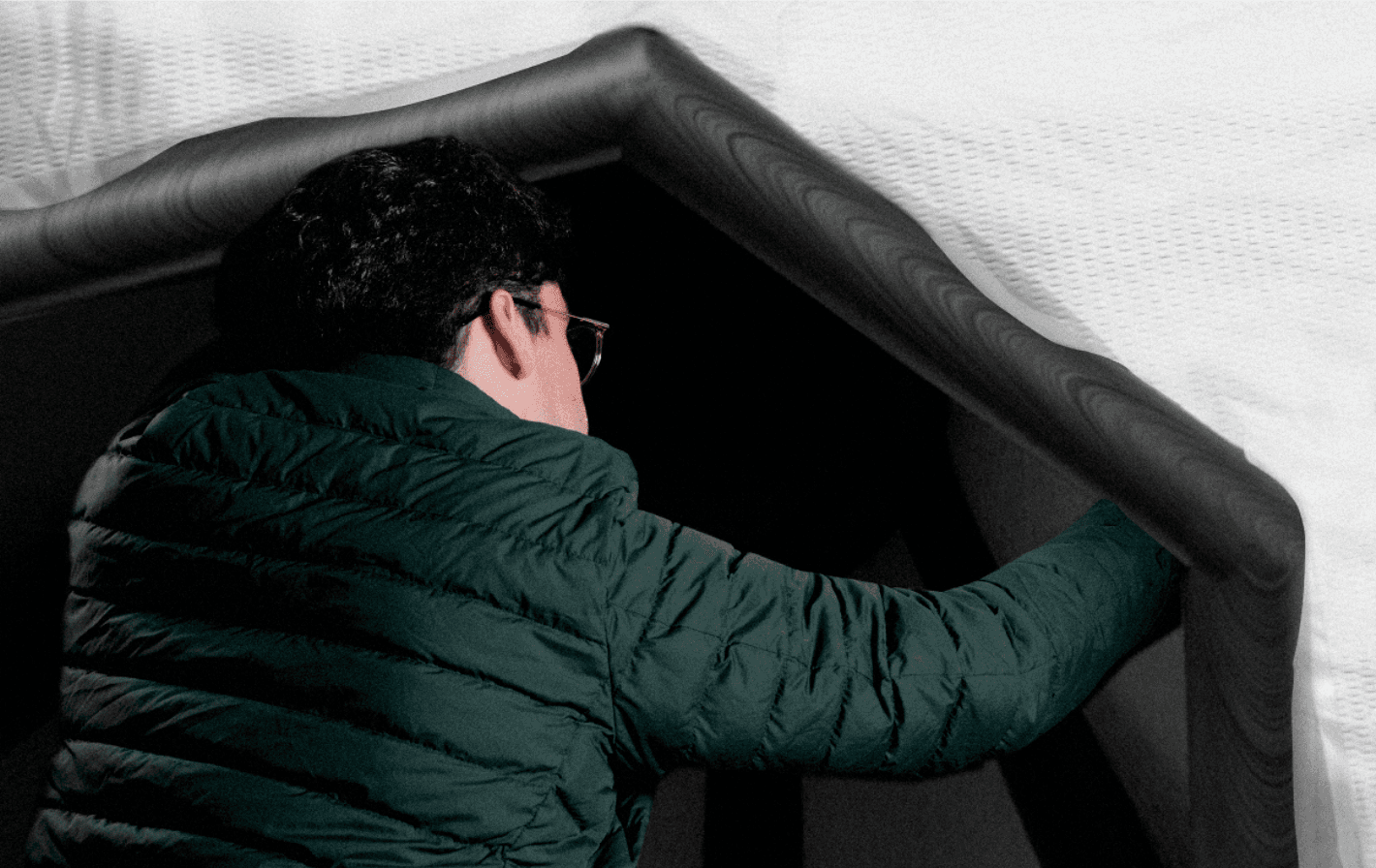
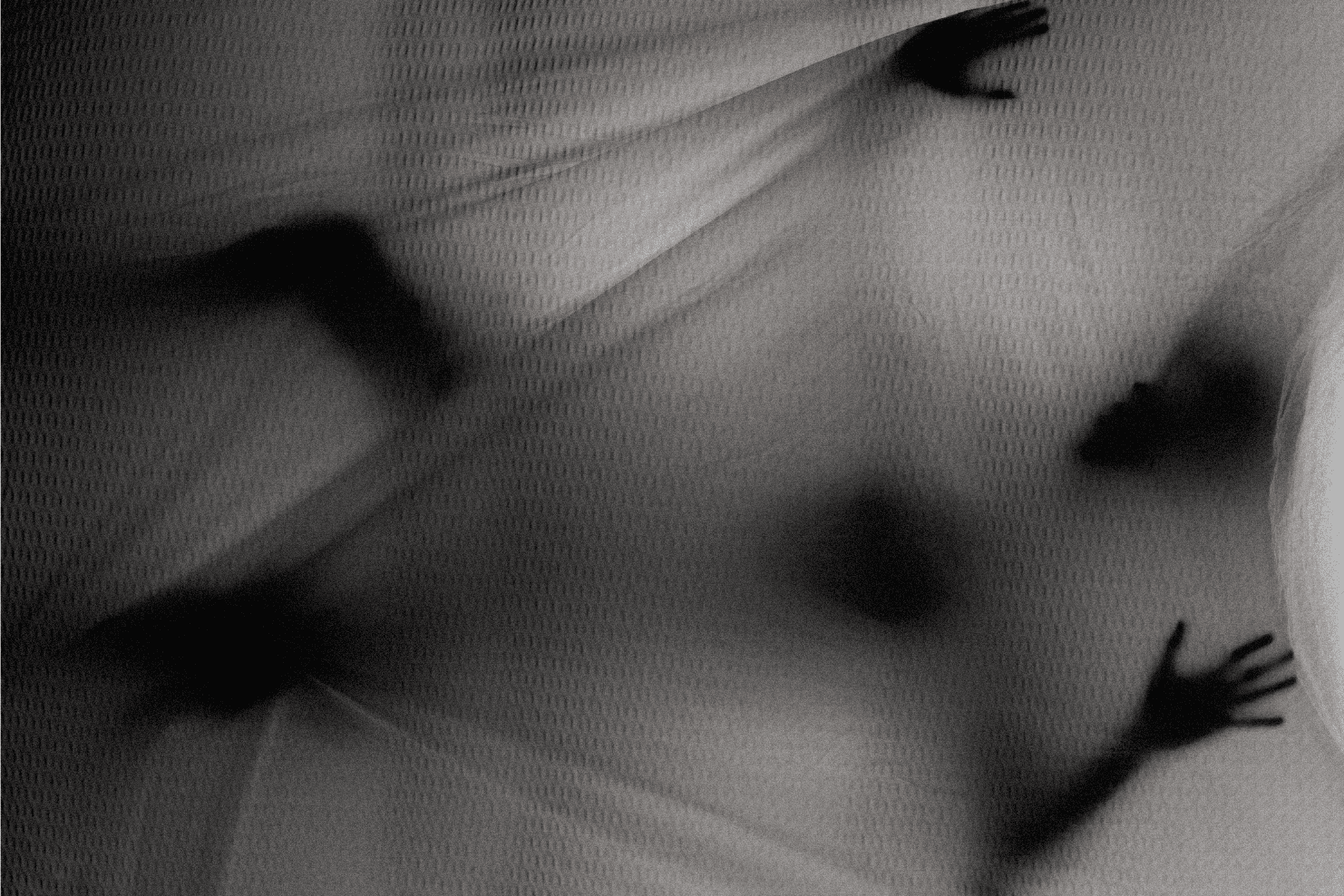
To solve this, the structure was imagined as a system of tubular frames covered by a flexible textile skin. The tubes defined the main geometry, while the fabric expanded and contracted depending on the presence and movement of the people inside.
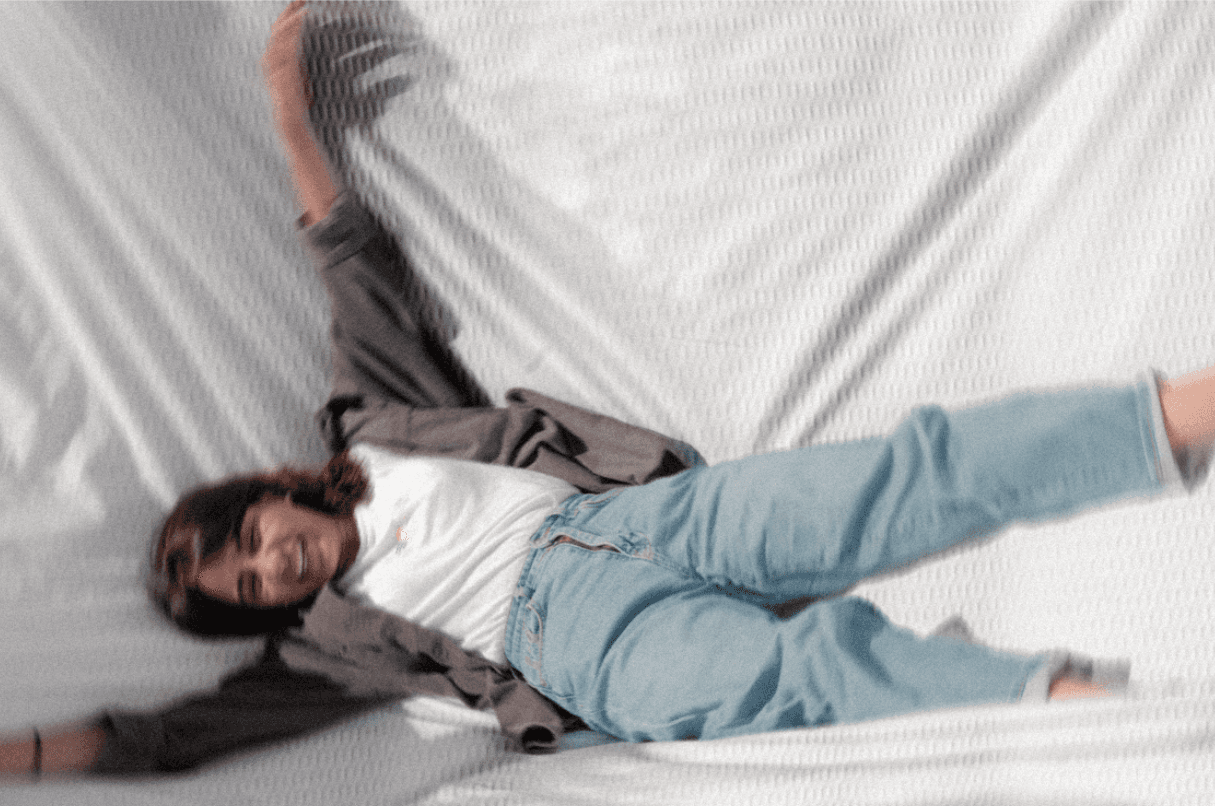
This created a relationship between body and envelope: when someone moved through the interior, the surface could deform, tighten, or open, making the architecture feel alive and responsive.
Implementation
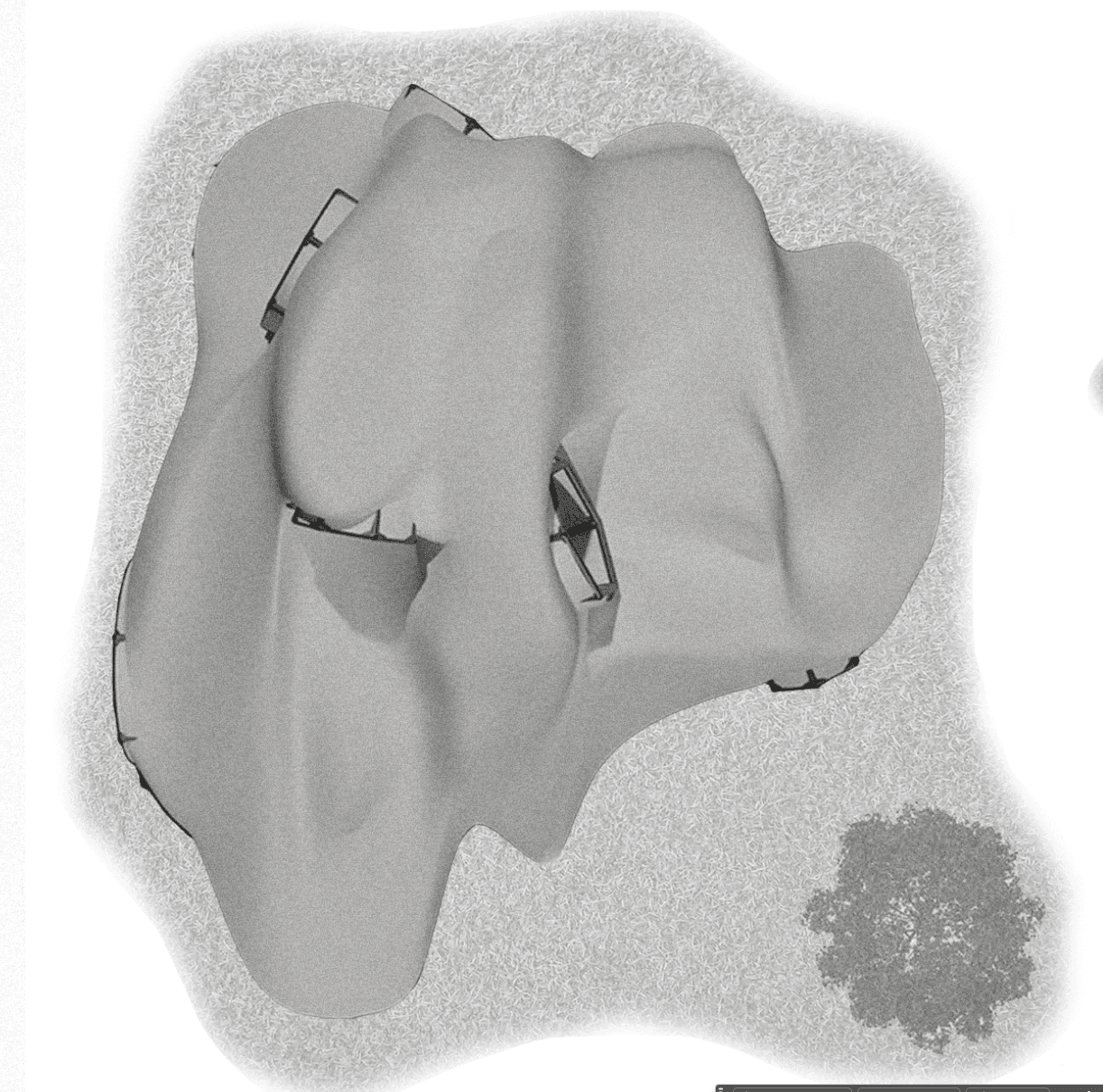
The proposal combined spatial modeling, structural exploration, and atmospheric visualization. The tubular skeleton defined the main form, while the textile membrane created a continuous soft surface that could transform through human interaction.
The interior worked as a compressed and sensory path, while the exterior became an open surface for climbing, resting, and observing. This dual condition allowed the same object to generate different emotional states depending on where the visitor was located.
The final images focused on showing the contrast between opacity and transparency, pressure and release, and object and landscape.
Results
The final proposal presented the museum as an emotional device rather than a static building. It created a playful and sensory environment where visitors could move between tension, curiosity, discomfort, and relief.
The project became an exploration of architecture as an interactive body: a structure that could respond to people not through technology, but through geometry, fabric, pressure, and movement.