Computational Geometry Studies 1
Client:
Personal research
Industry:
Computational Design / Generative Art / Geometry
Start:
End:
Duration:
3 months
Read time:
3 min
This project explores geometry as a field condition: not as isolated shapes, but as relationships between points, vectors, directions, densities, and movement.
The concept comes from the idea that form is not only found in objects, but in the space between them. A system of construction points becomes the origin of multiple geometries, where each line, curve, and connection behaves like part of a larger field. The project reflects on existence as a continuous process of explosions, unions, transformations, and cycles, where every element belongs to something larger than itself.
Through computation, the system generates expandable figures that suggest growth, tension, repetition, and infinity. The result is a visual language where complexity emerges from simple rules, and where each variation becomes a different reading of the same internal structure.
Starting point
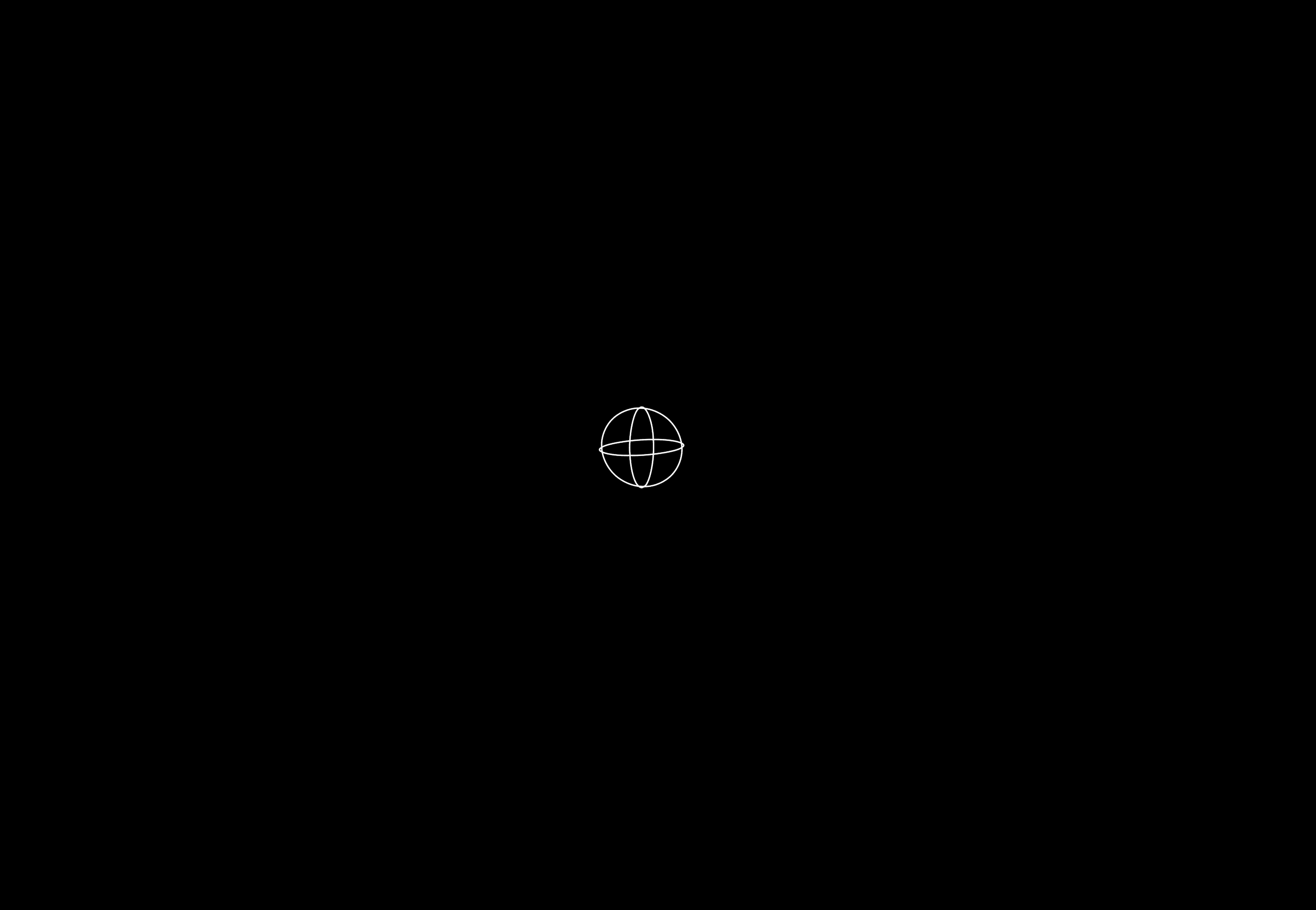
The project began with a conceptual question: what happens when geometry is understood as a system of forces instead of a fixed form?
Rather than designing one final object, the goal was to create a computational structure capable of generating multiple spatial conditions from the same origin. Construction points became the base of the system, while parameters, sequences, and curve behaviors defined how those points connected, expanded, and transformed.
Problem solving
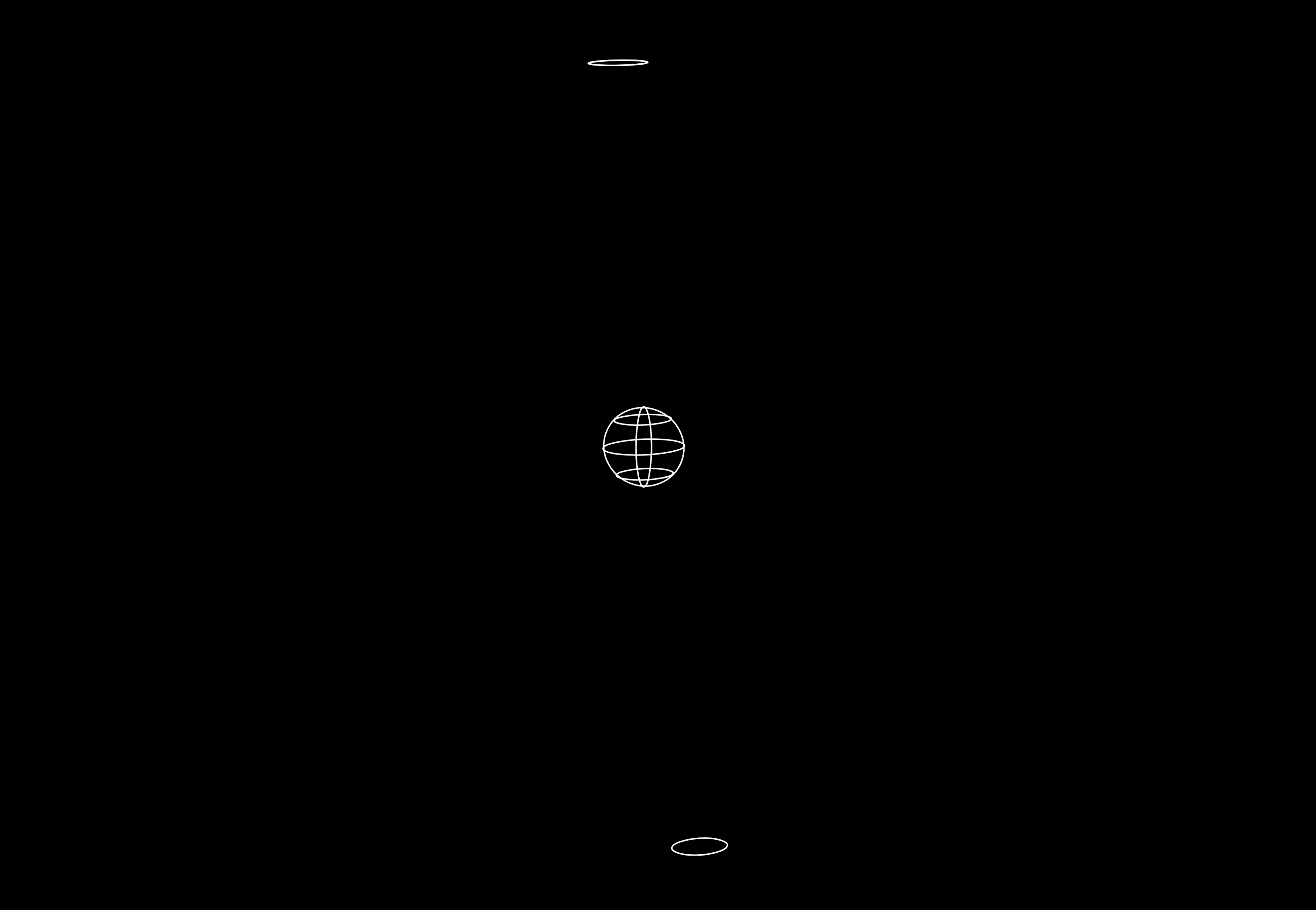
The main challenge was to create variation without losing coherence. Each geometry needed to feel different, but still belong to the same field logic.
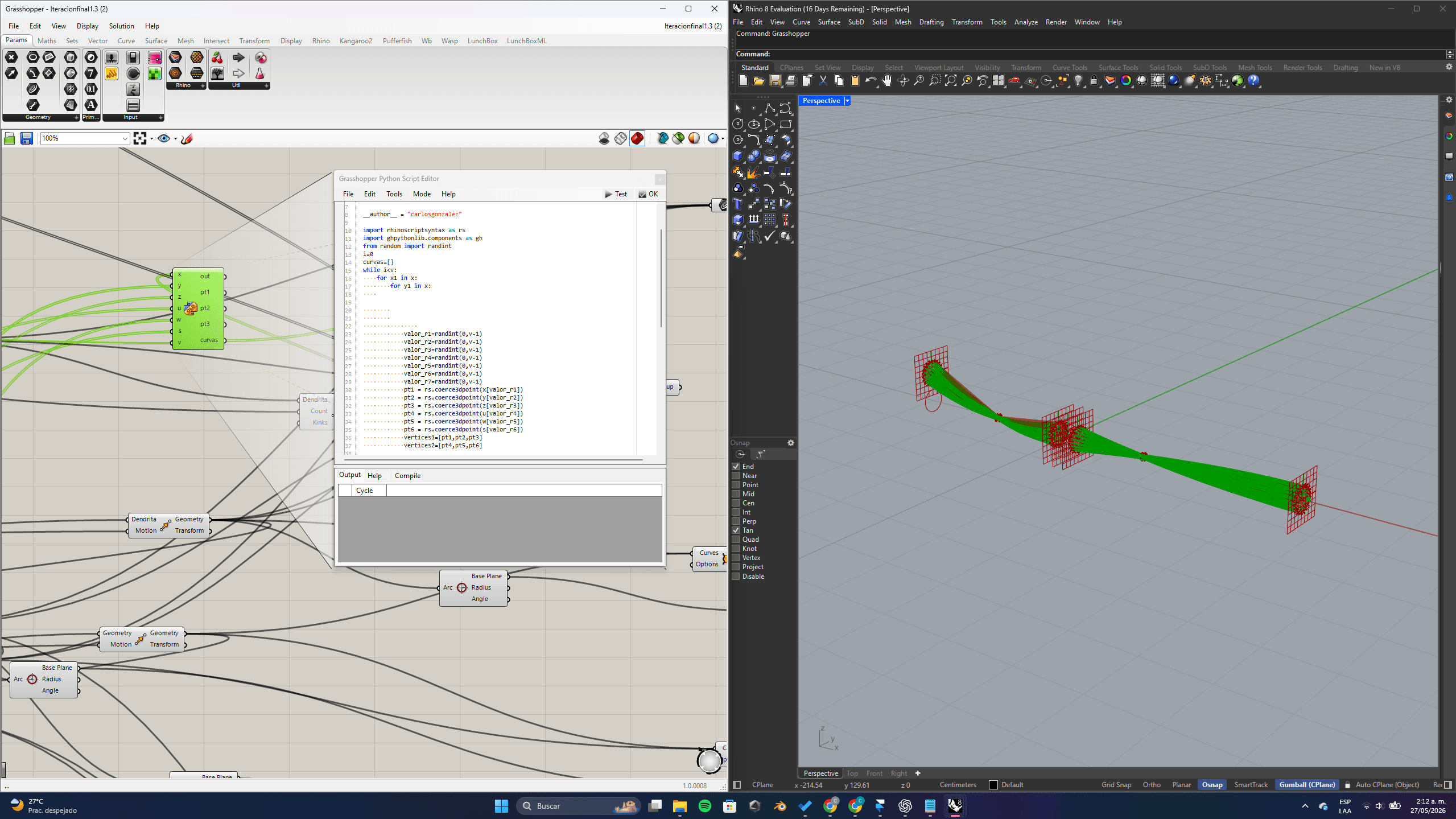
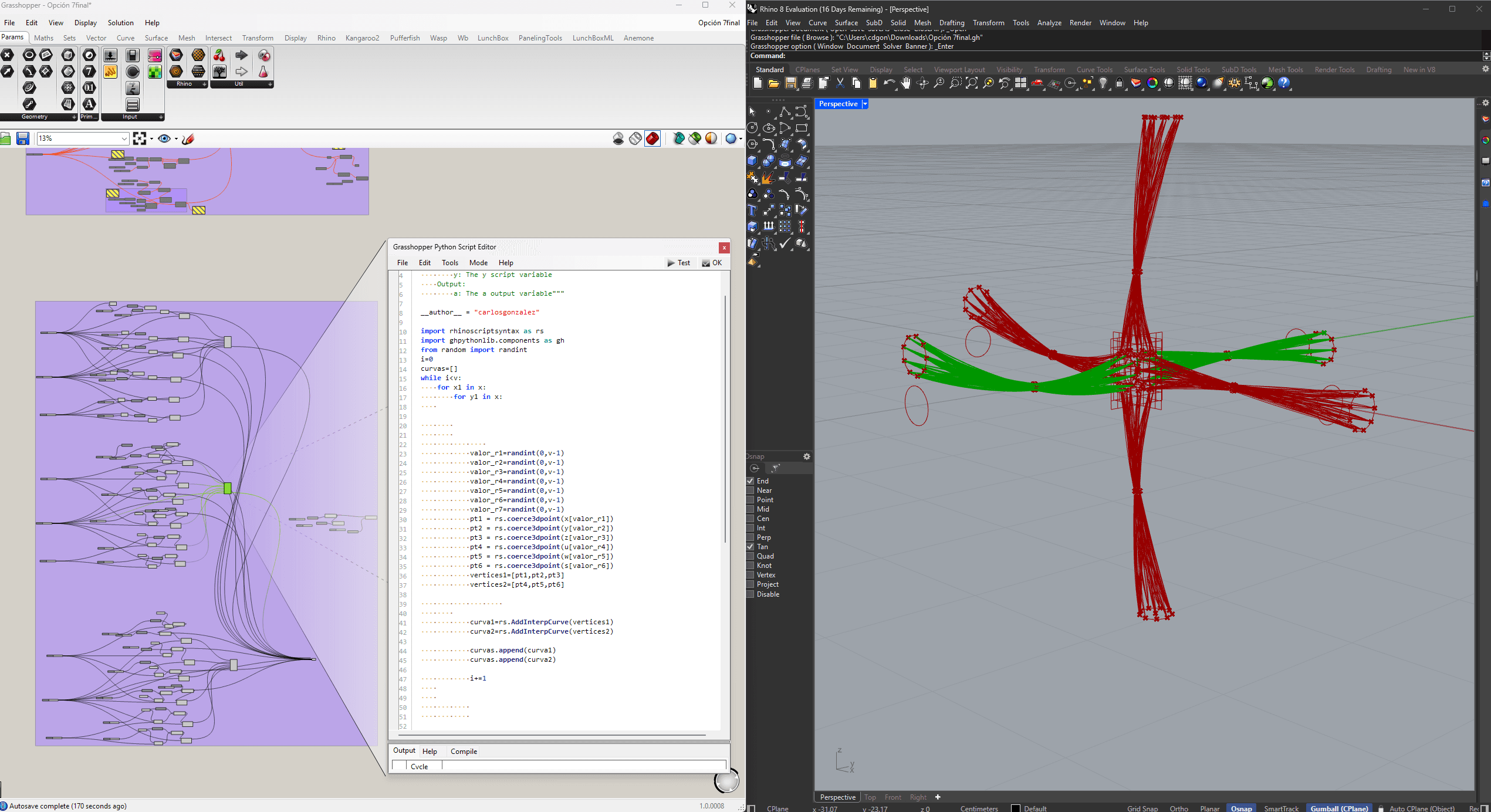
The project used Grasshopper as the main generative environment, but the organization of lists and data trees was handled through custom Python scripts. This allowed the system to control construction points, reorder relationships, manage curve sequences, and generate different behaviors from the same base code.
Instead of manually drawing complexity, the system produced it through controlled parameters: density, direction, repetition, order, curvature, and connection logic.
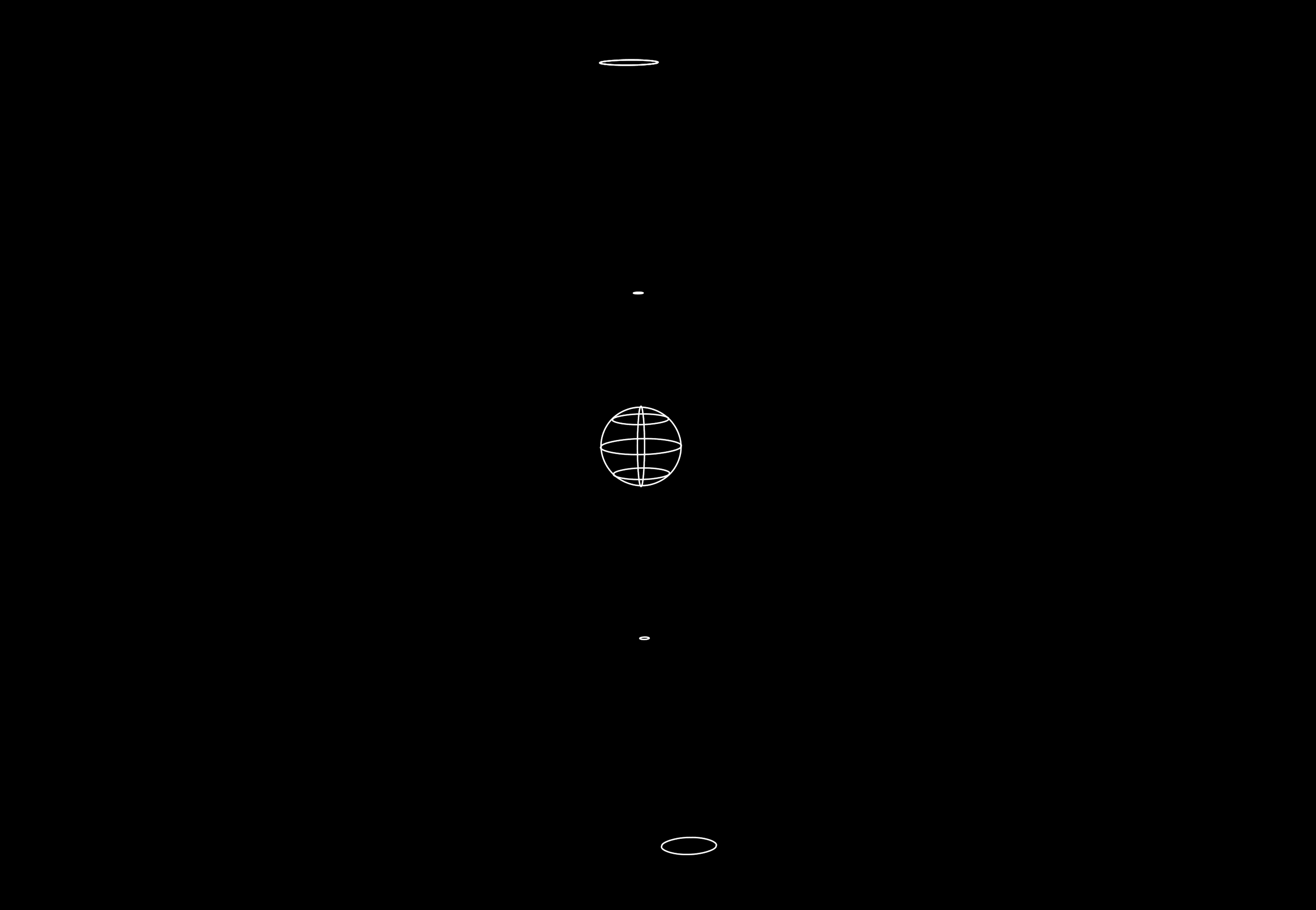
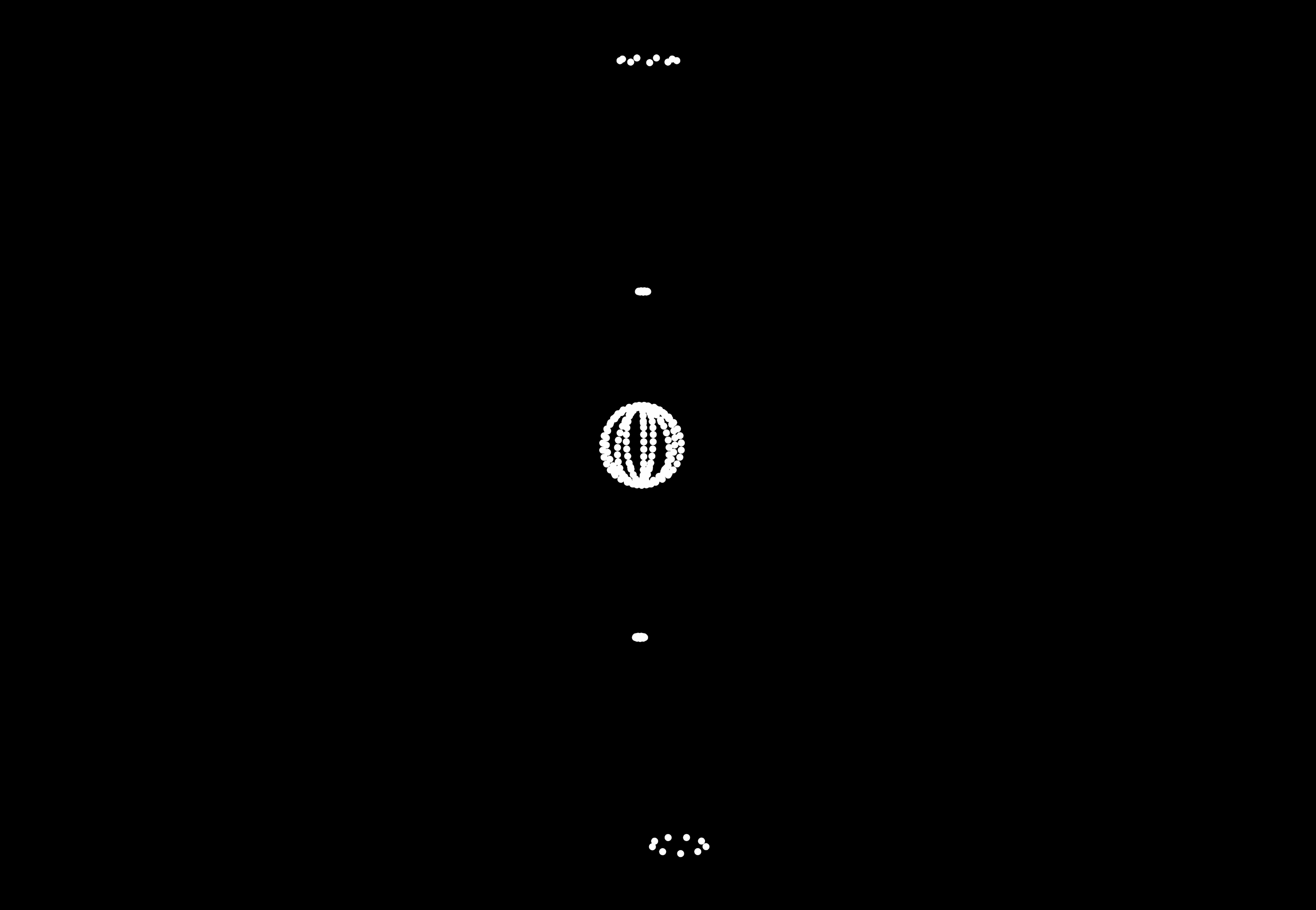
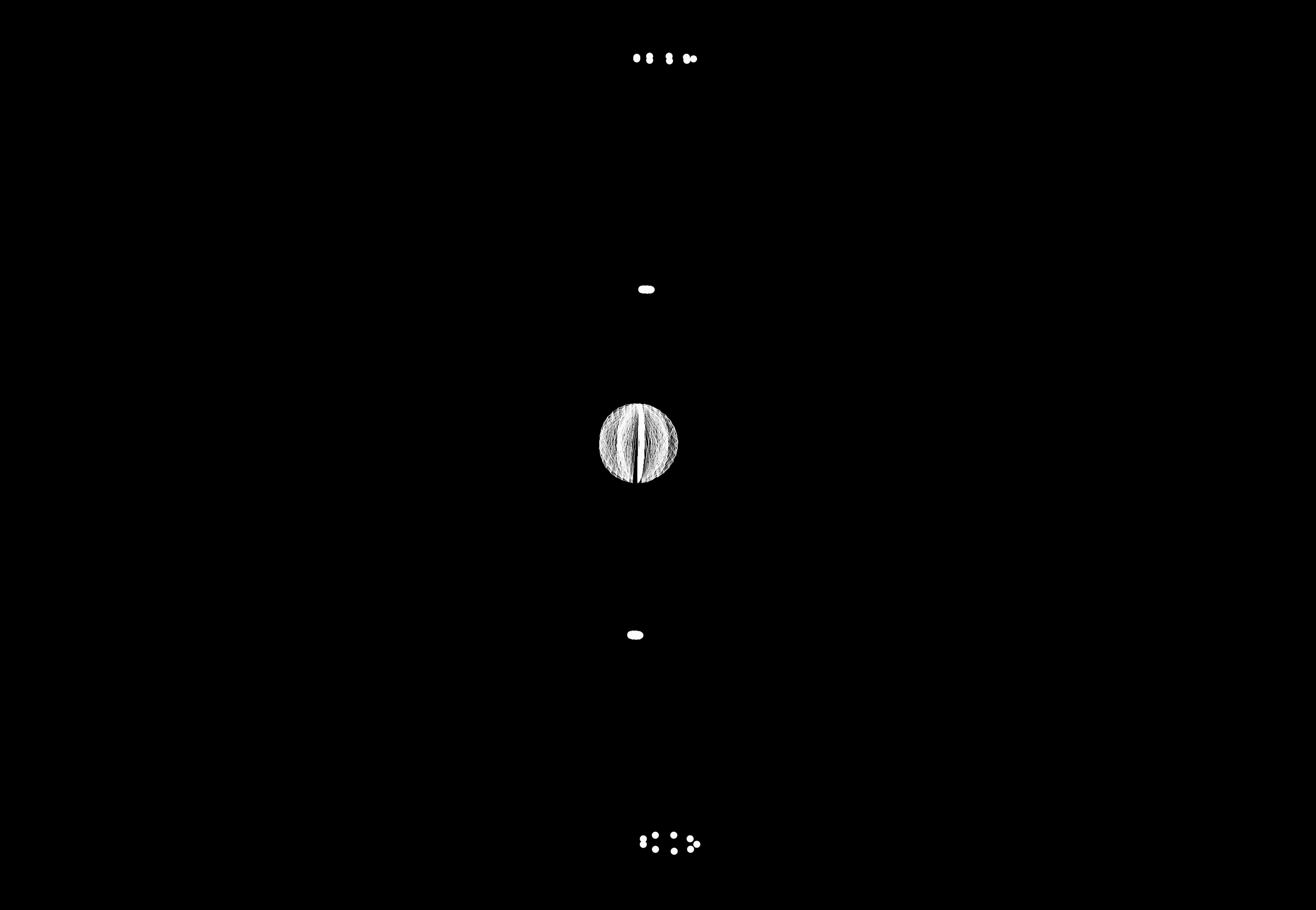
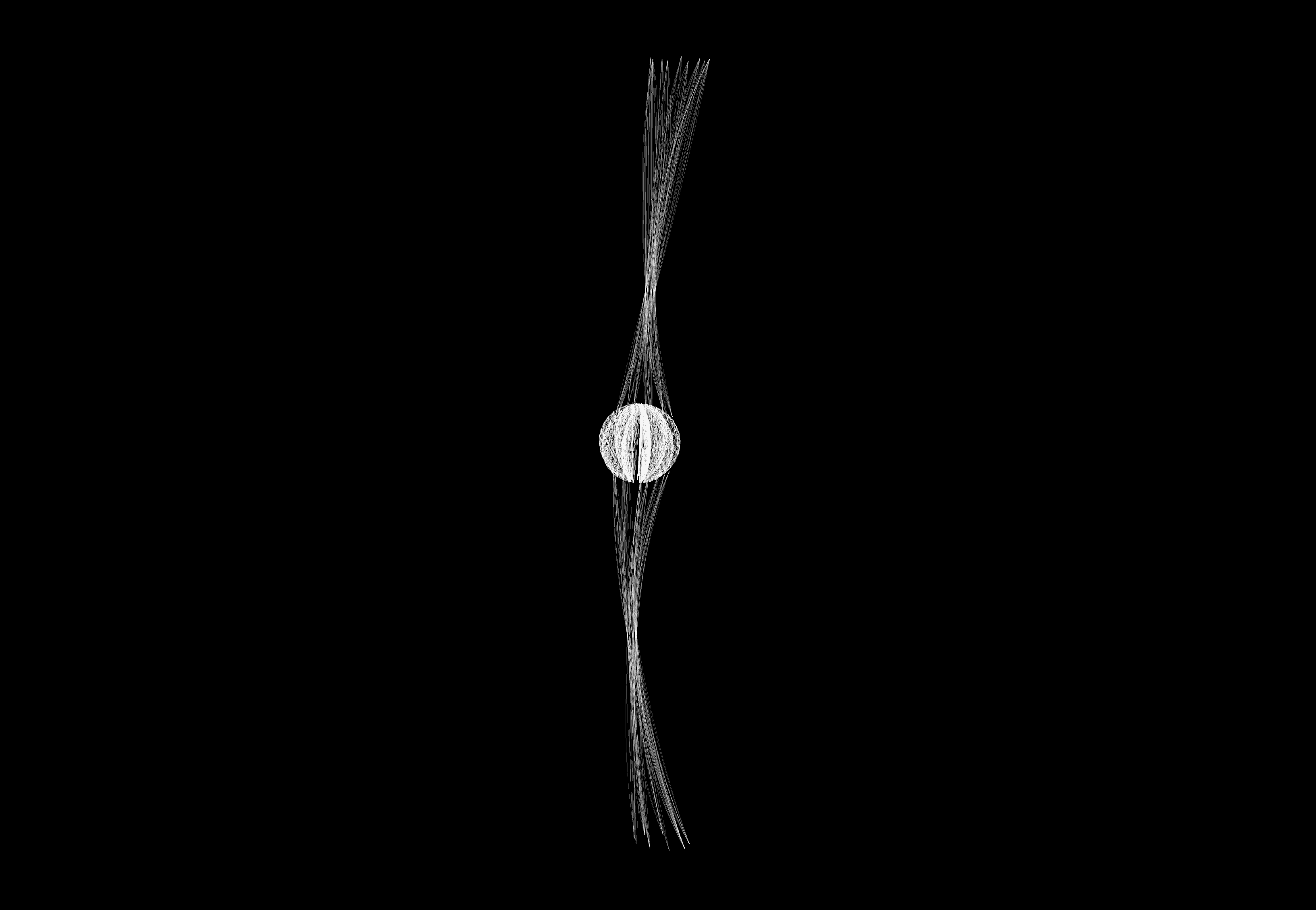
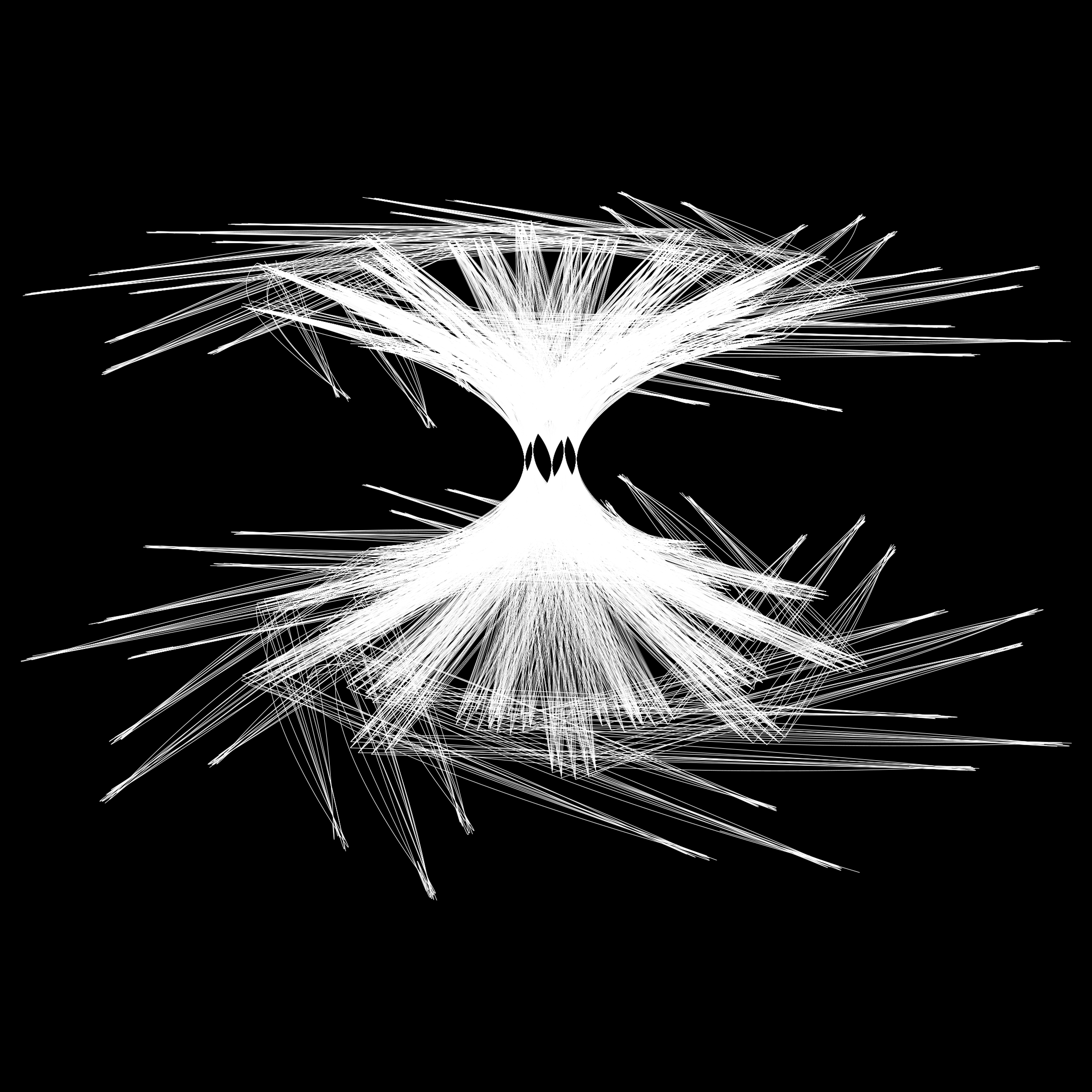
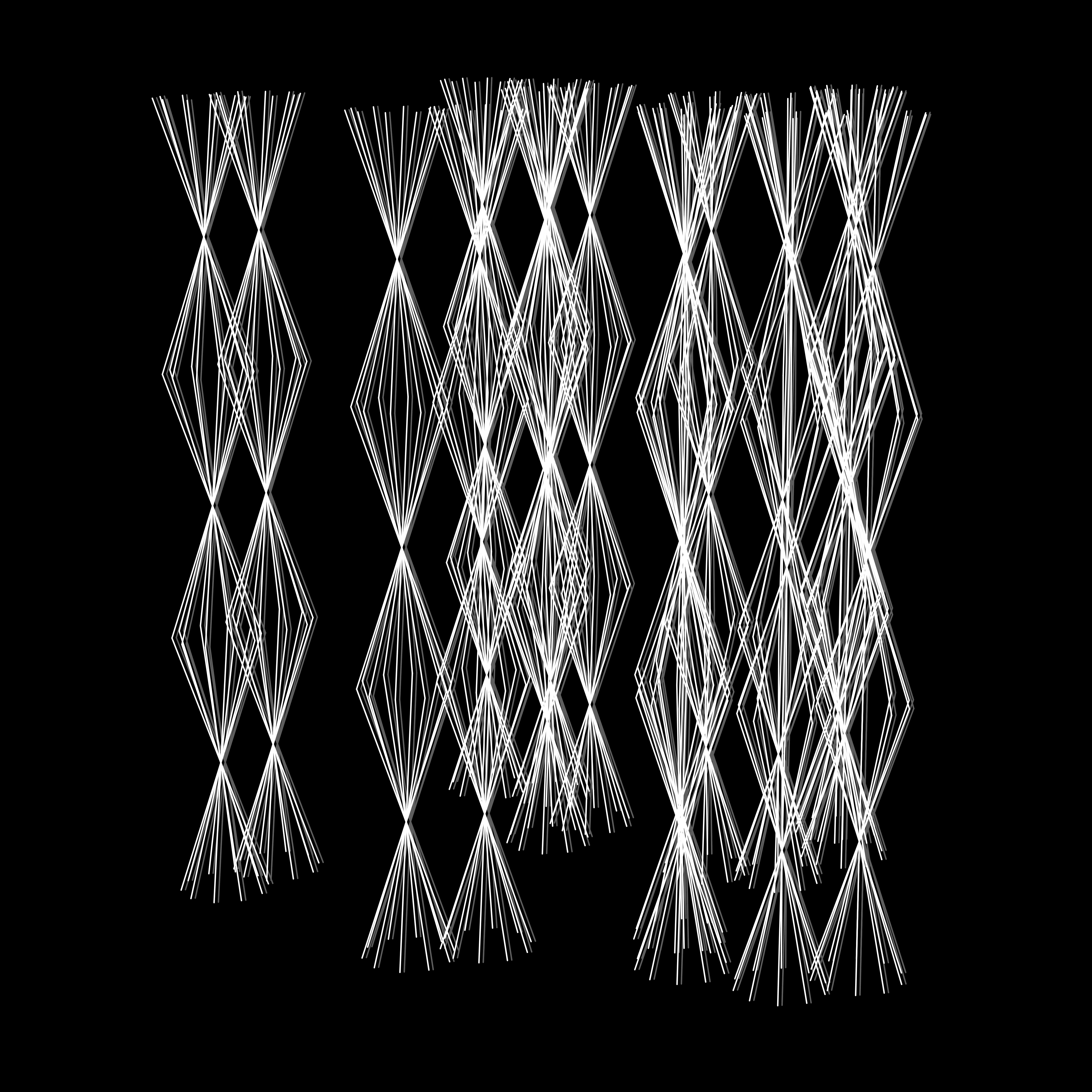
Gallery suggestion: Use the images with vertical line systems, radial compositions, and the dense field of spheres. They show how the same logic creates different outputs.
Implementation
The system was built as a computational field generator. A set of points worked as the base structure, while Python and Grasshopper defined how those points connected, repeated, and expanded.
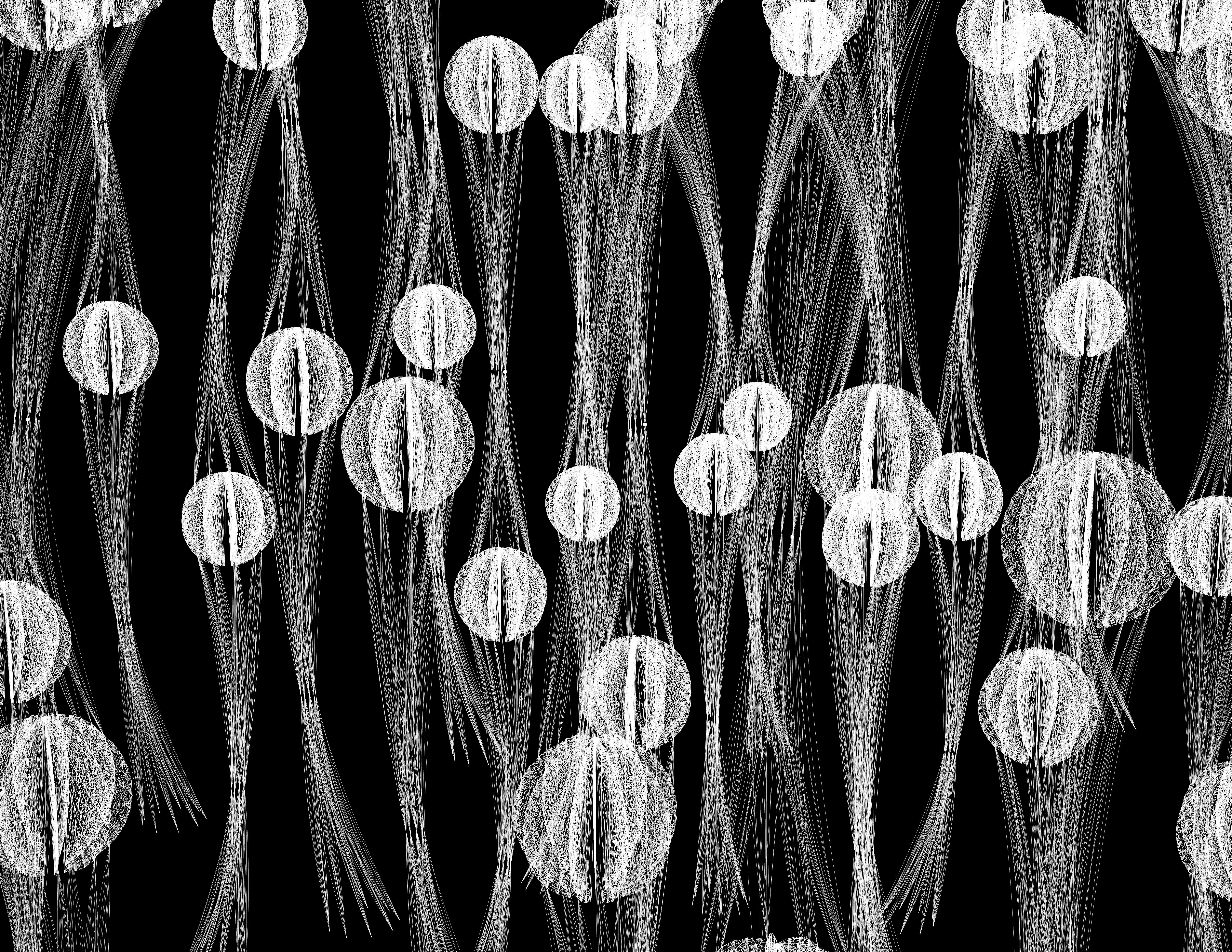
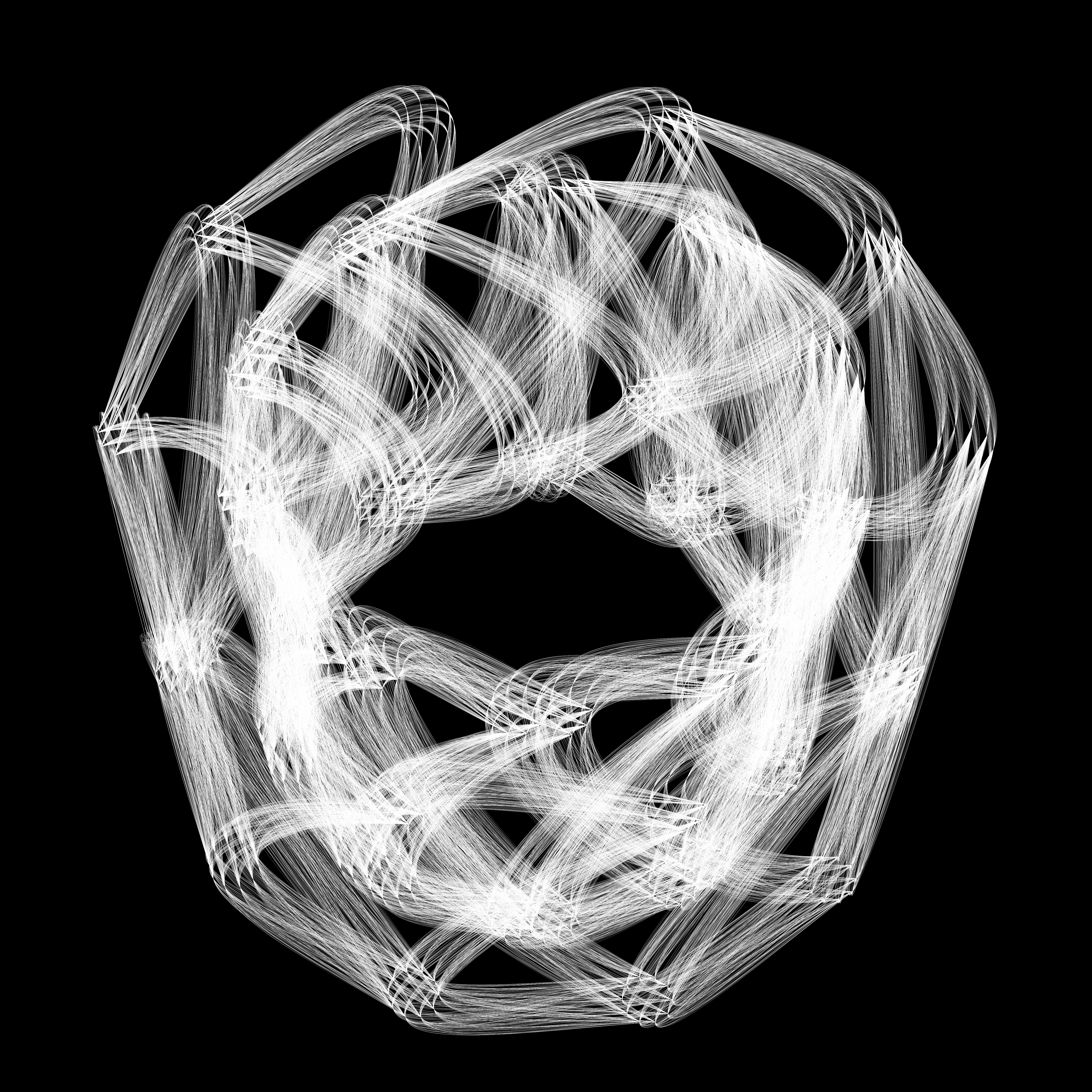
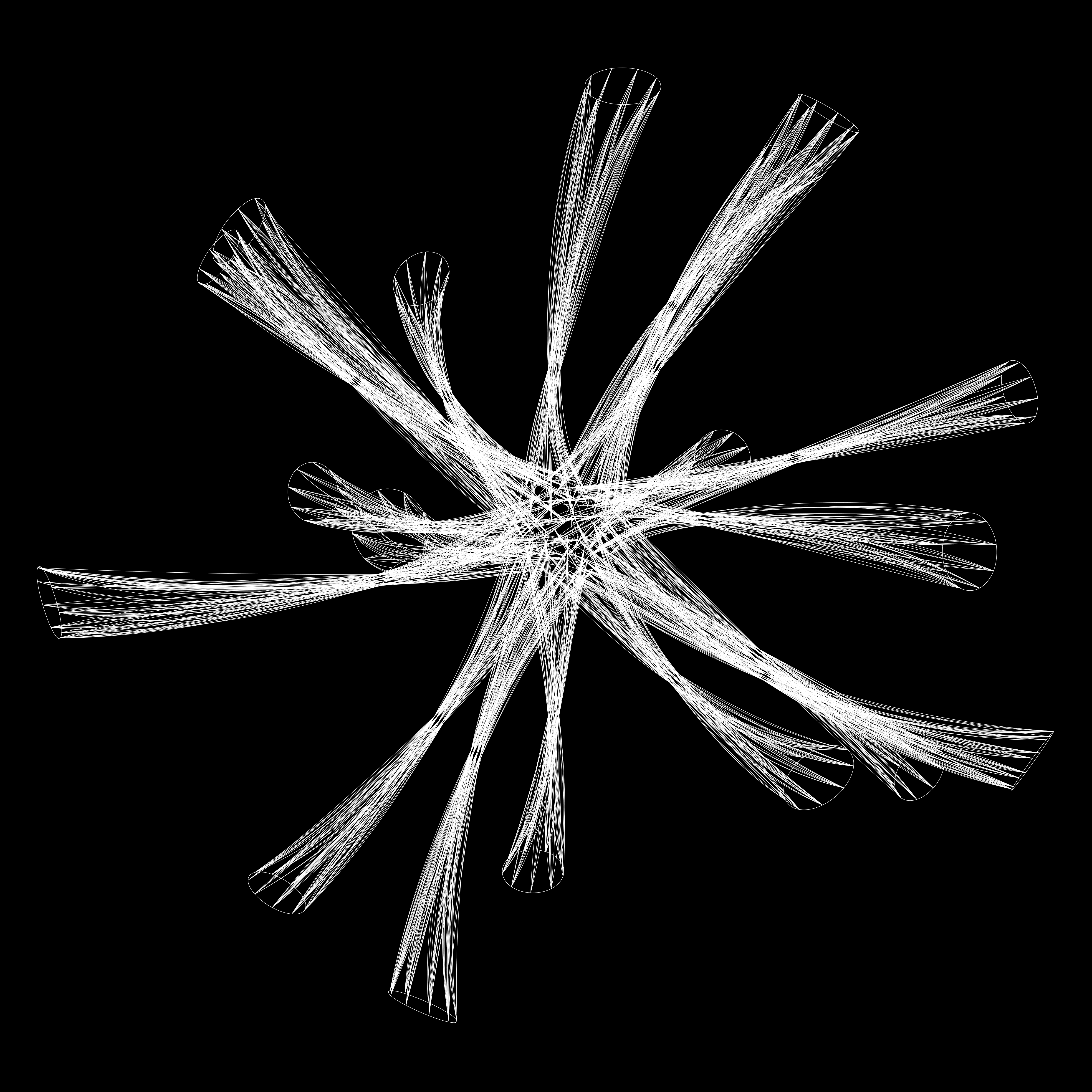
By changing parameters and instructions, the same code produced multiple families of geometry: woven fields, radial structures, spherical systems, vertical formations, and dense abstract compositions. The project was not about creating a single figure, but about designing the rules that allow many figures to emerge.
The process focused on the behavior between elements: how lines attract, cross, overlap, accumulate, and create new spatial readings through repetition.
Image suggestion: Use the image with many white spheres and vertical woven lines as the main implementation image. It communicates the system at its richest point.
Results
The final result is a series of computational drawings that express geometry as an expandable field. Each image appears different, but all of them come from the same internal logic.
The project shows how complexity can emerge from simple computational relationships. Points become lines, lines become fields, and fields become figures that suggest movement, growth, and transformation.
More than a formal exercise, the project became a study of connection: a way to visualize how individual elements can belong to a larger, dynamic, and almost infinite system.
Results image suggestion: Use the circular/radial composition or the dense sphere-field image. They feel the most complete and visually powerful for the final section.